
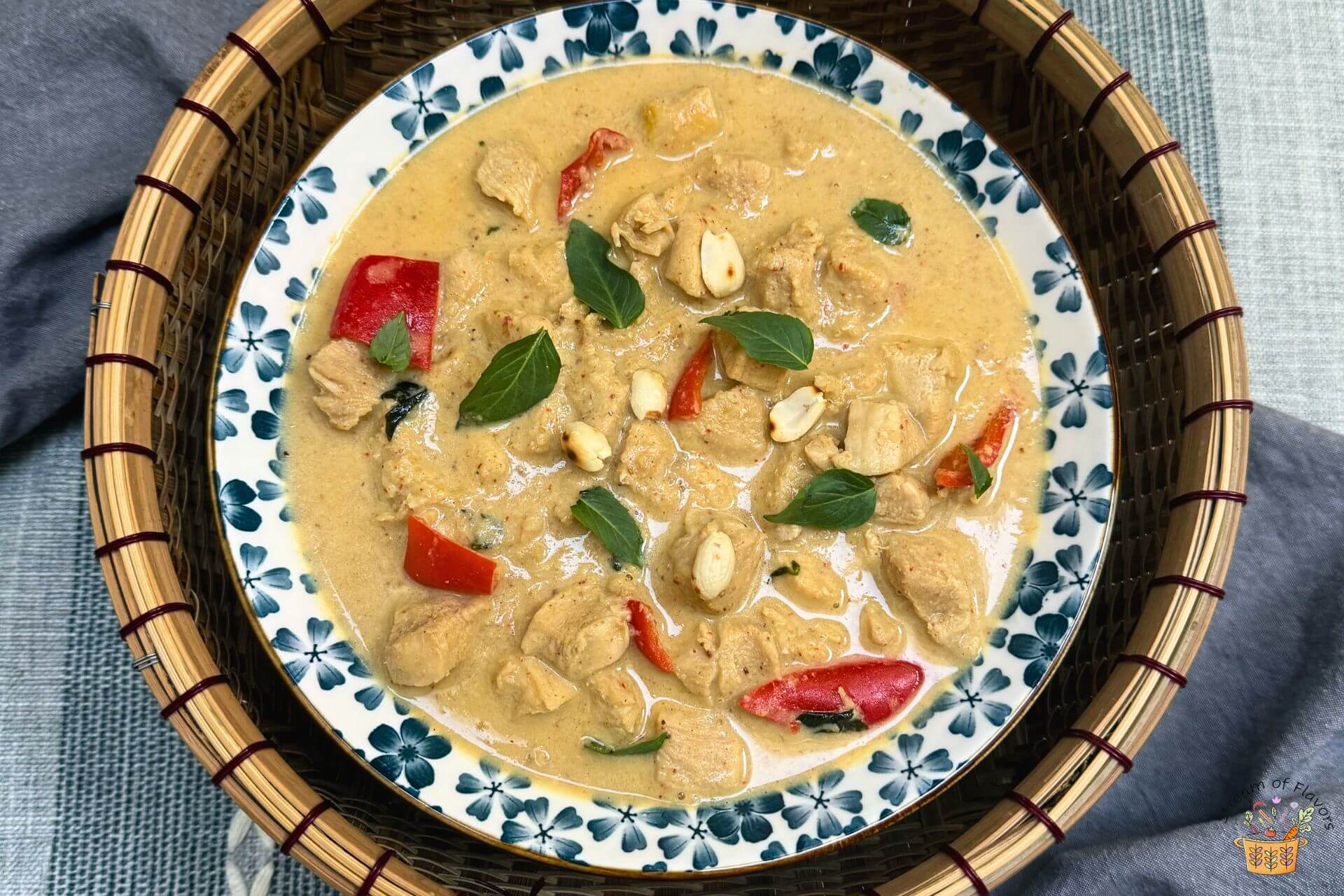
Panang Chicken Curry Recipe is a rich and creamy Thai gravy. Fragrant homemade spice paste featuring cumin, galangal, coriander, cinnamon, and garlic forms the aromatic base. Tender boneless chicken cubes absorb these bold Thai flavors as they simmer in coconut milk. Fresh Thai basil and kaffir lime leaves add bright herbal notes to the dish. Palm sugar lends a subtle caramel sweetness, while the fish sauce adds a depth that defines Thai cuisine. Roasted and ground peanuts lend a subtle texture, and the peppers add a mild, natural sweetness. Serve this comforting curry over steamed jasmine rice for a satiating lunch or dinner!
The best Panang Chicken Curry that I have tasted was in Melbourne, Australia. When I place my order, I usually ask them to add less oil to the dish because I do not like greasy food. In this case, the waitress mentioned that the chef does not add any oil to the Panang Chicken Curry but instead uses coconut cream to sauté the garlic with their own spice paste and fresh ingredients. I was inspired by this unique step. I recreated his dish with my own spice mixtures and proportions.
My husband calls the Panang Chicken Curry the most memorable misnomer of culinary history that he has come across so far. This is his explanation:
- Panang is the Thai phonetic transliteration of the Northern Malaysian state of Penang. Penang was a province of the Sultan of Kedah, who was then a Siamese vassal. Sir Francis Light of the East India Company negotiated the acquisition of the island in return for British military protection.
- Curry is a pervasive expression of a dish composed of a sauce or gravy seasoned with a mixture of ground spices. While Indian in origin and exported globally by the British, this sobriquet has become a veritable catchall for any dish with a sauce composed of ground spices.
Origin of the Panang Chicken Curry Recipe:
The aforementioned is my husband’s preferred etymology of the Panang Chicken Curry Recipe. However, there is an alternate version that traces the dish back to Central Thailand or even Laos. The earliest written record dates the dish to the 1890s, and it was called phanaeng, meaning “cross,” referring to sitting cross-legged on the floor. In this version, the moniker stuck because the cooks would grill the chicken by hanging it upright with its legs crossed and baste it with a spice mix before cooking it in coconut cream. I suppose it’s just as plausible, but it somehow doesn’t have the romance of Penang’s history.
The other thing I wanted to touch on was the color categorization of curries. It is important to understand that curries obtain their natural color from the nature and proportions of the herbs and spices. Yes, you can use coloring to obtain the same effect. I dislike this because the coloring is meaningless if you cannot relish the effect of the spices and herbs. It’s one of my pet peeves when I eat at some restaurants. Sometimes, even though the curry’s color is different, the dish still tastes the same. This tells me that the cook or chef is using artificial instead of natural ingredients to create the dish. I do love colorful dishes, but not at the cost of losing the natural flavors that create the color.
Summary of Thai color-coded curries:
Green Curry:
When made naturally, green curry gets its color from the fruits and herbs used to make it. In addition to the combination of green chilis (yes, it is a fruit) used to spice up the dish, it also contains a healthy portion of fresh cilantro, kaffir (or makrut) lime leaves, and green basil. Grind all this greenness up, and you have the green curry. Since it has copious amounts of young, green chilis, it tends to be the spiciest of Thai curries.
Red Curry:
While the red curry is certainly worthy of respect on the Scoville scale, it is less piquant than its green cousin. Like its green cousin, it uses an extensive amount of red chilis. These chilies are crushed with shallots, garlic, lemongrass, and galangal and then cooked down in coconut milk to produce the sauce.
Yellow Curry:
Yellow, gold, or orange, well, you get the idea. While there are such things as yellow chilis and orange chilis, the majority of the color in this dish comes from yellow mustard seeds and the spice turmeric (Curcuma longa). During my visits to Thailand, the yellow curry was the most common, made with and without coconut milk.
Massaman Curry:
Common throughout central and southern Thailand, this dish easily has the richest assortment of fruit, herbs, and spices of any Thai curry. It contains chilis, garlic, lemongrass, galangal, shallots, cardamom, nutmeg, cloves, coriander, cumin, and cinnamon, as well as kaffir leaves and coconut milk. It’s further garnished with potatoes and peanuts or even stewed in peanut sauce.
Frequently Asked Questions:
1.What are the ingredients in the Panang Chicken Curry Recipe?
The dish is made from sundried chilis, coconut cream, lemongrass, kaffir lime leaves, garlic, galangal, shallots, cilantro, and cumin. These ingredients are ground together to provide a mellow, rounded flavor that allows the tongue to safely taste the sharpness of the spices and herbs. Coconut milk or cream provides a sweeter and thicker base from which to explore the flavors of both the spices and the proteins. You can substitute it, but I assure you that the coconut milk is a better taste enhancer because of the fats.
2. How can I make this recipe vegetarian?
To make it vegetarian, omit the chicken and add Thai eggplant, green beans, carrots, and tofu or tempeh.
3. How is the Panang Chicken Curry recipe different from other Thai curries?
Panang Curry is slightly sweet and spicy, and it is creamier and less soupy than the other Thai curries. It is made with coconut milk, chicken, spice or curry paste, kaffir lime leaves, and roasted peanuts.
This post may contain affiliate links. As an Amazon Associate, I earn from qualifying purchases at no extra cost to you.
If you’ve tried this recipe or have questions, I would love to hear from you. Please feel free to share (below) your thoughts, comments, or any questions that you might have. And if you like my recipes, you can subscribe to my mailing list for the latest recipes delivered to your inbox. From my pen to your table, Bon Appétit!
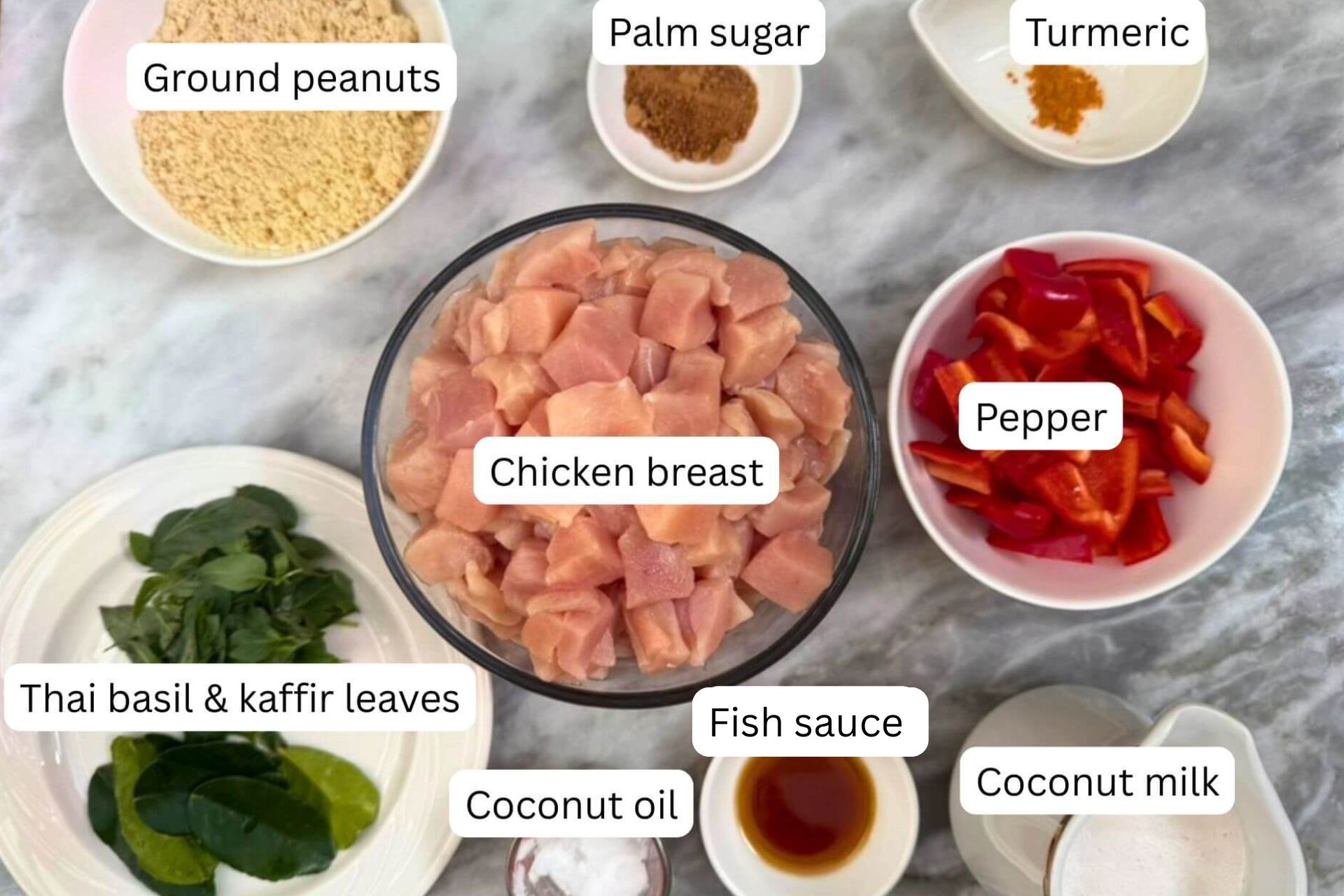
Ingredients:
For the spice paste:
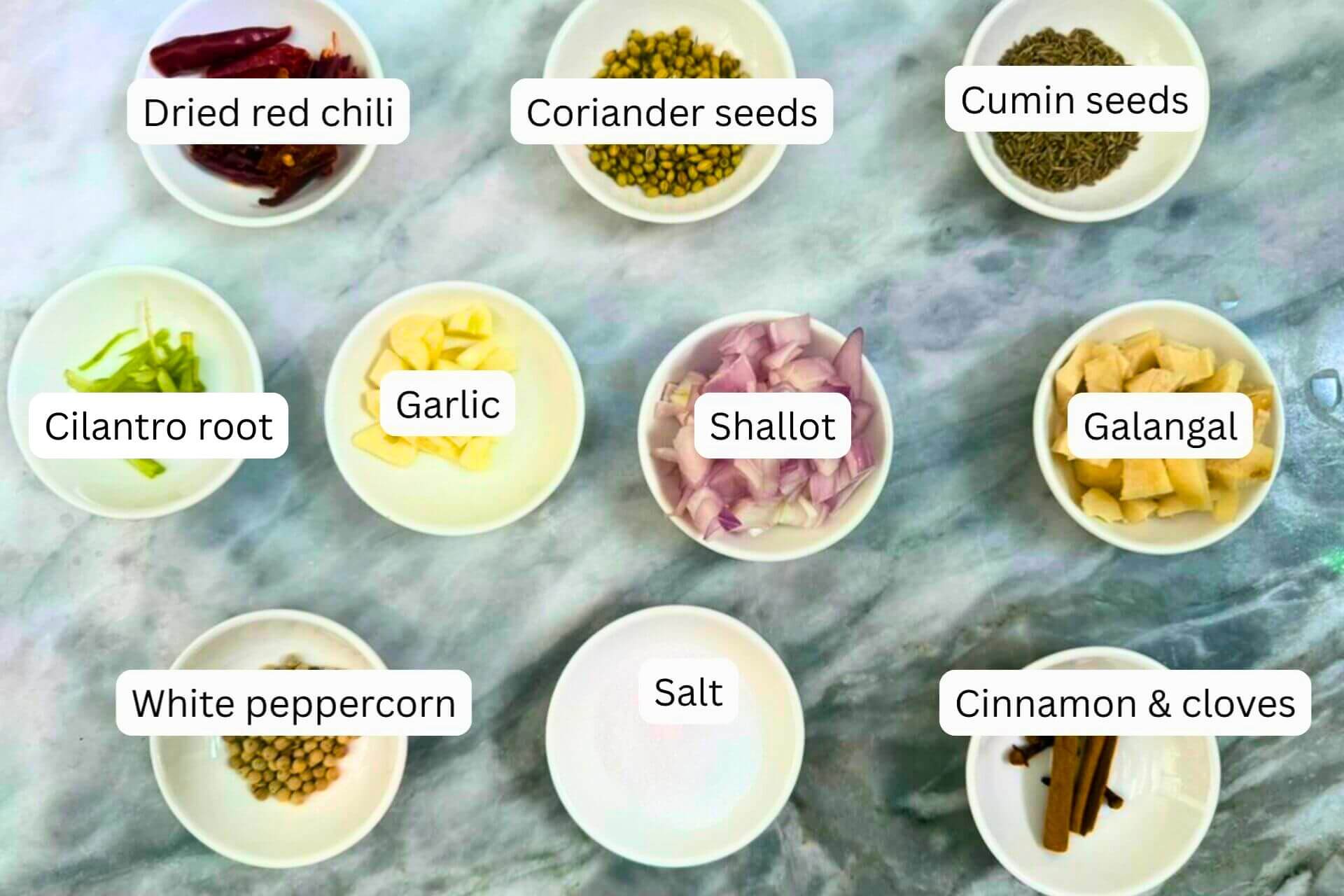
- Aromatics: galangal, garlic, cilantro root, shallot
- Spices: coriander seeds, dried red chili, cumin seeds, white peppercorn, cinnamon, cloves
For the Panang Chicken Curry:
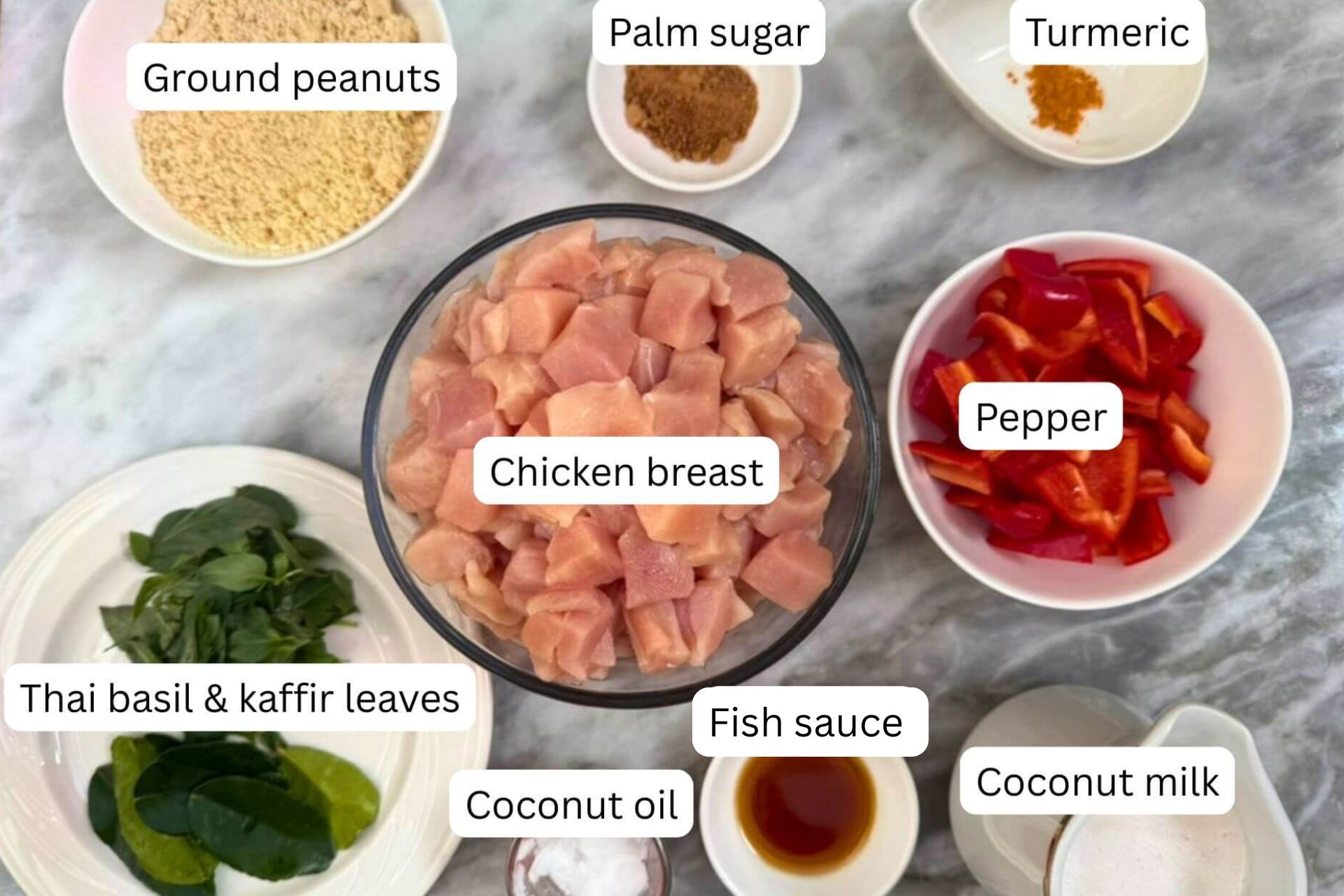
- Chicken breasts
- Coconut oil
- Thai basil and kaffir lime leaves
- Coconut milk (fresh or canned)
- Fish sauce
- Red pepper
- Palm sugar (or use brown sugar)
- Roasted peanuts
Here are the step-by-step instructions to make this dish. For the measurements, please refer to the recipe card below.
How to make Panang Chicken Curry with my recipe:
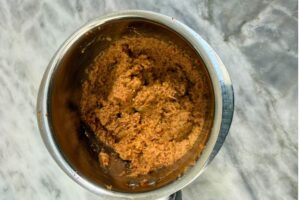
- Make the spice paste:
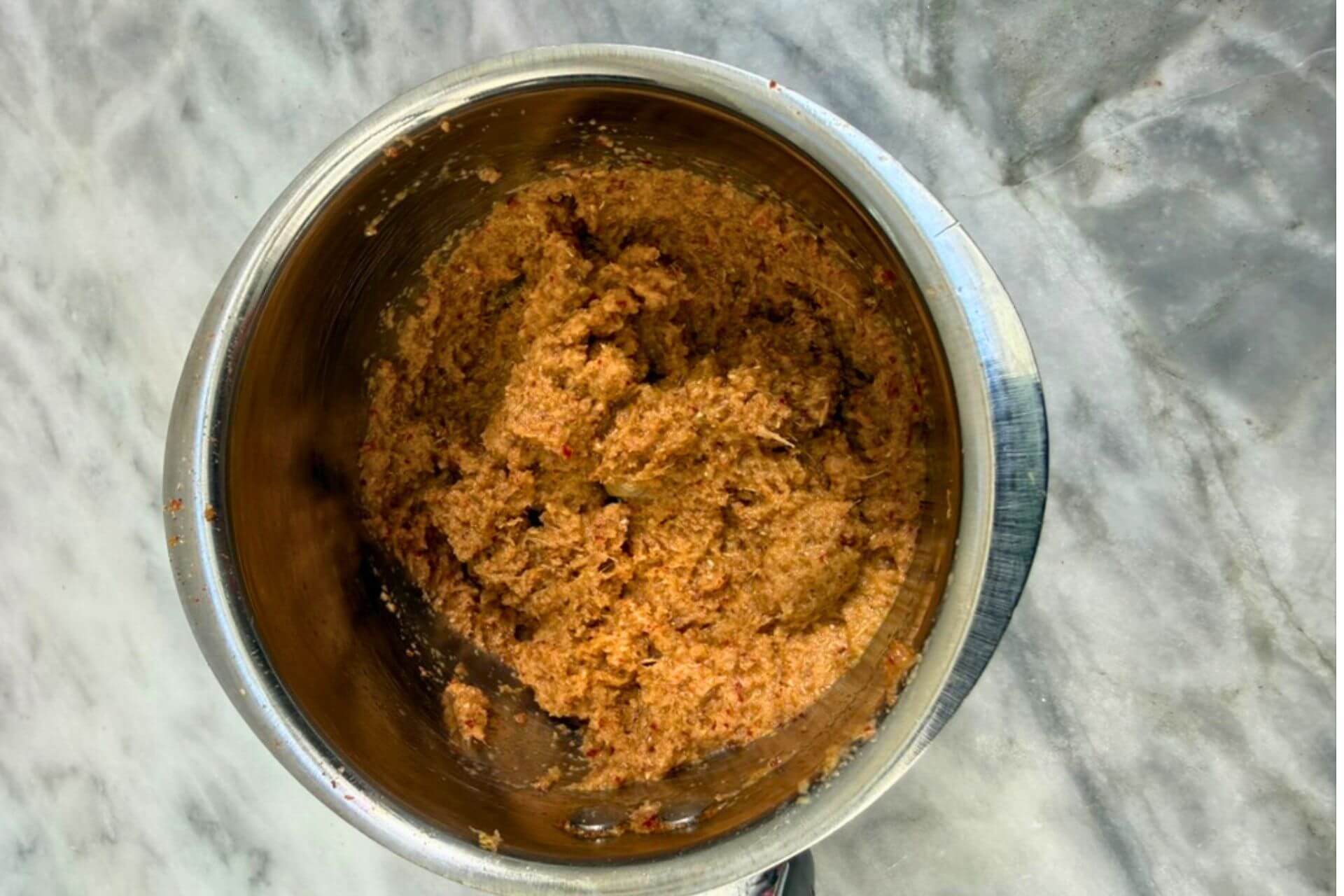
- Place the ingredients in a spice grinder. Add one tablespoon of water and grind it to a fine paste. Set it aside.
2. Make the Panang Chicken Curry with my recipe:
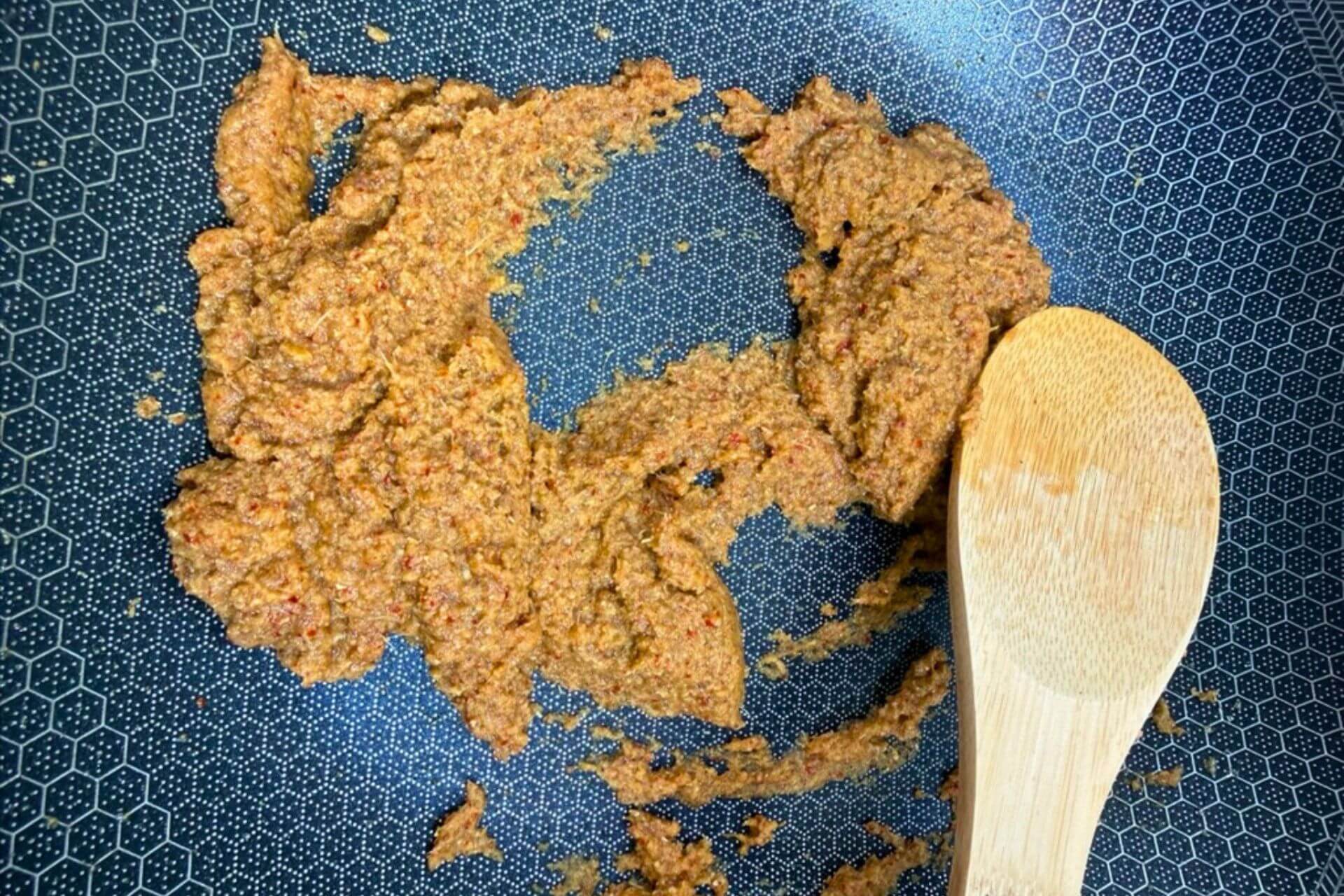
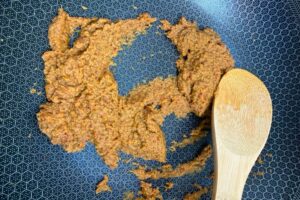
- Heat a wok, add the coconut oil and the spice paste. Sauté for 1-2 minutes or until fragrant over medium heat.
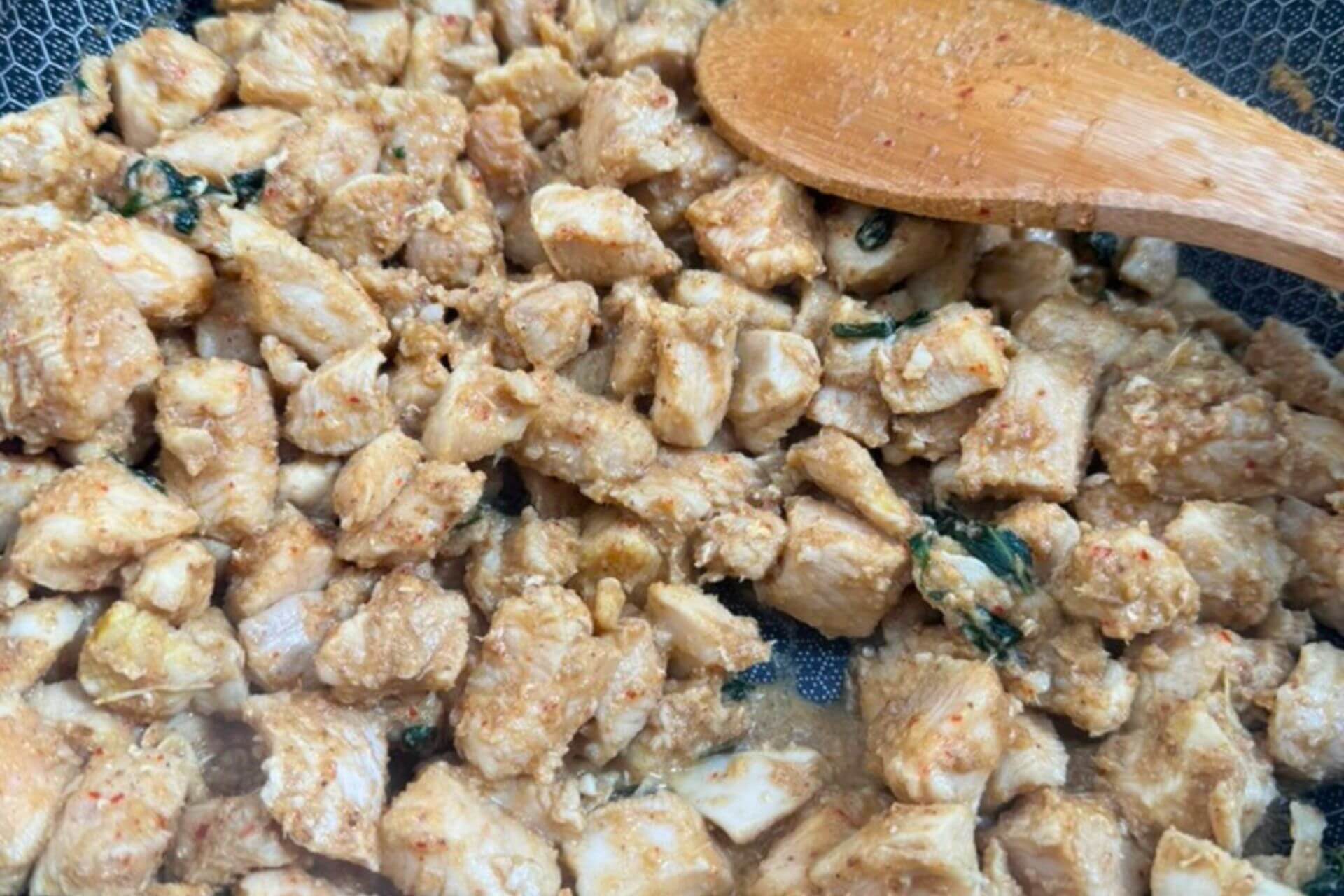
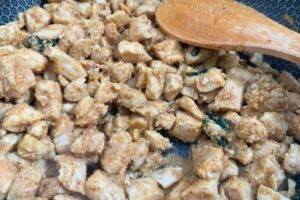
- Add the basil leaves (reserve a few for garnish), palm sugar, turmeric powder, and chicken cubes. Cook over medium heat for 5-6 minutes, stirring the wok intermittently.
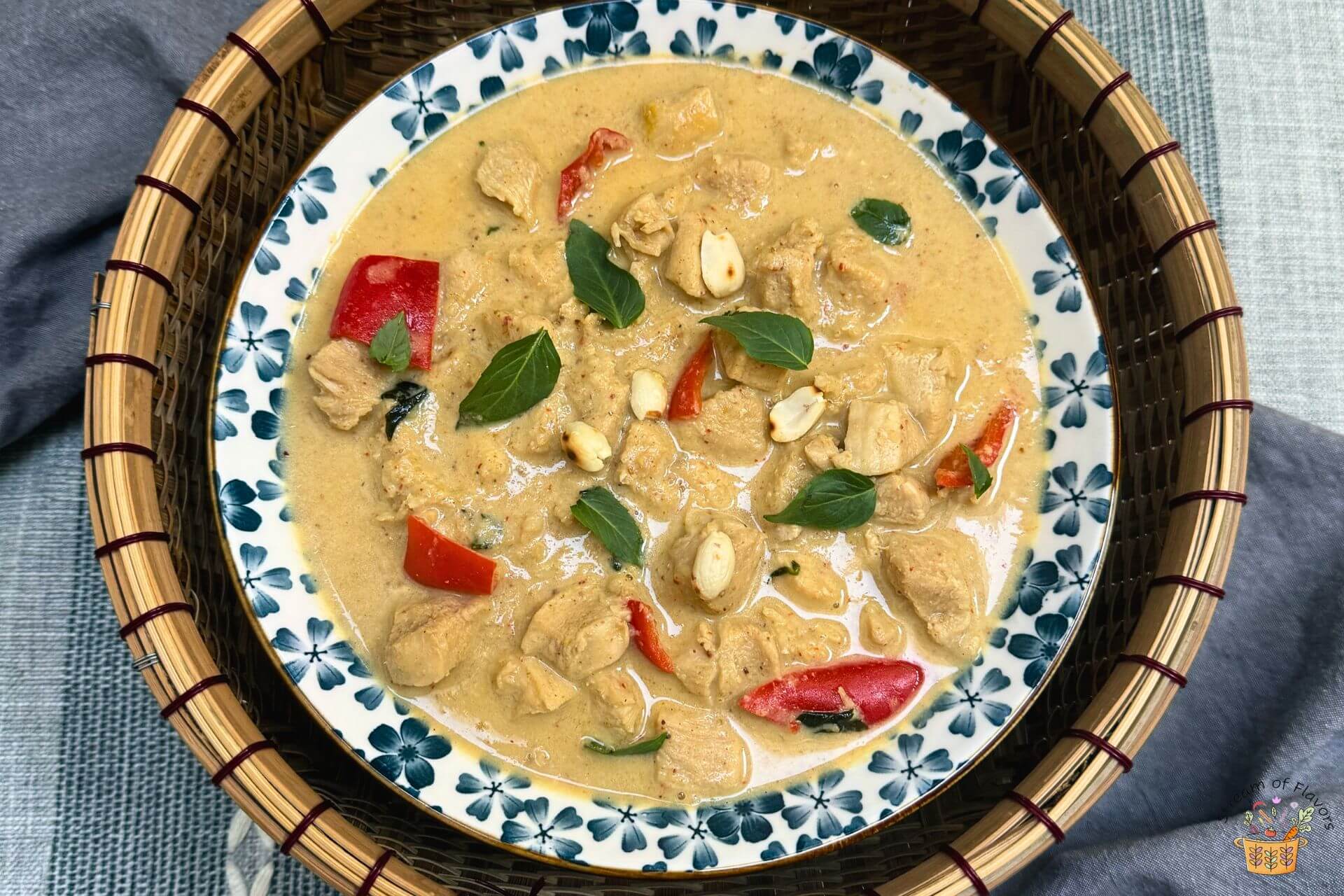
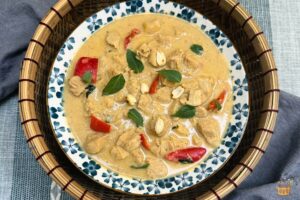
- Add the fresh coconut milk, torn kaffir lime leaves, red pepper, crushed peanuts, and season with fish sauce. Bring to a boil, and then let it simmer for 3-4 minutes or until the gravy reaches the desired consistency. Fish out the kaffir lime leaves and turn off the heat. Ladle the Panang Chicken Curry into a bowl and serve hot, garnished with basil leaves and/or crushed peanuts.
Tips:
1. The spice paste must be as smoothly ground without any chunks. Grinding in a stone mortar and pestle enhances the flavor of the paste and, by extension, the curry. Store-bought curry pastes need not be fried in coconut oil; instead, they can be added directly after the coconut milk.
2. To thicken the curry, simmer for longer; the gravy will thicken from evaporation, or add more water or coconut milk to dilute it. Add coconut cream if you want to thicken it some more.
3. If you cannot find kaffir or makrut leaves, which have a very distinct flavor, use some tamarind pulp and lime zest.
Serving suggestions:
Serve this Panang Chicken Curry hot with steamed rice or rice cakes, along with a side of vegetables.
Storage:
Leftover Panang Chicken Curry can be refrigerated for 2-3 days or frozen for three months in airtight containers. Reheat the curry by thawing it at room temperature and gently heating it in a pot. Splash 1-2 tablespoons of water, then reheat with a lid on until the curry reaches a rolling boil.
Other gravy/curry recipes that you might like:
Panang Chicken Curry Recipe
Equipment
- Wok
- spice grinder
Ingredients
For the spice paste:
- 1 tsp white peppercorn
- 2 cilantro root optional
- 5 dried red chili deseeded
- 2 tsp coriander seeds
- 1½ tsp cumin seeds
- 1½ tbsp galangal peeled, chopped
- 1 shallot chopped
- 3 clove garlic
- 1 stick cinnamon
- 5 clove
- 2 tsp salt
For the curry:
- 1 tbsp coconut oil
- 2¼ lb chicken breast
- 4 sprig Thai basil leaves
- 8 kaffir lime leaves
- 2 tsp palm sugar
- ¼ tsp turmeric powder
- 3½ cup coconut milk
- ¾ cup roasted peanuts crushed
- 1 red pepper
- 1½ tsp fish sauce
Instructions
How to make the spice paste:
- Prepare the ingredients for the spice paste.
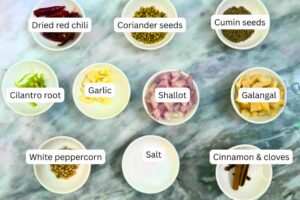
- Place the ingredients in a spice grinder. Add one tablespoon of water and grind it to a fine paste. Set it aside.
How to make the Panang Chicken Curry with my recipe:
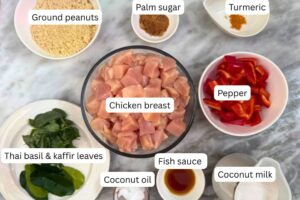
- Prepare the ingredients for the chicken curry. Grind the coconut kernel with warm water, then strain it for coconut milk, or use canned coconut milk. Trim any fat and chop the chicken breasts into bite-sized cubes. Roast raw peanuts in a pan, remove the skin, and set them aside or use store-bought roasted peanuts.
- Heat a wok, add the coconut oil and the spice paste. Sauté for 1-2 minutes or until fragrant over medium heat.
- Add the basil leaves (reserve a few for garnish), palm sugar, turmeric powder, and chicken cubes. Cook over medium heat for 5-6 minutes, stirring the wok intermittently.
- Add the fresh coconut milk, torn kaffir lime leaves, red pepper, crushed peanuts, and season with fish sauce. Bring to a boil, and then let it simmer for 3-4 minutes or until the gravy reaches the desired consistency. Fish out the kaffir lime leaves and turn off the heat. Ladle the Panang Chicken Curry into a bowl and serve hot, garnished with basil leaves and/or crushed peanuts.
Notes
Nutrition



0 Comments