
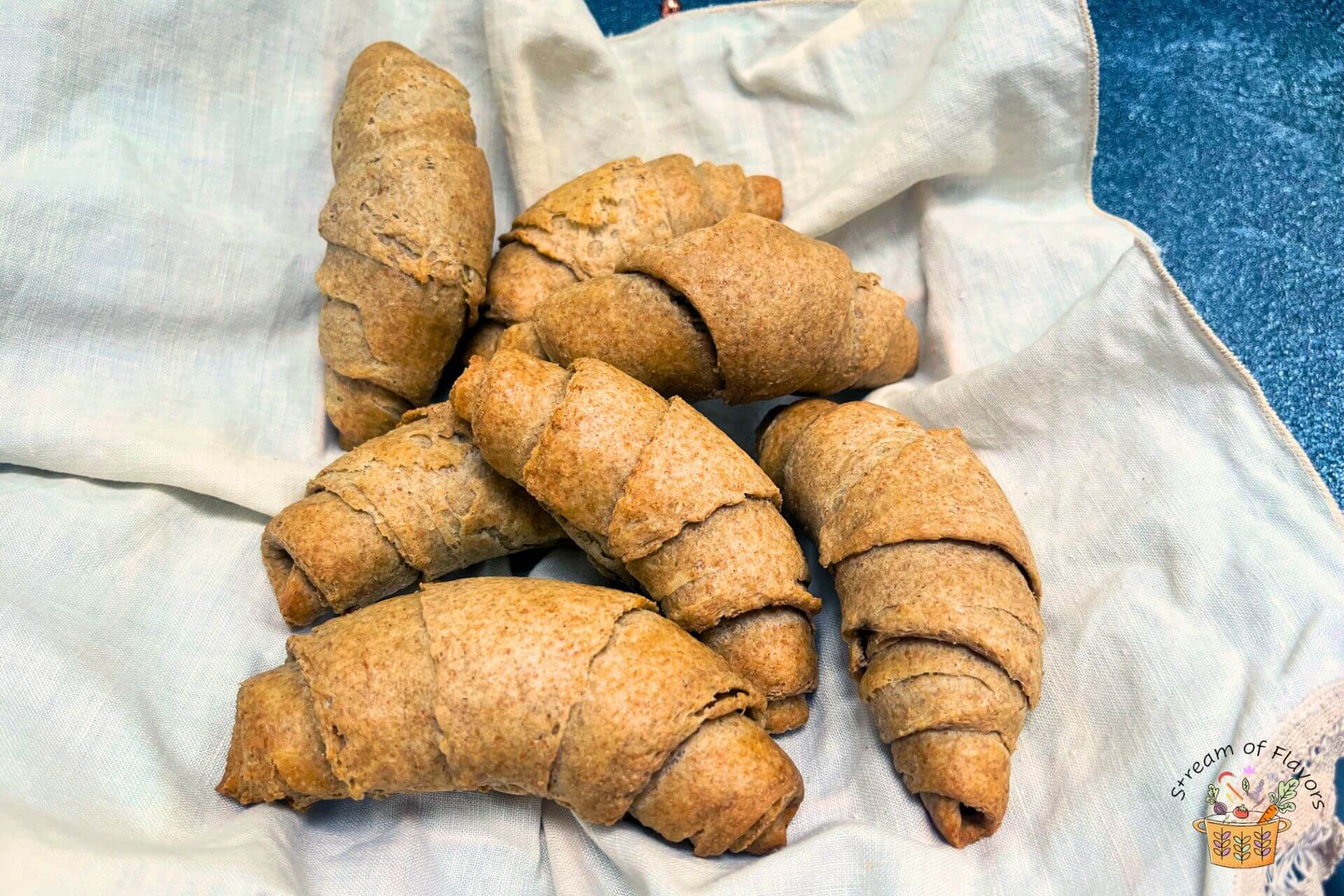
Whole Wheat Croissants are crafted with a nourishing blend of golden whole wheat and spelt flour. These croissants are flaky and tender, with a deeply satisfying taste from the naturally rich, nutty whole-grain flavor. This recipe uses unsalted butter and milk that help yield buttery layers. It focuses on a simple method for rolling croissants with no complicated steps, resulting in a mindful breakfast option!
There is nothing more satisfying than warm, Whole Wheat Croissants served with hot coffee for breakfast. Over the years, through my travels to France and research into French cookbooks, I have worked to master the techniques for making excellent Whole Wheat Croissants at home. In this post, I will demystify how to make croissants that delight your palate.
Origin of croissants:
While more commonly associated with French cuisine, croissants can be traced to 13th-century Austrian cuisine. Known as kipferl, they were made in various shapes and served plain or filled with nuts. In the early 19th century, an Austrian military officer, August Zang, founded a bakery in Paris that served kipferl. So popular was kipferl, that French bakers adapted this to become the lighter ‘croissant’ that we now celebrate throughout the world. Croissant in French means ‘crescent’ or ‘crescent of the moon’.
Characteristics of good croissants:
French bakeries (no surprise there) have traditionally made the best croissants. Each step in the croissant-making process is precise and controlled. From using French soft wheat pastry flour called farine de gruau to using butter with a fat content of 85-87%, these commercial facilities are temperature- and humidity-controlled and operate on precise schedules.
- Croissants must be puffy, airy, light, yet with a sturdy structure.
- The crust must be crumbly; biting into a croissant should yield a few crumbs.
- Croissants should be flaky- it is puff pastry that can be taken apart into flakes.
- They must taste buttery, so don’t spare the butter.
- The layers must be springy.
While there are various methods for making croissants, the method below is straightforward. It does not include the traditional lamination method, in which a square slab of butter is folded, rolled, and turned several times to create many layers. However, this method will still yield most of the characteristics mentioned above; however, the Whole Wheat Croissants will not be as light or springy as those made with refined flour. Nevertheless, these Whole Wheat Croissants will have delicate layers with a wholesome feel. It is a diabetic-friendly option when enjoyed in moderation.
Frequently Asked Questions:
- What gives the croissants their flakiness?
- Croissants are made with a lot of butter. When they are baked, the butter melts, generating steam from the oven’s heat. The steam is trapped between the layers of pastry, causing the pastry to flake.
- Which kind of butter is good for Whole Wheat Croissants?
- European butter, with a high fat content, is best suited for making Whole Wheat Croissants. I always use butter from France, Germany, Ireland, or Finland, with an 80-85% fat content, for my baked goods.
- Which flour can I substitute for the whole wheat and spelt flours?
- The French use pastry flour (T45) for making croissants. All-purpose or bread flour will result in delicate croissants.
This post may contain affiliate links. As an Amazon Associate, I earn from qualifying purchases at no extra cost to you.
If you’ve tried this recipe or have questions, I would love to hear from you. Please feel free to share (below) your thoughts, comments, or any questions that you might have. And if you like my recipes, you can subscribe to my mailing list for the latest recipes delivered to your inbox. From my pen to your table, Bon Appétit!
Ingredients:
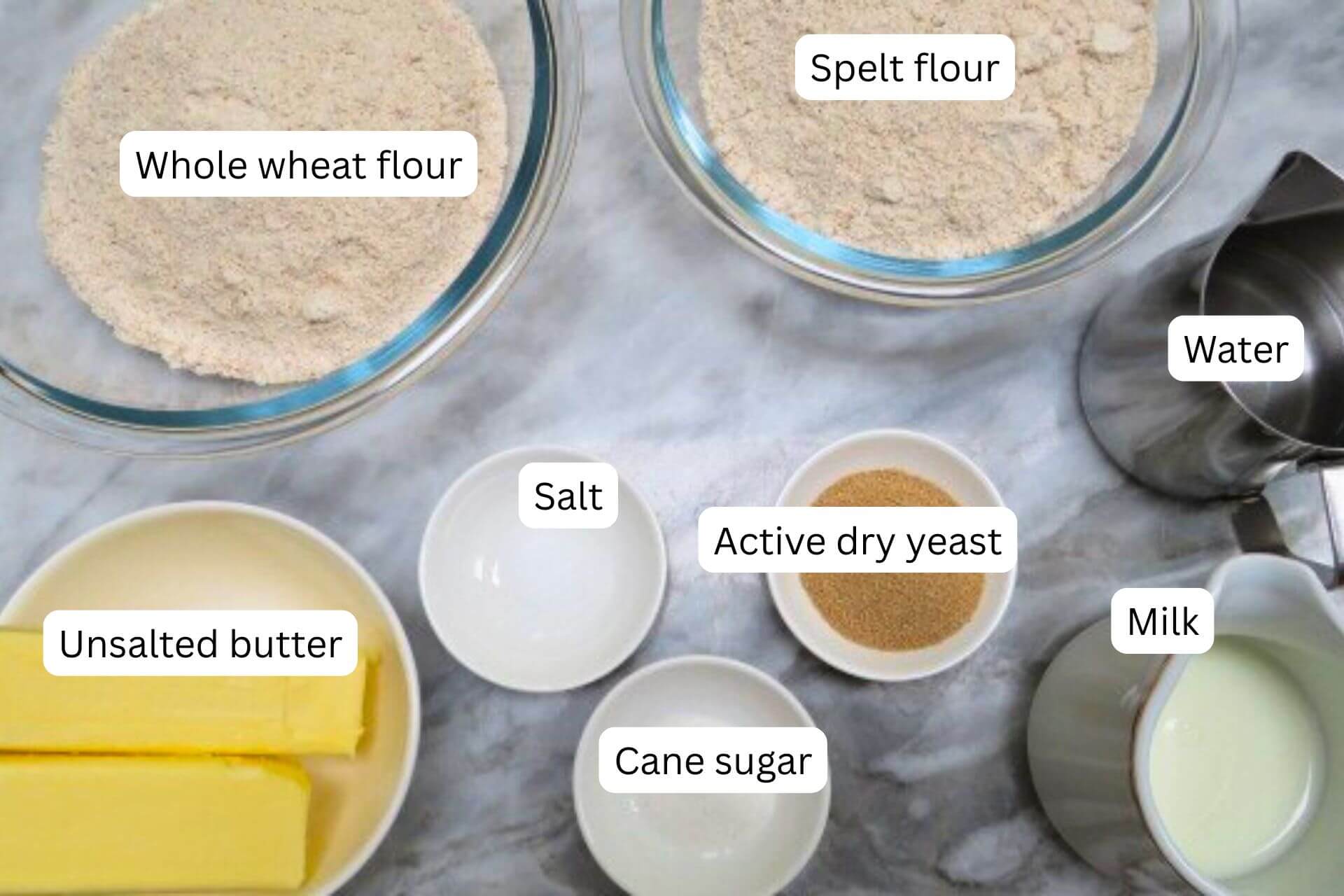
- Flour: golden whole wheat flour, spelt flour
- Unsalted butter
- Liquids: warm milk, warm water
- Active dry yeast
- Cane sugar (or use honey)
Here are the step-by-step instructions for making this dish. For the measurements, please refer to the recipe card below.
How to make Whole Wheat Croissants:
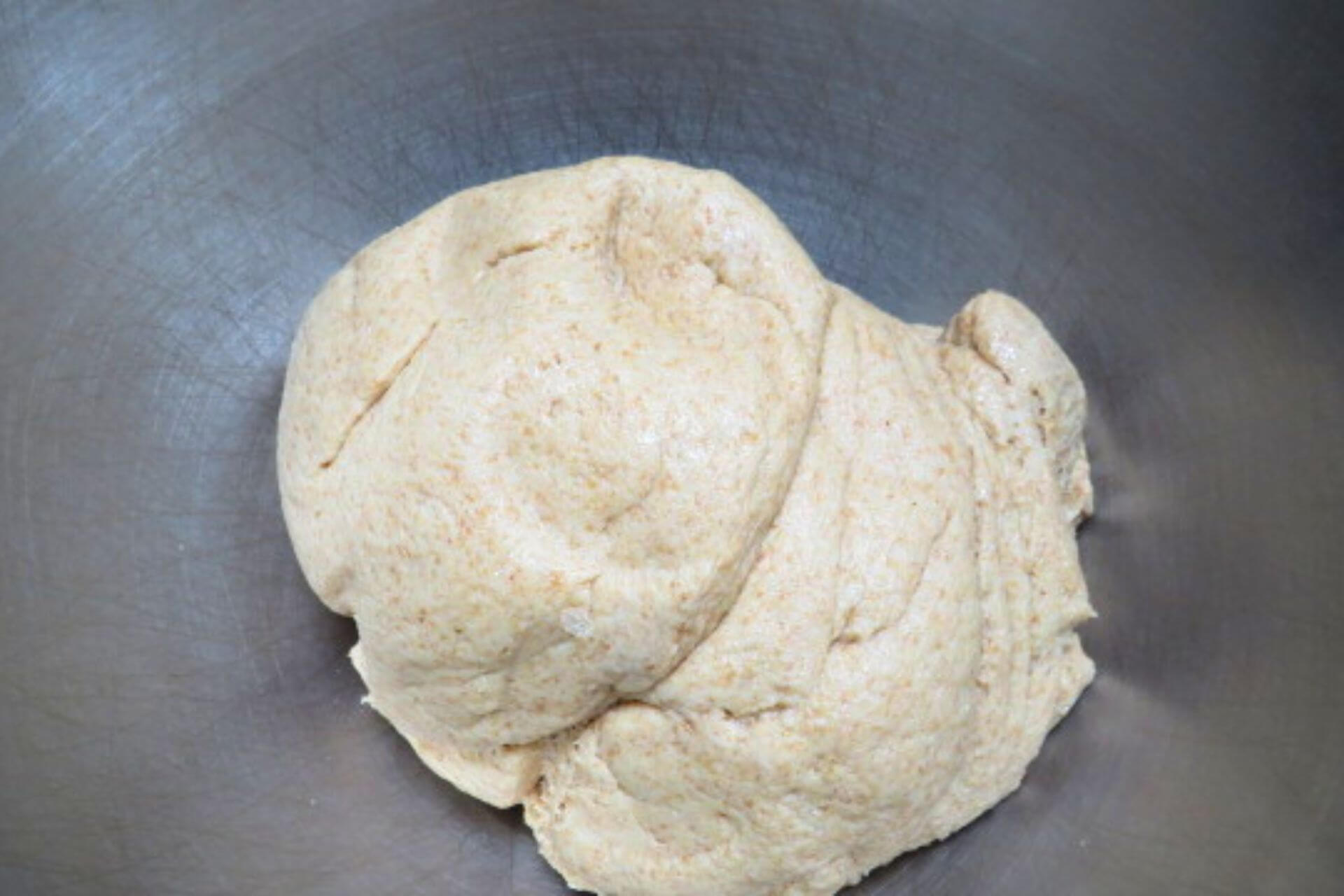
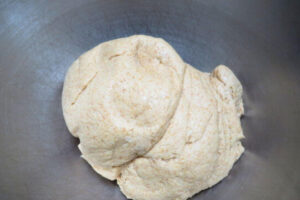
- Place the whole wheat and spelt flours, salt, and half the butter in a stand mixer. Use the dough hook to mix the ingredients until the mixture resembles bread crumbs. In a small bowl, whisk the warm milk, warm water, sugar, and yeast with a fork for a minute. Add the yeast mixture to the flour and knead for 3-5 minutes or until smooth and elastic. Cover the bowl with a damp towel and let it proof for 20 minutes in a warm area in the kitchen.
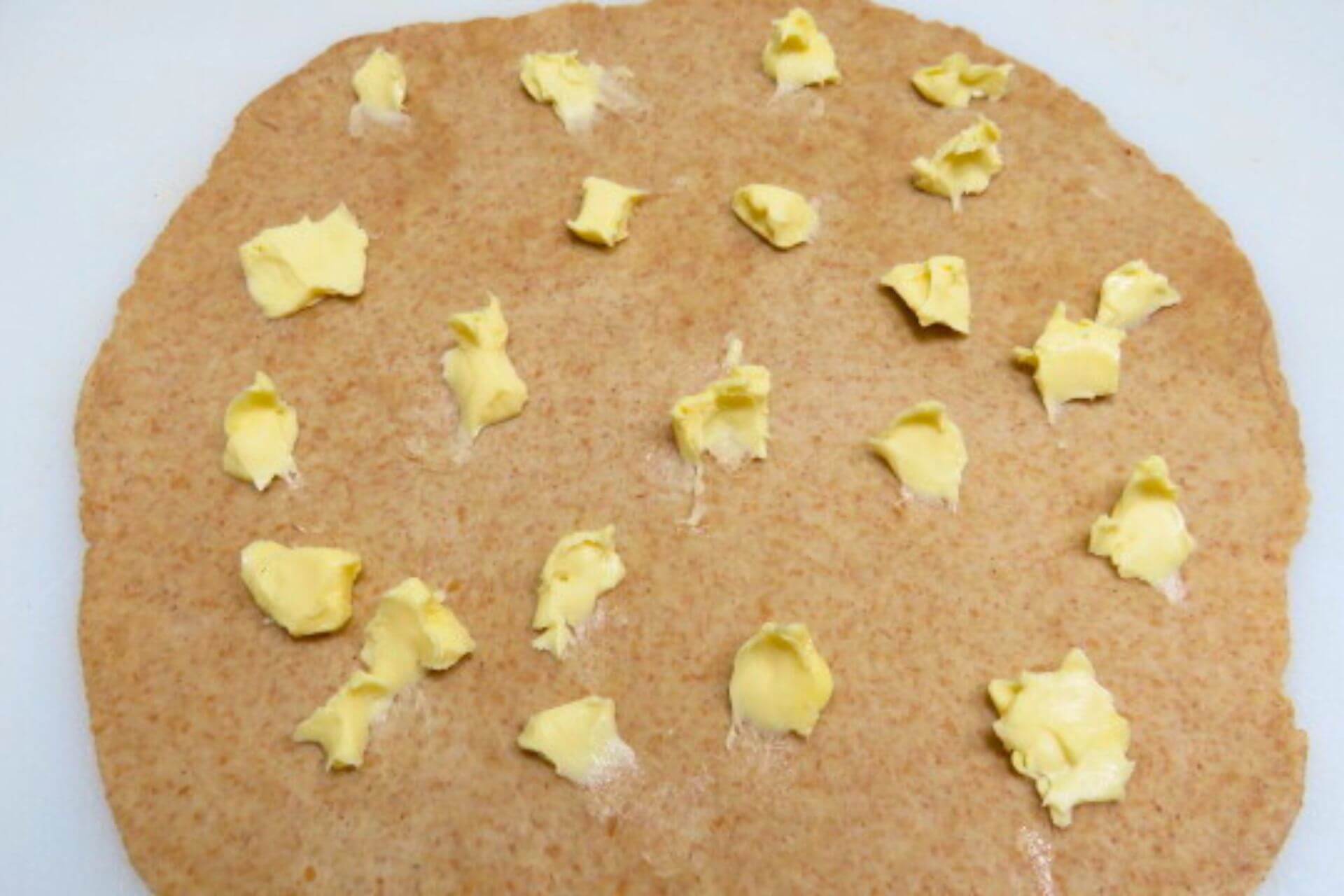
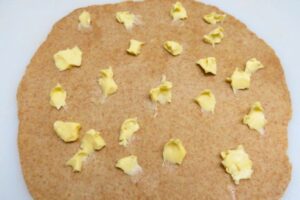
2. Divide the dough into five portions and roll each portion into a 9″ disc. Cut the remaining butter into small pieces. Use a fourth of the butter and place the bits on the first disc. Repeat this step until all the discs are used, ending with a disc without any butter on top.
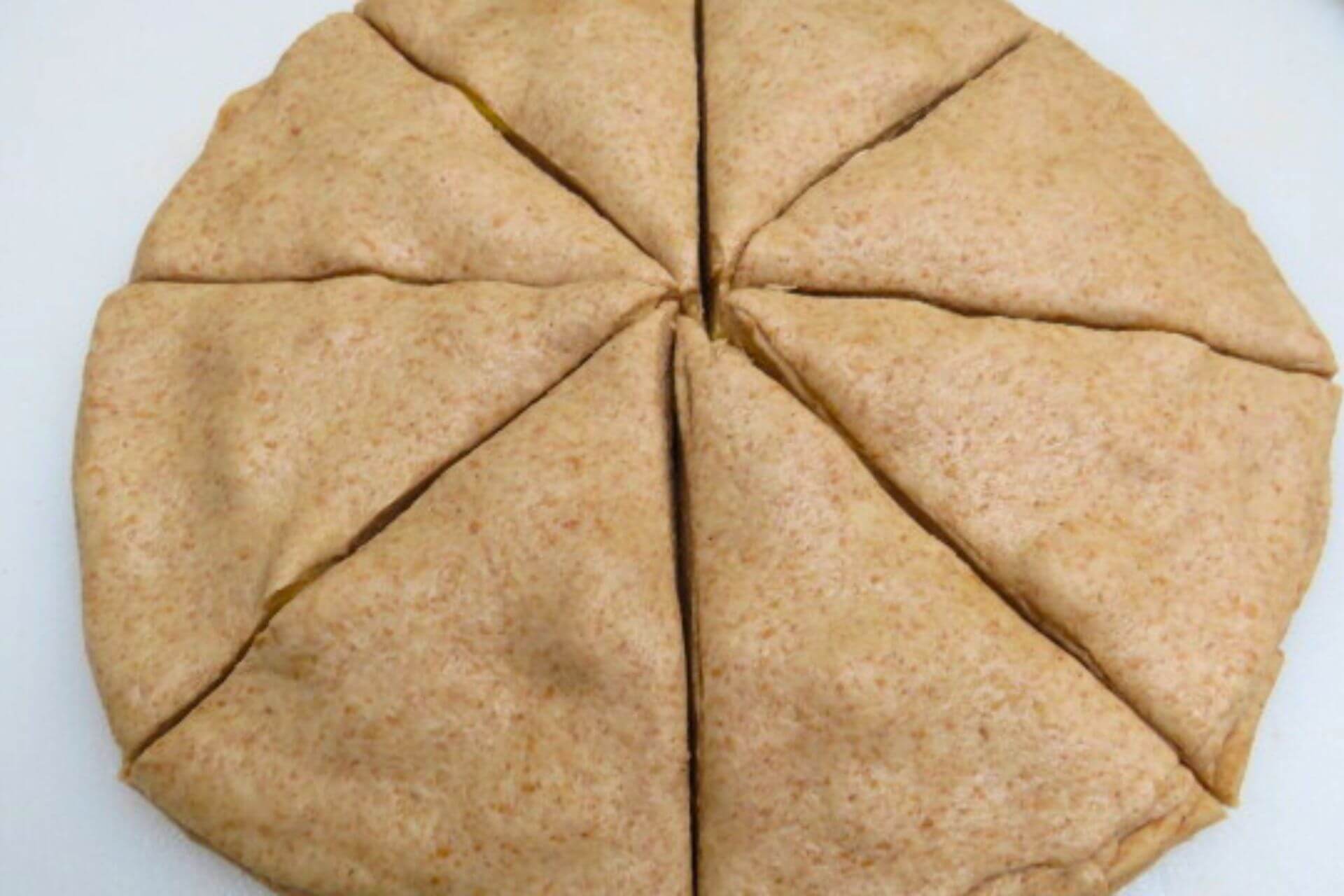
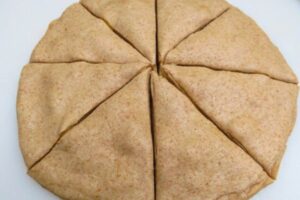
3. Use a sharp knife to cut the stack of discs into eight triangles.
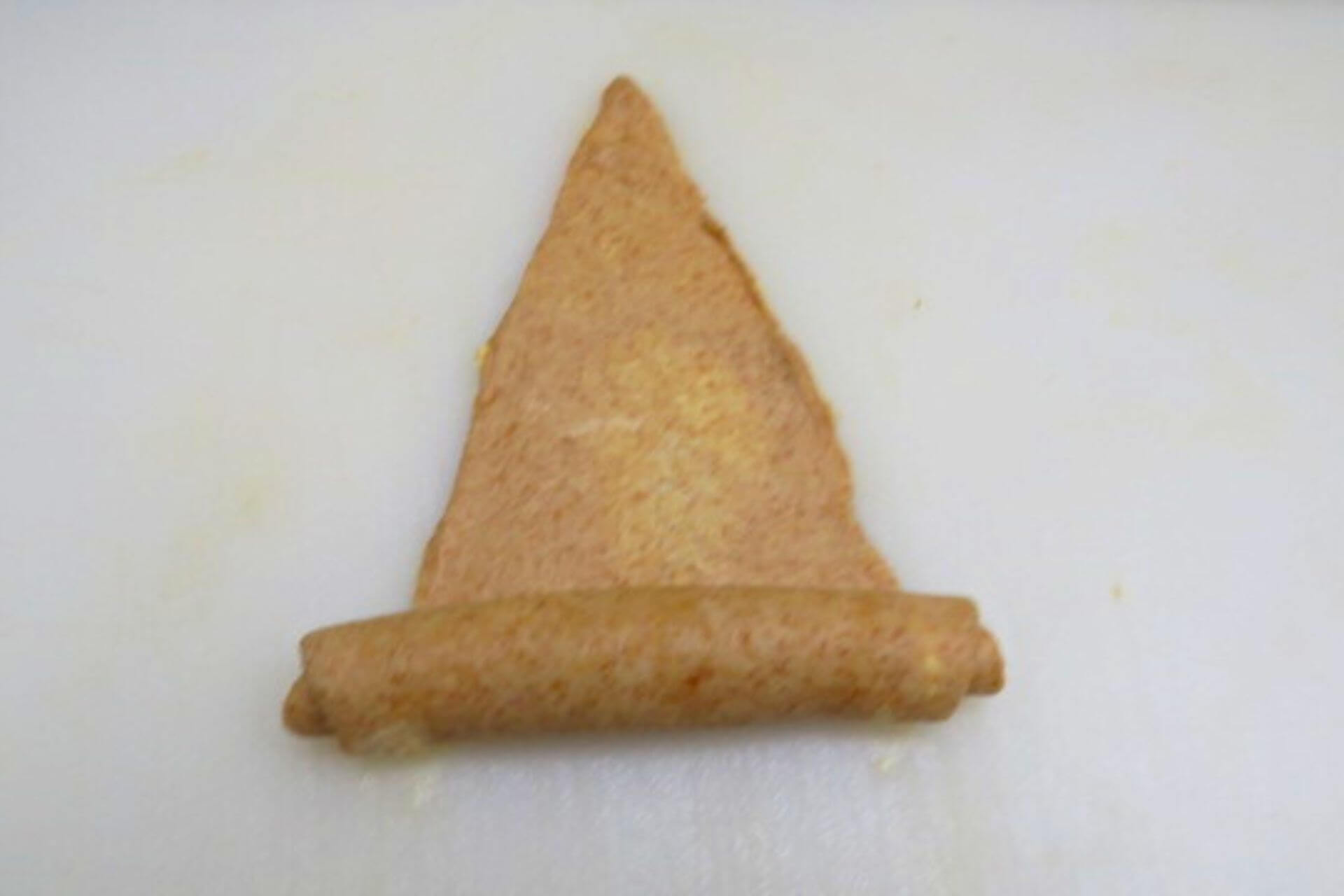
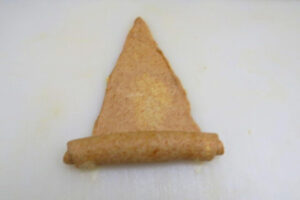
4. Roll each triangle 10-11″ long, starting from the base.
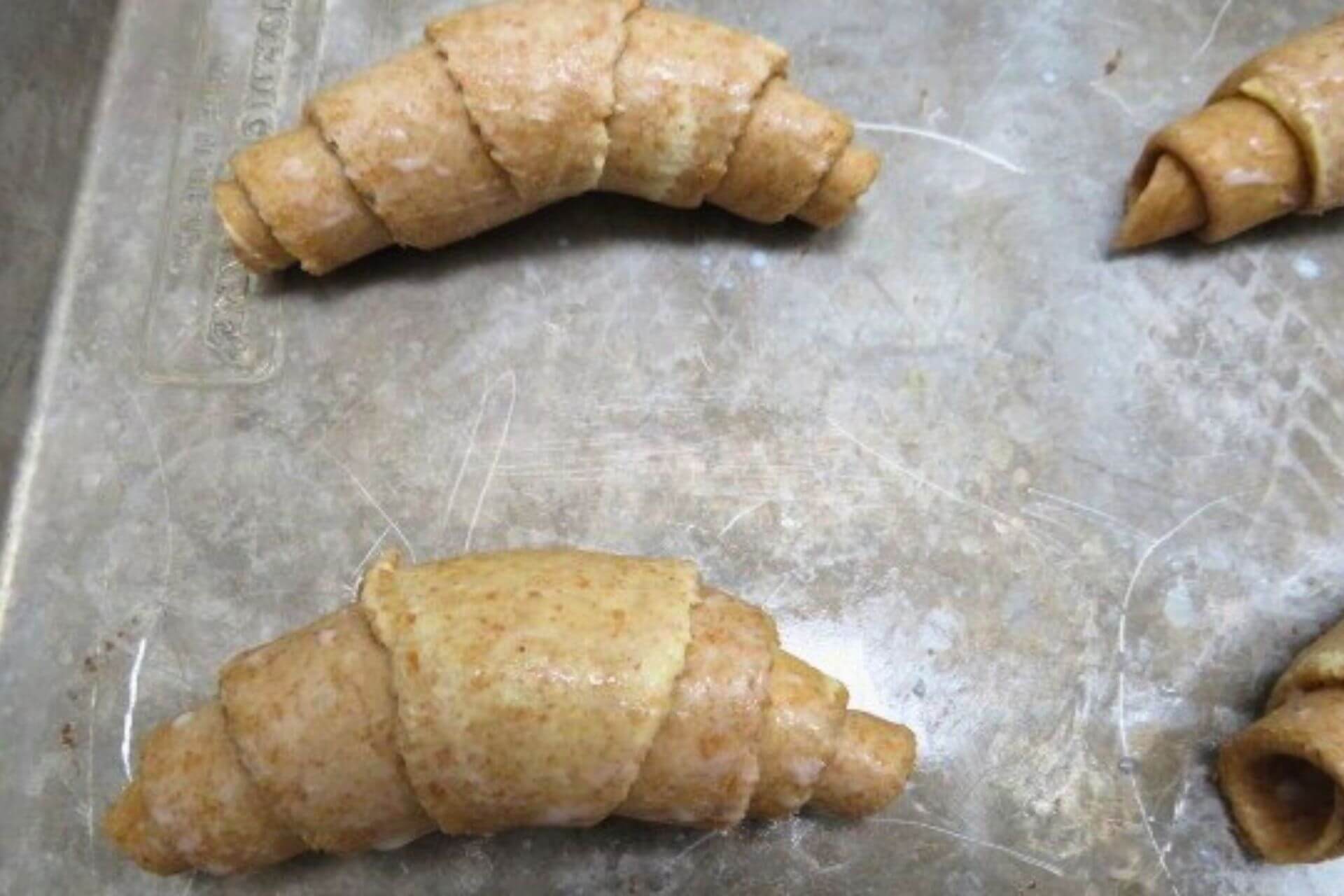
5. Brush the top with milk or egg wash and place the Whole Wheat Croissants on a greased tray, leaving 1-2″ space between them.
6. Bake the Whole Wheat Croissants and serve them warm with jam.
Tips:
- Use high-quality whole wheat and spelt flours for these Whole Wheat Croissants to help the dough withstand the rolling and shaping required.
- The choice of butter with a high fat content. European butter does not crack or split during rolling, lends a rich flavor, and helps croissants puff up with a clear definition of the layers.
- The temperature of your kitchen should be warm when making the dough and cool when rolling it. I ensure my room temperature is conducive to yeast rising without melting the butter while rolling.
- Baking Whole-Wheat Croissants at a high temperature, then reducing the heat and baking again, helps them develop a crumbly exterior and a somewhat soft interior.
- Rolling the dough into a thin, elongated triangle yields more layers as you roll from the base up.
- Keep the dough cold and roll quickly to prevent the butter from melting.
- Finally, when cutting the pastry dough for each croissant, use a sharp knife or pastry cutter to make a straight cut, and do not drag or tear any of the layers. Clean-cut pastry will yield perfectly looking croissants.
- Brush the pastry with an egg wash made with egg yolk and cream, or with cream alone, carefully on the surface and not on the layers, to prevent the open layers from sticking together.
Serving suggestion:
Serve the Whole Wheat Croissants with butter and sugar-free jam or chocolate spread. Warm them in the oven on the lowest setting, then serve them with coffee or tea. They can be served as sandwiches with avocado or eggs.
Storage:
Baked Whole Wheat Croissants can be refrigerated in boxes for 4-5 days or frozen in airtight boxes for up to 3 months.
Other bread/breakfast recipes that you might like:
Whole Wheat Croissants
Equipment
- 1 Baking tray
- 1 Oven
Ingredients
- 4 oz golden whole wheat flour
- 4 oz spelt flour
- ¼ tsp salt
- ¼ oz yeast active dry
- ½ tsp cane sugar (or honey)
- ¼ cup warm milk
- 6 tbsp warm water
- 4 oz unsalted butter
Instructions
- Measure the ingredients.
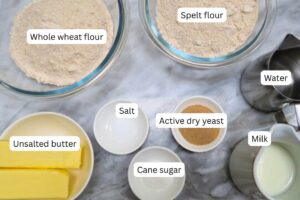
- Place the whole wheat and spelt flours, salt, and half the butter in a stand mixer. Use the dough hook to mix the ingredients until the mixture resembles bread crumbs. In a small bowl, whisk the warm milk, warm water, sugar, and yeast with a fork for a minute. Add the yeast mixture to the flour and knead for 3-5 minutes or until smooth and elastic. Cover the bowl with a damp towel and let it proof for 20 minutes in a warm area in the kitchen.
- Preheat the oven to 425 degrees F.Divide the dough into five portions and roll each portion into a 9" disc. Cut the remaining butter into small pieces. Use a fourth of the butter and place the bits on the first disc. Repeat this step until all the discs are used, ending with a disc without any butter on top.
- Use a sharp knife to cut the stack of discs into eight triangles.
- Roll each triangle 10-11" long, starting from the base.
- Brush the top with milk or egg wash and place the croissants on a greased tray, leaving 1-2" space between them.

- Bake the Whole Wheat Croissants for 5 minutes and then lower the temperature to 375 degree F and bake for 12-14 minutes or utnil golden.

Notes
- Use high-quality whole wheat and spelt flours for these Whole Wheat Croissants to help the dough withstand the rolling and shaping required.
- The choice of butter with a high fat content. European butter does not crack or split during rolling, lends a rich flavor, and helps croissants puff up with a clear definition of the layers.
- The temperature of your kitchen should be warm when making the dough and cool when rolling it. I ensure my room temperature is conducive to yeast rising without melting the butter while rolling.
- Baking Whole-Wheat Croissants at a high temperature, then reducing the heat and baking again, helps them develop a crumbly exterior and a somewhat soft interior.
- Rolling the dough into a thin, elongated triangle yields more layers as you roll from the base up.
- Keep the dough cold and roll quickly to prevent the butter from melting.
- Finally, when cutting the pastry dough for each croissant, use a sharp knife or pastry cutter to make a straight cut, and do not drag or tear any of the layers. Clean-cut pastry will yield perfectly looking croissants.
- Brush the pastry with an egg wash made with egg yolk and cream, or with cream alone, carefully on the surface and not on the layers, to prevent the open layers from sticking together.
Nutrition







0 Comments