
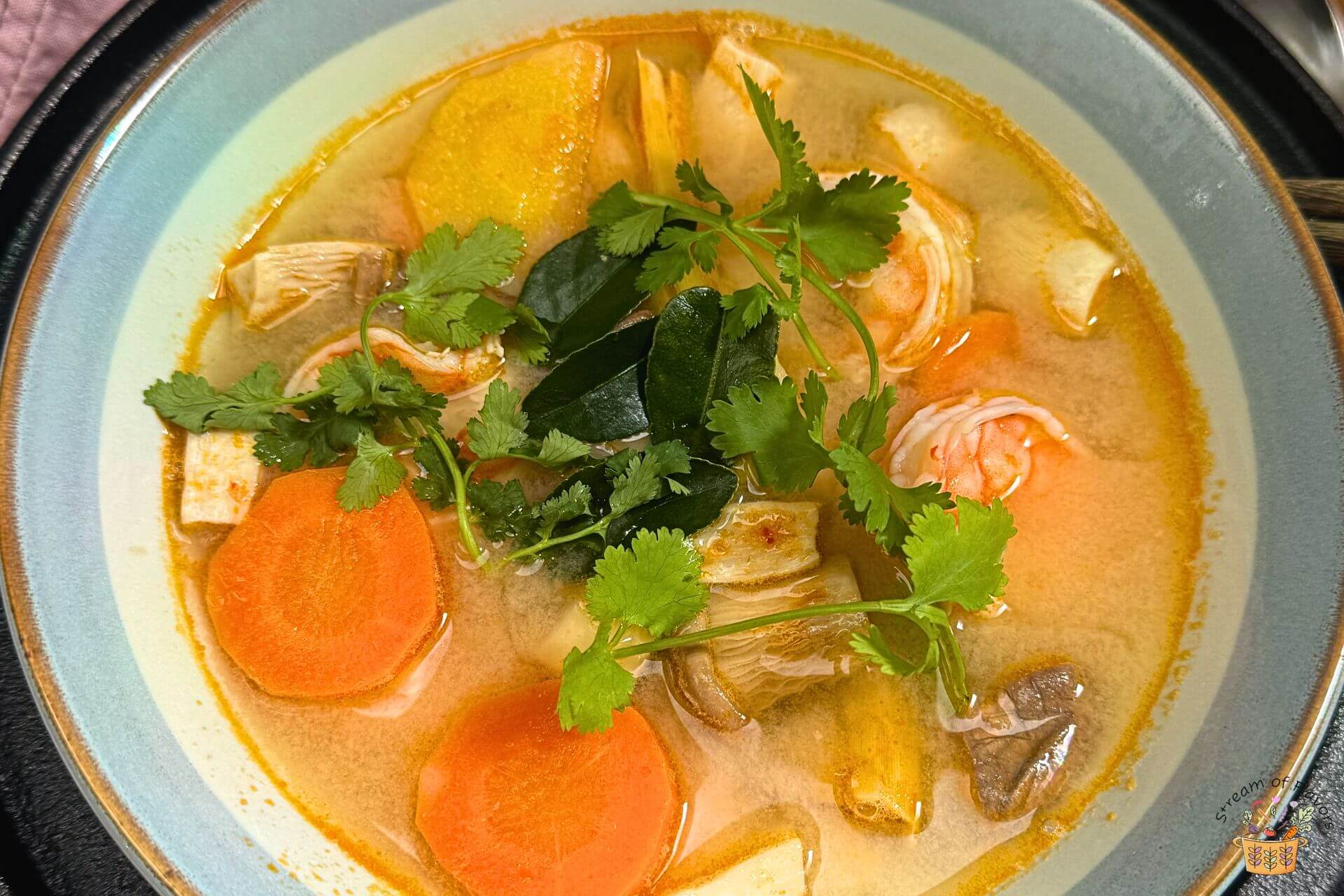
Tom Yum Goong Recipe is a deeply aromatic soup layered with bold Thai flavors. Freshly ground Thai fiery red chilis are blended with cilantro roots, then sautéed with pounded lemongrass, sliced galangal, and fragrant shallots to create a rich base. Homemade shrimp stock deepens the flavors, where each ingredient plays a part. Galangal adds a peppery warmth, oyster mushrooms and carrots soak up the tangy-spicy broth, and tamarind pulp rounds out the sourness. Shrimp is cooked until tender, adding natural sweetness, while kaffir lime leaves and a splash of lime juice add a lift of citrusy brightness. The result is a hot, sour, sweet, and savory soup that tastes great when served hot with a scattering of fresh cilantro. A steaming bowl of this mouthwatering soup will surely awaken every sense!
Tom Yum Goong recipe brings back a fair share of memories from our travels to Thailand. No one should underestimate the fresh, robust, and complex flavors of this soup, nor should one expect there to be only two versions of it. Every country brings its own spin to this wonderful platform dish.
Origin:
Like most Asian dishes, the Tom Yum Goong is ancient but poorly documented, relying instead on oral tradition. Believed to have originated in Central Thailand on the banks of the Chao Phraya River, where shrimp is abundant, the first written record in Thai dates back to 1888. It is called Snakehead Fish Tom Yum. The first mention of shrimp in the Tom Yum is from 1897, from an American missionary in a recipe titled “Tom Yum Goong With Additional Garnish”.
From its humble beginnings on the banks of the Chao Phraya, this dish has become a superstar Thai food ambassador, beloved the world over. But as it traveled, so did the ingredients. While shrimp may have been its origin, I have seen a variety of proteins added to it. Some of them aren’t meat-based at all, most notably the use of mushrooms, especially shiitake, straw, and oyster mushrooms. Sometimes, adding coconut milk softens the dish’s spicy profile and offers another variation on the theme.
What is Tom Yum Goong?
The phrase “tom yum” is a kind of portmanteau because “Tom” refers to the boiling process, while “yum” refers to a famous spicy and sour salad. Goong means prawn or shrimp. So it is essentially a hot-and-sour soup with shrimp. The signature rich red-yellow-orange colors give fair warning to the spicy, savory nature of this dish. A fragrant herbal blend of lemongrass, chili, galangal, kaffir lime leaves, shallots, lime juice, and fish sauce shapes the flavor profile and gives it the legendary kick.
Frequently Asked Questions:
1. Is the Tom Yum Goong recipe spicy?
You can adjust the spiciness of this dish by adding more or less of the chili paste.
2. What does this soup taste like?
It is a hot-and-sour soup that is light and fragrant. It is sour from the lime juice, spicy from the red chilis, salty from the fish sauce, and fragrant with galangal, lemongrass, and kaffir lime leaves.
3. What protein can I substitute for the shrimp?
Tom Yum Gai is made with chicken. Other substitutions for the shrimp include mixed seafood or a vegetarian option with tofu.
This post may contain affiliate links. As an Amazon Associate, I earn from qualifying purchases at no extra cost to you.
If you’ve tried this recipe or have questions, I would love to hear from you. Please feel free to share (below) your thoughts, comments, or any questions that you might have. And if you like my recipes, you can subscribe to my mailing list for the latest recipes delivered to your inbox. From my pen to your table, Bon Appétit!
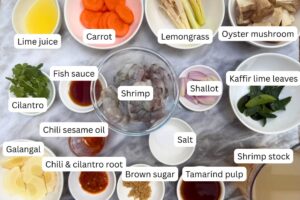
Ingredients:
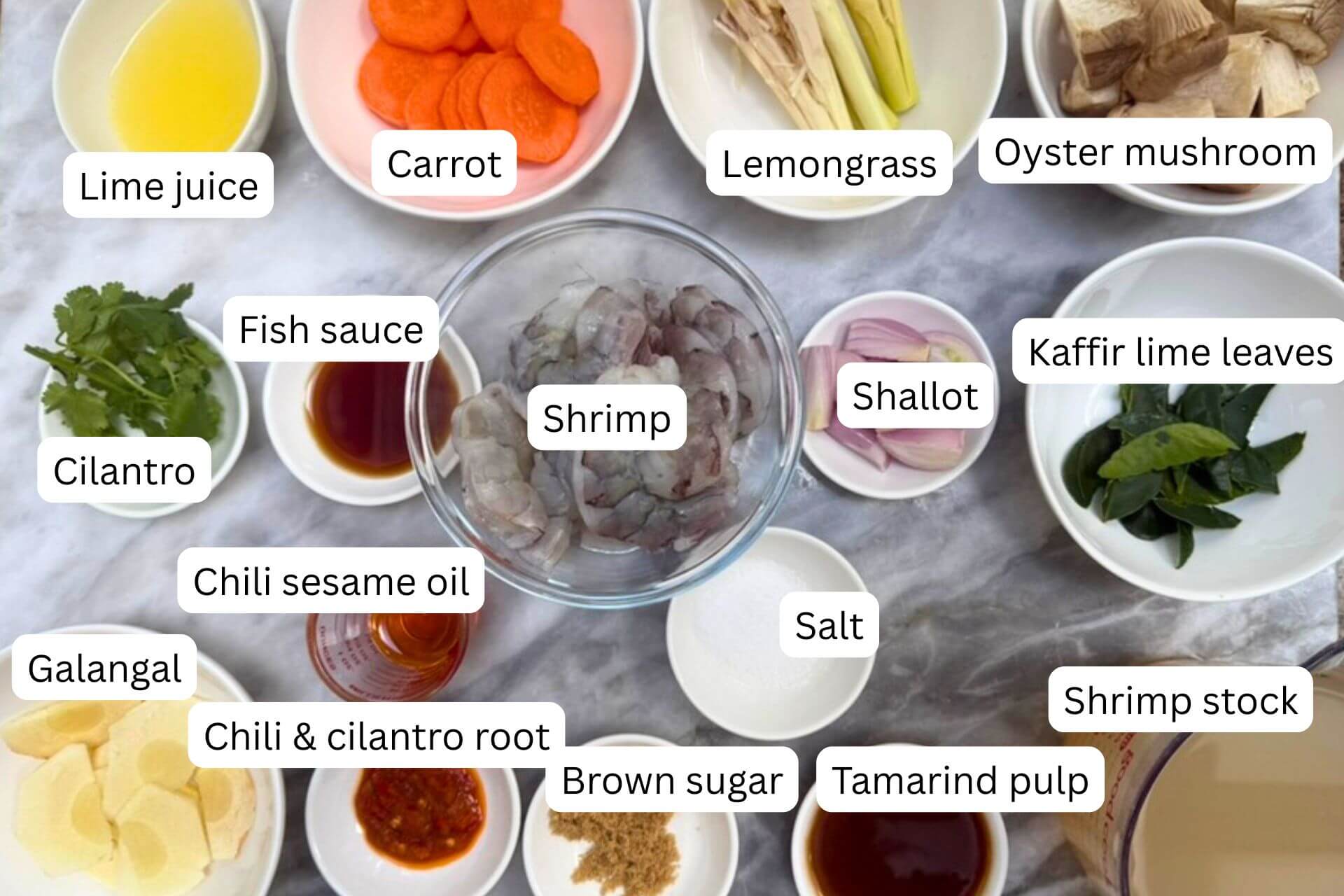
- Chili sesame oil (or use sesame oil)
- Shrimp stock
- Aromatics: shallot, galangal, lemongrass, Thai red chili, cilantro root or stalks
- Shrimp
- Herbs: kaffir lime leaves, cilantro
- Tamarind pulp
- Oyster mushrooms (or use button mushrooms)
- Fish sauce
- Carrot (optional)
- Brown sugar
- Lime juice
Here are the step-by-step instructions to make this dish. For the measurements, please refer to the recipe card below.
How to make Tom Yum Goong with my recipe:
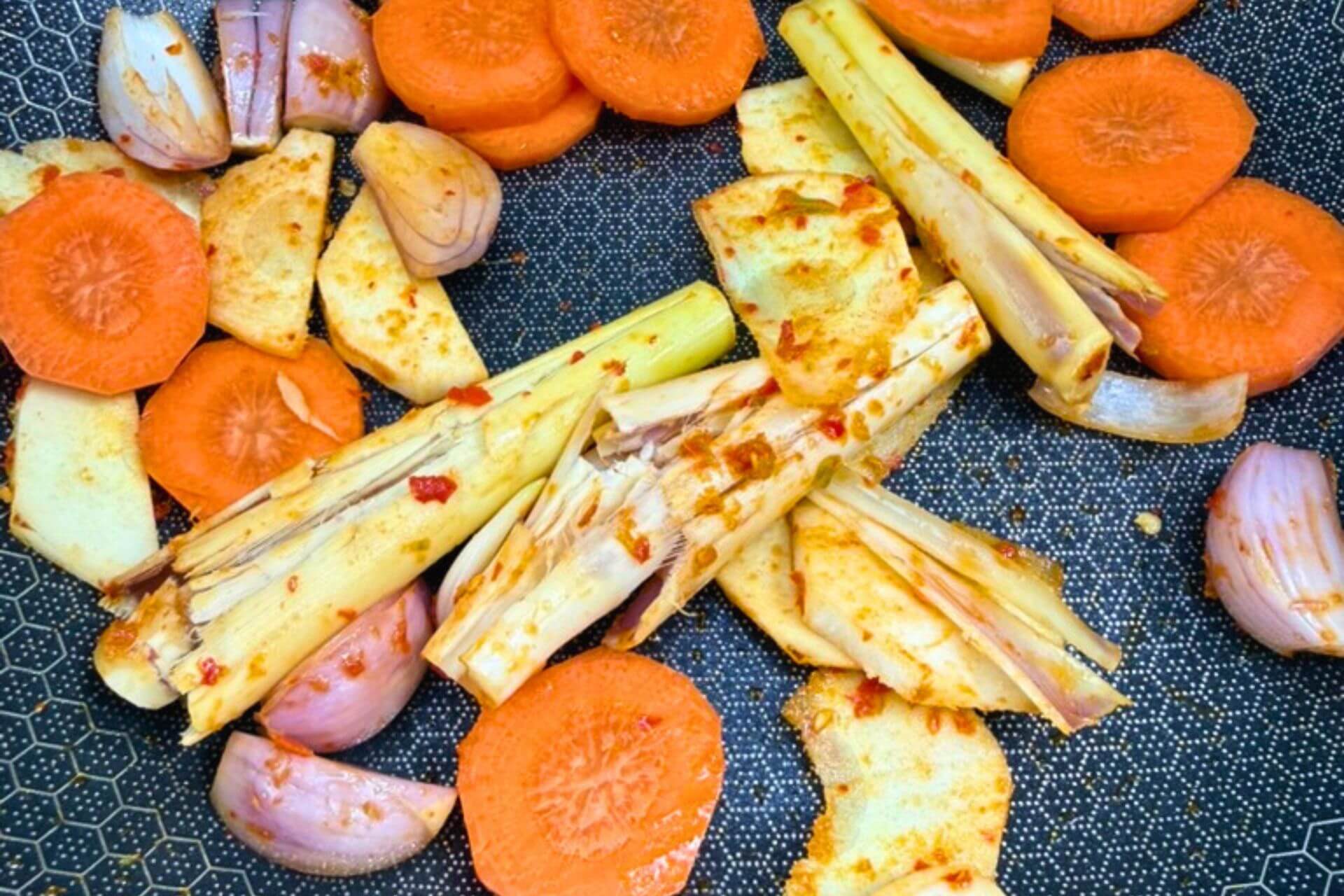
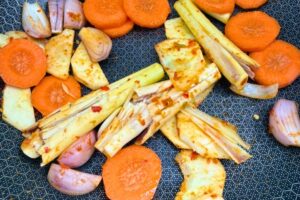
- Heat a wok with the chili sesame oil. Add the chili-cilantro root paste, galangal slices, shallot, lemongrass, and carrot. Sauté them for 2 minutes over medium heat.
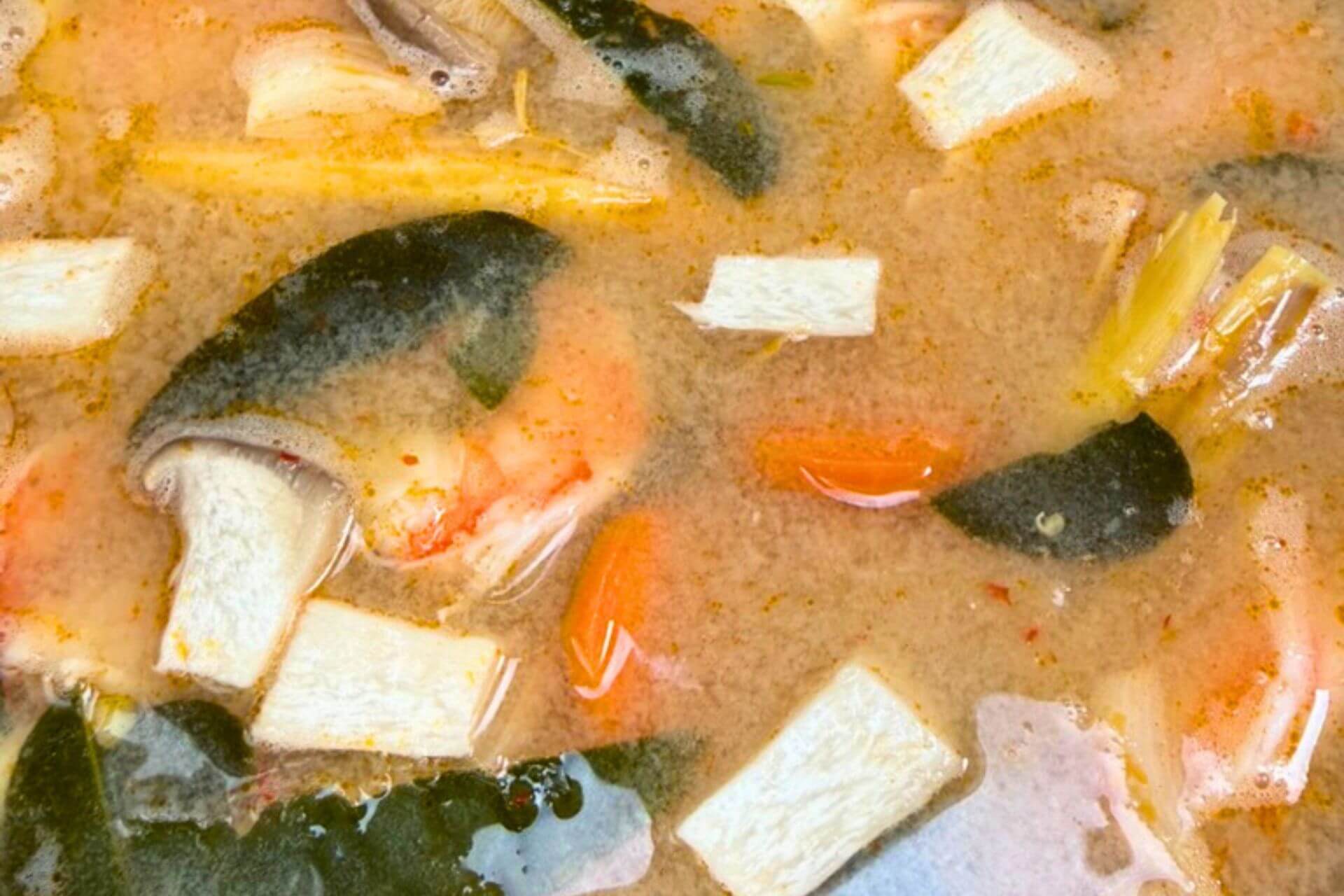
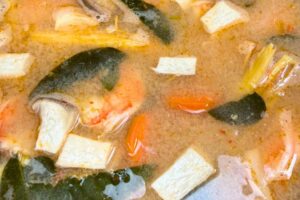
2. Pour the cooked shrimp stock, and add the oyster mushrooms, tamarind pulp, kaffir lime leaves, shrimp, salt, and brown sugar. Bring the stock to a rolling boil, and then cook for 1-2 minutes. Season with fish sauce. Turn off the heat and add the lime juice.
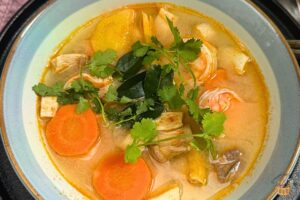
3. Serve hot, garnished with kaffir lime leaves and cilantro.
Tips:
- Boil the shrimp shells and/or heads in 4 cups of water until the water is reduced by half. This shrimp stock adds depth to the Tom Yum Goong recipe. This is an optional step, but I highly recommend it.
- Do not grind or pulverize the aromatics, but bruise them slightly with the back of a knife. Sauté the aromatics and carrot for 1-2 minutes to help release their oils. Large chunks or slices of aromatics will gently infuse the Tom Yum Goong soup with their flavors.
- Adjust the heat by adding more ground chili paste, balance the sourness by adding more of the lime juice, and season the soup with fish sauce. Taste and adjust the balance of flavors as you go.
- Do not overcook the shrimp.
- Mushrooms and carrots act like flavor sponges, soaking up the broth, so cook them for an additional 1-2 minutes after the soup comes to a rolling boil.
- Add the cilantro at the end to preserve its fresh aroma.
Serving suggestions:
Serve Tom Yum Goong hot, garnished with cilantro and kaffir lime leaves. Serve the soup on its own or with steamed rice. Drizzle a few drops of chili sesame oil. The aromatics are traditionally left in the soup, but you could fish them out if you like.
Storage:
Refrigerate any leftover soup for one day. This recipe for Tom Yum Goong soup does not allow for it to be frozen. It tastes best when consumed the same day.
Other soup recipes that you might like:
Tom Yum Goong Recipe
Equipment
- Wok
- spice grinder
Ingredients
- 1½ tsp chili sesame oil
- 4 Thai red chili ground
- 2 cilantro root optional
- 1 shallot
- 4 lemongrass white part crushed
- 1 inch galangal peeled, sliced
- 4 oyster mushroom
- 1 carrot peeled, sliced
- 2½ cup shrimp stock reduced from 4 cups
- 1 tbsp tamarind pulp
- 1 tsp brown sugar
- 8 kaffir lime leaves
- 1 tsp salt
- 2 tsp fish sauce
- 8 jumbo shrimp deveined (shells reserved for stock)
- 1½ tbsp lime juice
- 3 sprig cilantro garnish
Instructions
- Prepare the ingredients. To make the shrimp stock, boil the shrimp shells in a pot with 4 cups of water until the water reduces to half. Pound the lemongrass stalks (white part) with the back of your knife. Bruise or gently crush the kaffir lime leaves. Grind the Thai red chilis, cilantro root, and 2 teaspoons of water in a spice grinder and set it aside.
- Heat a wok with the chili sesame oil. Add the chili-cilantro root paste, galangal slices, shallot, lemongrass, and carrot. Sauté them for 2 minutes over medium heat.
- Pour the cooked shrimp stock, and add the oyster mushrooms, tamarind pulp, kaffir lime leaves, shrimp, salt, and brown sugar. Bring the stock to a rolling boil, and then cook for 1-2 minutes. Season with fish sauce. Turn off the heat and add the lime juice.
- Serve hot, garnished with kaffir lime leaves and cilantro.
Video
Notes
- Boil the shrimp shells and/or heads in 4 cups of water until the water is reduced by half. This shrimp stock adds depth to the Tom Yum Goong recipe. This is an optional step, but I highly recommend it.
- Do not grind or pulverize the aromatics, but bruise them slightly with the back of a knife. Sauté the aromatics and carrot for 1-2 minutes to help release their oils. Large chunks or slices of aromatics will gently infuse the Tom Yum Goong soup with their flavors.
- Adjust the heat by adding more ground chili paste, balance the sourness by adding more of the lime juice, and season the soup thoughtfully with fish sauce. Taste and adjust the balance of flavors as you go.
- Do not overcook the shrimp.
- Mushrooms and carrots act like flavor-sponges as they soak up the broth, so cook for an additional 1-2 minutes after the soup comes to a rolling boil.
- Add the cilantro at the end to preserve its fresh aroma.
Nutrition





0 Comments