
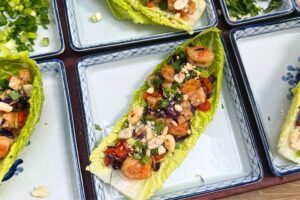
Shrimp Lettuce Wraps are Thai-inspired appetizers that are incredibly easy to make. Tender, juicy shrimp are sautéed with a homemade spice paste of galangal, garlic, bird’s eye chili, and white peppercorns. Crisp red cabbage, colorful peppers, crunchy carrots, and fragrant shallots are then tossed with shrimp and stir-fried to perfection. A savory addition of fish and soy sauces, palm sugar, and cornstarch forms a glossy coating on the mixture. This warm filling is spooned into lettuce cups and served garnished with spring onion, cilantro, and roasted peanuts. Every bite will be light and satisfying, whether eaten as an appetizer or for a weeknight dinner!
When one mentions Shrimp Lettuce Wraps, at least in the U.S, most people immediately think of PF Chang’s, the family that made this dish ubiquitous in America. Philip Chang and Paul Fleming (fame at Ruth’s Chris Steak House) became a major force in bringing Chinese cuisine to the mainstream American palate through PF Chang’s. However, the Shrimp Lettuce Wraps, which they are credited with, have their origins in Southeast Asia.
Specifically, many people point to the Cambodian/Thai dish larb as the source of this salad. Make no mistake, it is a salad. During my visits to both Thailand and Cambodia, I sampled versions of this dish made with a variety of stir-fried diced meats and seafood, usually flavored with chilis, mint, ram rau (Vietnamese cilantro), lime juice, and, of course, the perennial fish sauce. But equally, I saw the Shrimp Lettuce Wraps served both as a salad and as a main dish, served with rice.
This first reaction was not far from the truth. The truth is that while Southeast Asia comprises many nations, cultures, languages, and religions, the food that many consume transcends borders and cultures. Curry is no longer the exclusive provenance of Indian chefs, just as noodles are not the provenance of Chinese cuisine. As with most foods, Southeast Asia melds these traditional influences into a unique and delectable treat.
Origin:
While John Montagu (4th Earl of Sandwich) may have invented the bread-based sandwich to fuel his passion for gambling and wraps, wraps have a history going back thousands of years. One can find wraps all over the world, wherever there is flour. Whether it was Mesoamerican flour or corn-based tortilla wraps, Ethiopian Injera, Greek Pita, Middle Eastern Lavash, Indian Kathi, or Chinese Cōngyóubǐng, wraps have been around for a long time. They are functionally portable, fashionably eclectic, and universally adored. What more can you ask for in food?
Types of lettuce:
The element I adore most about the Shrimp Lettuce Wrap, strangely, is the lettuce. Though there are dozens of types of lettuce (from the iceberg to kale), there are generally only four botanical varieties:
- Celtuce, or asparagus lettuce, has narrow leaves and edible, succulent stems. This type of lettuce is native to China and can be found in many Asian grocery stores. Its woody, asparagus-styled wood stem has a nutty flavor. The leaves have a slightly bittersweet taste.
- Head or cabbage lettuce is the most common and has leaves folded into a compact head. There are two types of head lettuce:
- Butterhead lettuce, such as Bibb lettuce, has soft, somewhat oily leaves.
- Crisp-heads, such as iceberg lettuce, have harder and more brittle leaves.
- Leaf or curled lettuce, which do not have a head on them because they are leaves from a single stem. You can usually find leaf lettuce packages labeled as baby lettuce or in spring mixes, which generally come in three types: red, green, and oak-shaped. These are generally more perishable than the other types of lettuce.
- Cos or Romaine lettuce has smooth leaves that form into a tall, squarish shape.
When it comes to wraps, the more common varieties of lettuce used are crisp-head lettuces, such as iceberg, cos, or Romaine. It is worth noting that while you would be right to think that lettuce leaves have a mild flavor profile, there are tangible differences. Icebergs have a more neutral flavor, which allows them to absorb the flavors of the dish or dressing. They serve as a delightful, cool, and satisfying palate cleanser.
The Romaine, on the other hand, has a bittersweet taste that accentuates strong dressings, especially those that are acidic or sweet-and-tangy. I tried both versions, using Iceberg and Romaine, and found that the Romaine served as a wonderful foil to the sauce mix, which included fish sauce.
Benefits of lettuce:
Lettuce is also often undervalued for its nutritional benefits, seen as nothing more than a filler ingredient. Icebergs tend to have fewer nutritional benefits than other varieties. Notwithstanding, lettuce possesses the following nutritional benefits:
- Bone strength: As a source of vitamin K, lettuce helps strengthen bones, reducing the risk of fractures.
- Hydration: 95% of the composition of the lettuce is water, so eating lettuce hydrates your body.
- Improved vision: As a source of vitamin A, including lettuce, can add to your eye health and help reduce the risk of cataracts and macular degeneration.
- Overall nutrition: Along with Vitamin A and K, lettuce is also a wonderful source of iron and vitamin C.
For such a simple dish, Shrimp Lettuce Wraps can be a delectable addition to your repertoire. Whether served as a salad or a main course, the filling can be made days in advance and assembled in minutes. They are a great way to serve leftovers and can be made with virtually any ingredient, both meat-based and vegetarian. They can be served warm or cold and are surprisingly refreshing. Who would have thought that this leafy vegetable could awaken one’s taste buds to a whole new level?
Frequently Asked Questions:
1. Should you cut or tear lettuce?
Tear the ends with your hands. Using a metal knife browns the lettuce faster than if torn by hand.
2. How do you make the lettuce crispy?
Rinse with cold water, pat dry, and refrigerate in Ziploc sandwich bags for 10 minutes before using them in the Shrimp Lettuce Wraps.
3. How do you store lettuce?
Lettuce requires proper air circulation to keep it fresh and crisp, so I store it in perforated bags or boxes in the refrigerator.
This post may contain affiliate links. As an Amazon Associate, I earn from qualifying purchases at no extra cost to you.
If you’ve tried this recipe or have questions, I would love to hear from you. Please feel free to share (below) your thoughts, comments, or any questions that you might have. And if you like my recipes, you can subscribe to my mailing list for the latest recipes delivered to your inbox. From my pen to your table, Bon Appétit!
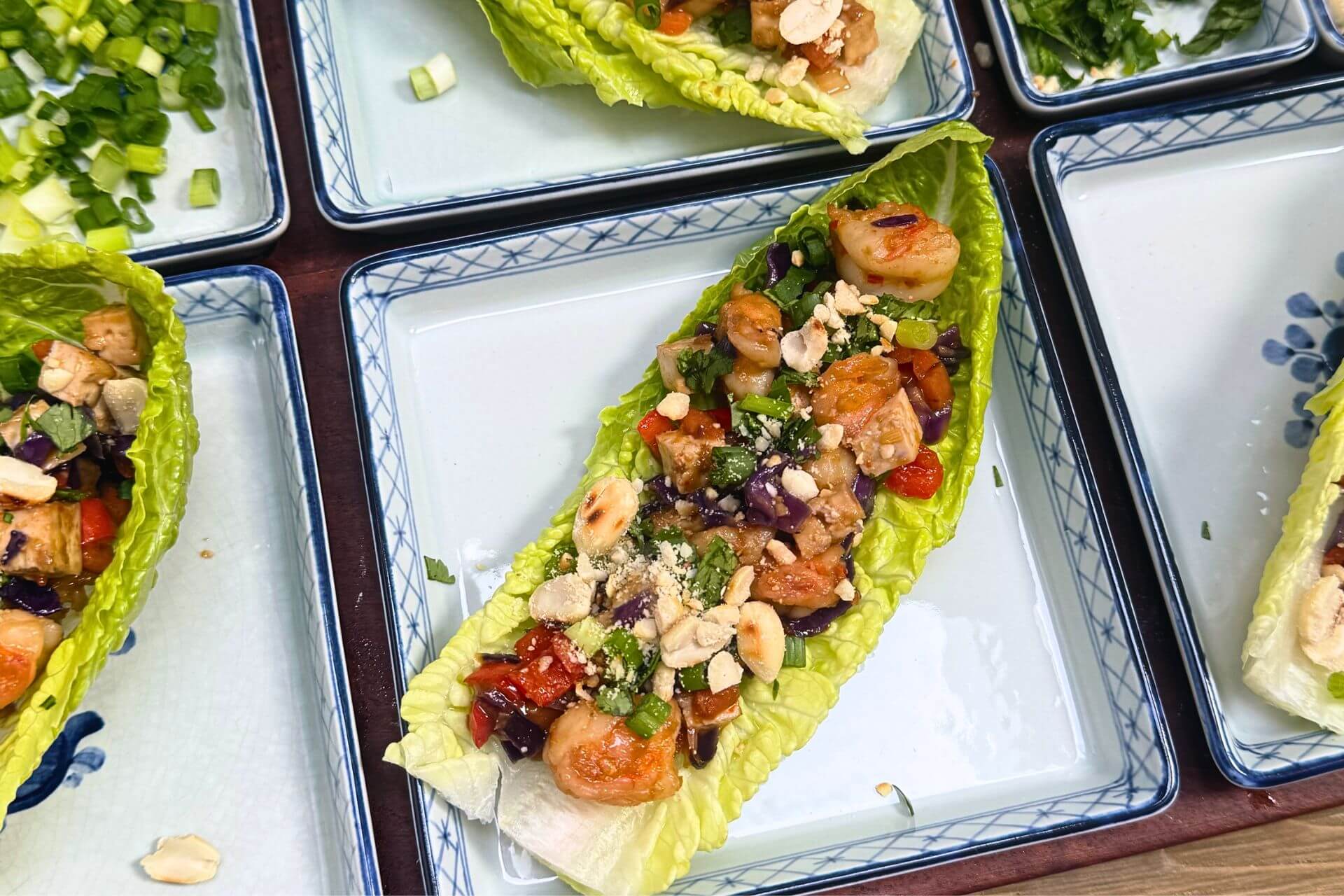
Ingredients:
1. For the spice paste:
- Aromatics: Lemongrass, garlic, galangal, Thai bird’s eye chili
- White peppercorn
2. For the filling:
- Peanut oil
- Protein: shrimp, tofu
- Vegetables: red cabbage, peppers, carrot, Romaine lettuce
- Herbs: spring onion, cilantro
- Sauces: soy sauce, fish sauce
- Palm sugar
- Cornstarch
Here are the step-by-step instructions to make this dish. For the measurements, please refer to the recipe card below.
How to make the Shrimp Lettuce Wraps:
- Grind the spice paste:
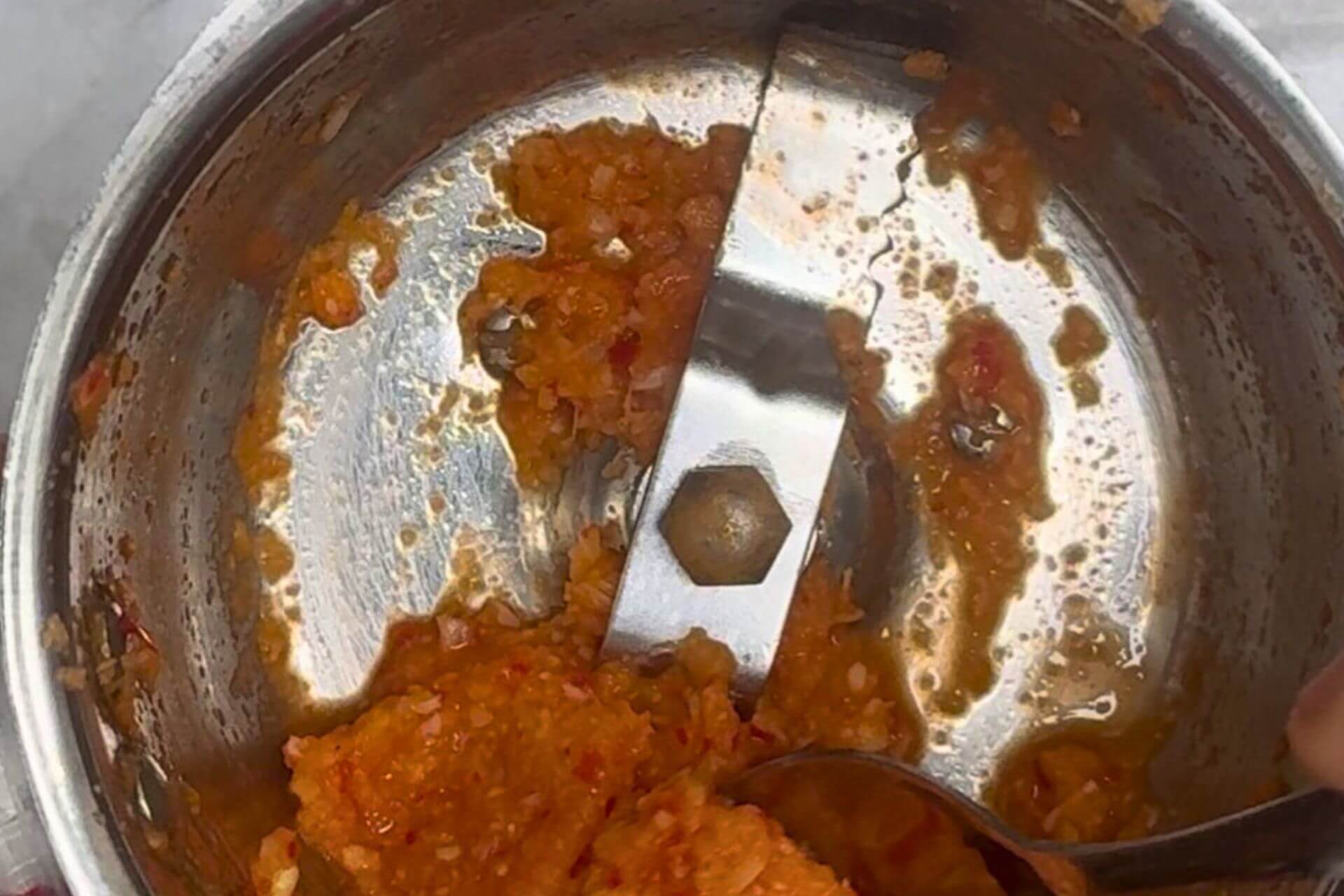
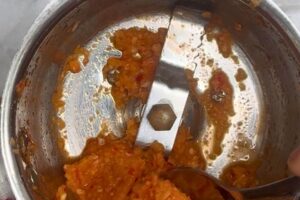
- Place the ingredients in a spice grinder, add 1 tablespoon of water, and grind to a slightly coarse paste. Set it aside.
2. Make the filling:
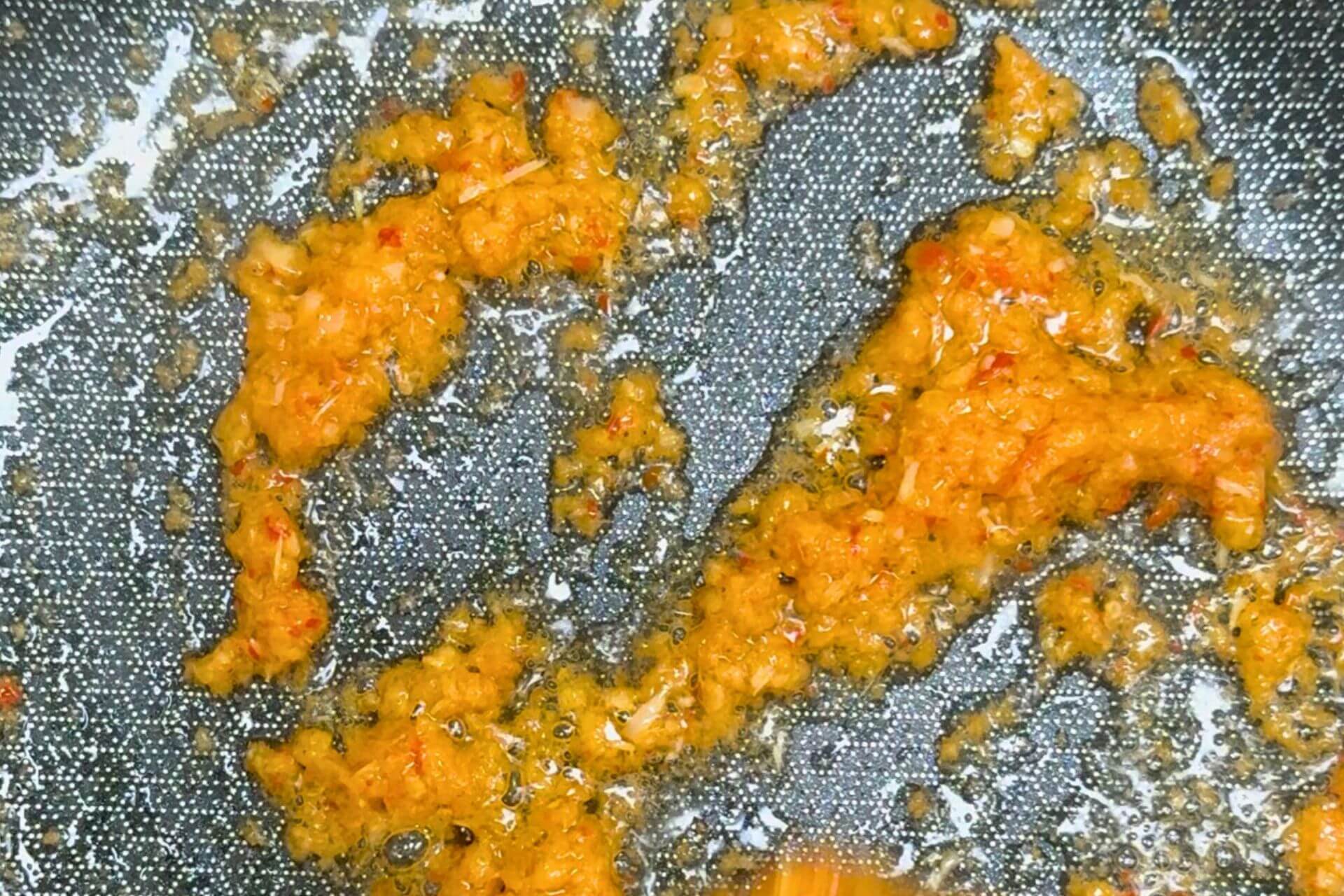
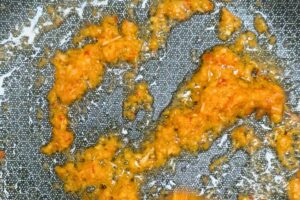
- Heat the wok, add peanut oil, and the spice paste. Sauté it over medium heat for 1-2 minutes, or until fragrant.
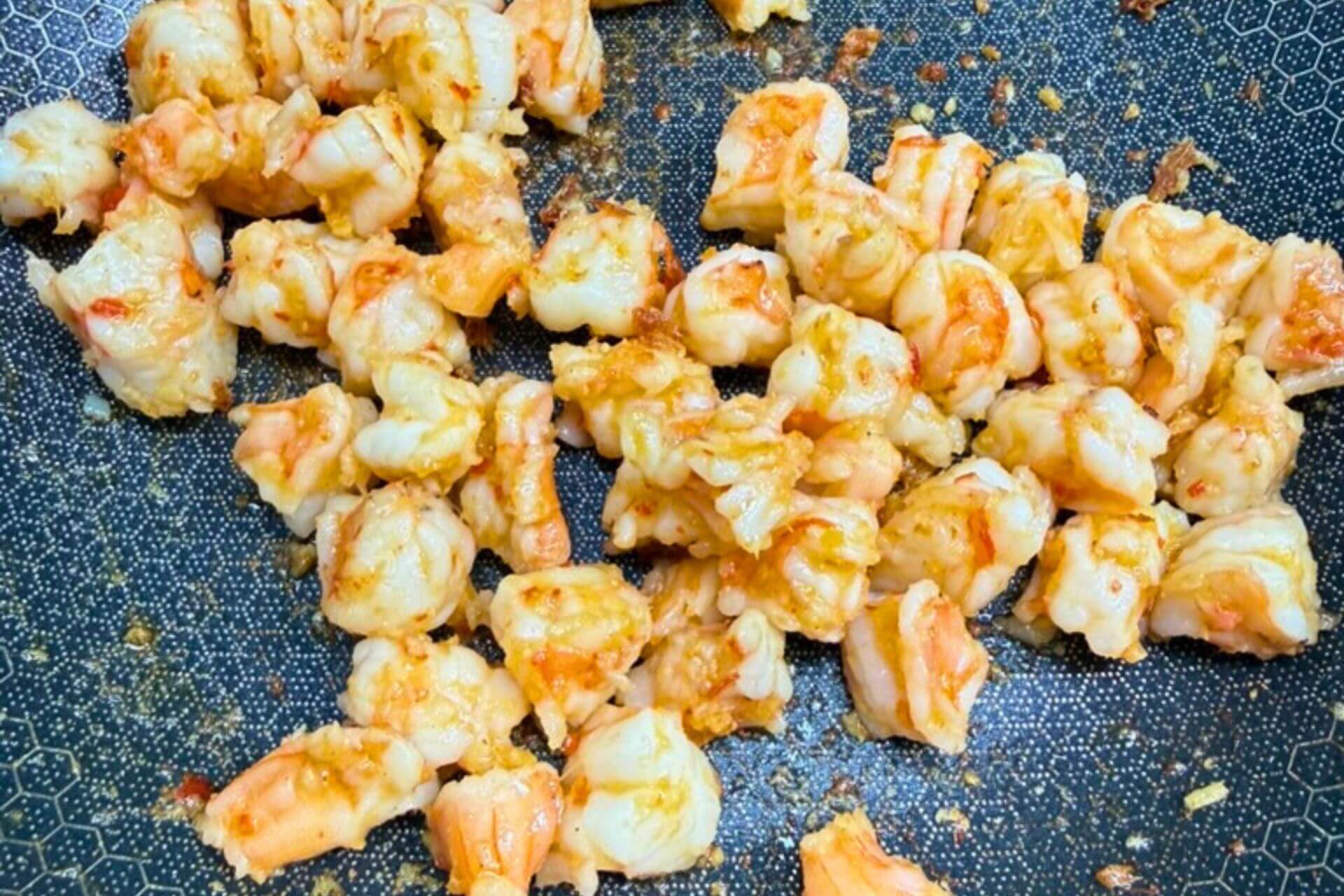
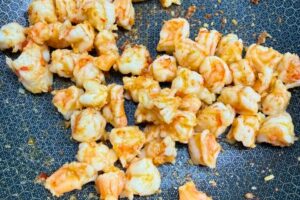
- Add the chopped shrimp and continue to sauté for 2-3 minutes.
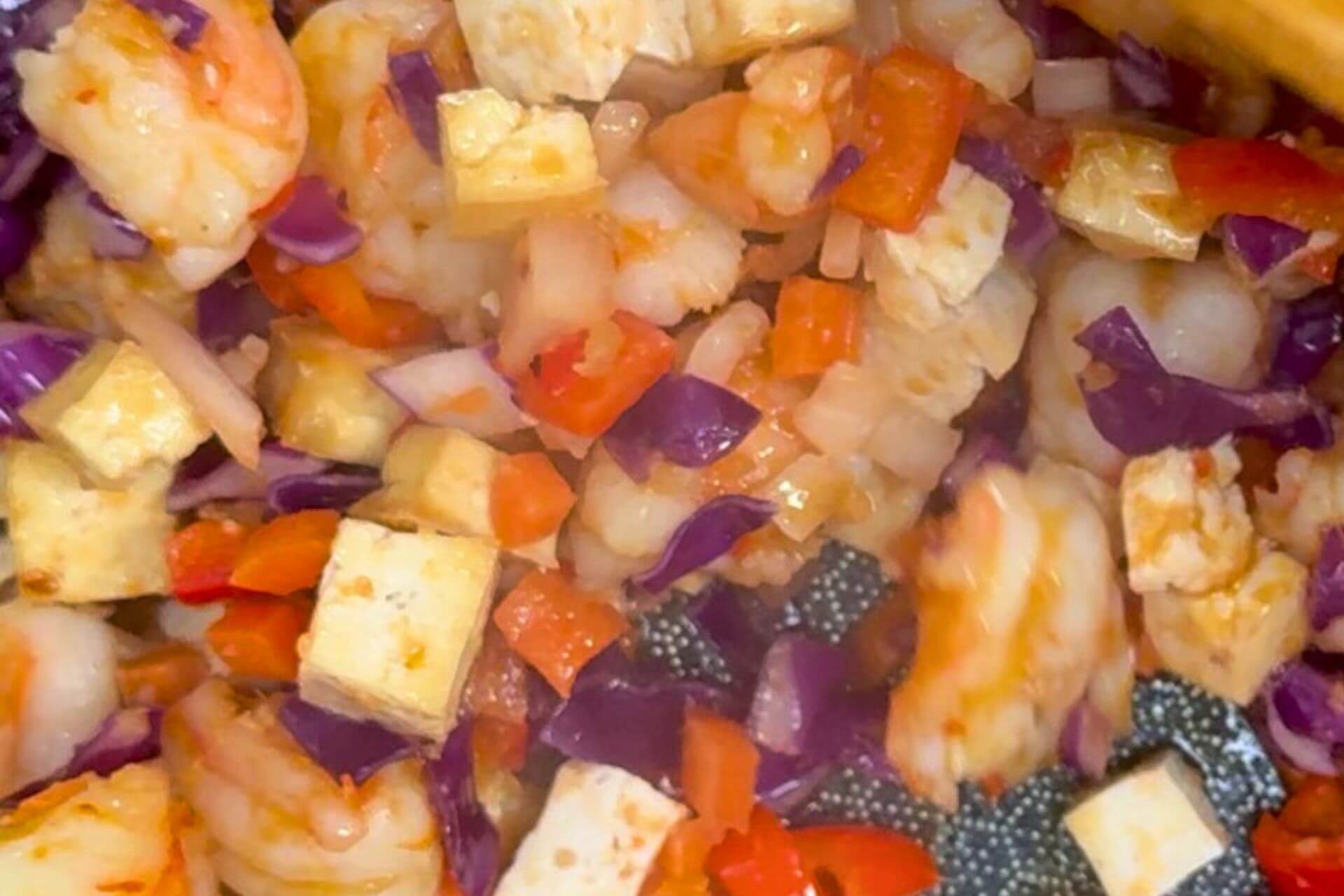
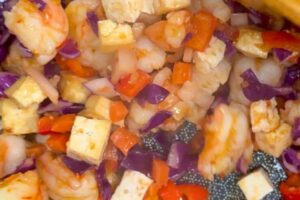
- Toss the red cabbage, pepper, carrot, and shallot into the wok, and stir-fry for 1 minute. Add a teaspoon of oil if the veggies stick to the wok. Add the air-fried tofu. This is an optional step, i.e if you like crispy tofu in your appetizer. Mix the soy sauce, fish sauce, cornstarch, and palm sugar in a small bowl, then add it to the wok. Sauté for a few seconds, turn off the heat, and let it cool.
- Fill each lettuce leaf with the shrimp and vegetable mixture, and serve garnished with cilantro, spring onion, and crushed peanuts.
Tips:
1. Slightly warm the shrimp and vegetable mixture before filling the refrigerated lettuce leaves. Do not pile hot filling on top as the leaves will wilt.
2. Please ensure that most of the moisture has evaporated from the shrimp and vegetable mixture and that it is not runny, or the wraps will drip while serving.
3. Rinse the lettuce leaves in cold water, pat them dry with kitchen paper, and refrigerate them in Ziploc sandwich bags for 10 minutes before using them as wraps.
4. Air-frying the tofu adds an additional crunch; however, this step is optional.
5. Tear the ends of the lettuce leaves with your hands. Using a metal knife browns the lettuce faster than if torn by hand. Remove the thick stalk from the head of the lettuce.
6. Do not overcook the vegetables. A quick toss for a couple of minutes will make them slightly soft yet crunchy, but not mushy.
7. If the filling has excess sauce, use a slotted spoon to drain it before placing it on the lettuce leaf, or the wrap will drip and become soggy.
8. Cook the shrimp filling over medium-high heat, using quick wrist movements with the spatula; otherwise, the shrimp will steam and release more moisture.
Serving suggestions:
- For a large gathering: Serve the filling warm in a bowl; stack some butter, iceberg or Romaine lettuce leaves on a platter; and set chili and peanut sauce (optional), and spring onions, cilantro, and crushed peanuts in small bowls on the side.
- For family-style: Scoop some of the warm filling into the lettuce leaves and garnish with spring onion, cilantro, and crushed peanuts. Feel free to squeeze some lime juice to brighten the wraps. Fold the lettuce cup like a taco and enjoy!
Storage:
The filling can be refrigerated for 1-2 days in airtight containers and wrapped in lettuce leaves before serving.
Other shrimp recipes that you might like:
Shrimp Lettuce Wraps
Equipment
- Wok
- air fryer optional
Ingredients
For the spice paste:
- 4 lemongrass white part only
- 2 clove garlic
- 2 tsp galangal peeled, chopped
- 3 Thai bird's eye chili
- ½ tsp white peppercorn
- ¼ tsp salt
For the filling:
- 1 tbsp peanut oil
- ¼ lb shrimp chopped
- 1 carrot peeled, chopped
- 1 pepper chopped
- ⅓ cup red cabbage chopped
- 1 shallot chopped
- ½ cup firm tofu cubed, optionally air-fried
- 1 tbsp soy sauce
- 1 tsp fish sauce
- 1 tsp palm sugar
- 1 tsp cornstarch
- 4 sprig cilantro chopped
- 3 spring onion chopped
- ½ cup peanuts roasted, crushed
- 8 leaves Romaine lettuce
Instructions
How to make the spice paste:
- Place the ingredients for the spice paste in a spice grinder, add one tablespoon of water, and grind to a slightly coarse paste. Set it aside.
How to make the filling and assemble the Shrimp Lettuce Wraps:
- Heat the wok, add peanut oil, and the spice paste. Sauté it over medium heat for 1-2 minutes, or until fragrant.
- Add the chopped shrimp and continue to sauté for 2-3 minutes.
- Toss the red cabbage, pepper, carrot, and shallot into the wok, and stir-fry for 1 minute. Add a teaspoon of oil if the veggies stick to the wok. Add the tofu, air-fried at 400°F on a foil-lined tray for 15 minutes. This is an optional step, i.e if you like crispy tofu in your appetizer. Mix the soy sauce, fish sauce, cornstarch, and palm sugar in a small bowl, then add to the wok. Sauté for a few seconds, turn off the heat, and let it cool.
- Fill each lettuce leaf with the shrimp and vegetable mixture, and serve garnished with cilantro, spring onion, and crushed peanuts.
Video
Notes
Nutrition



0 Comments