
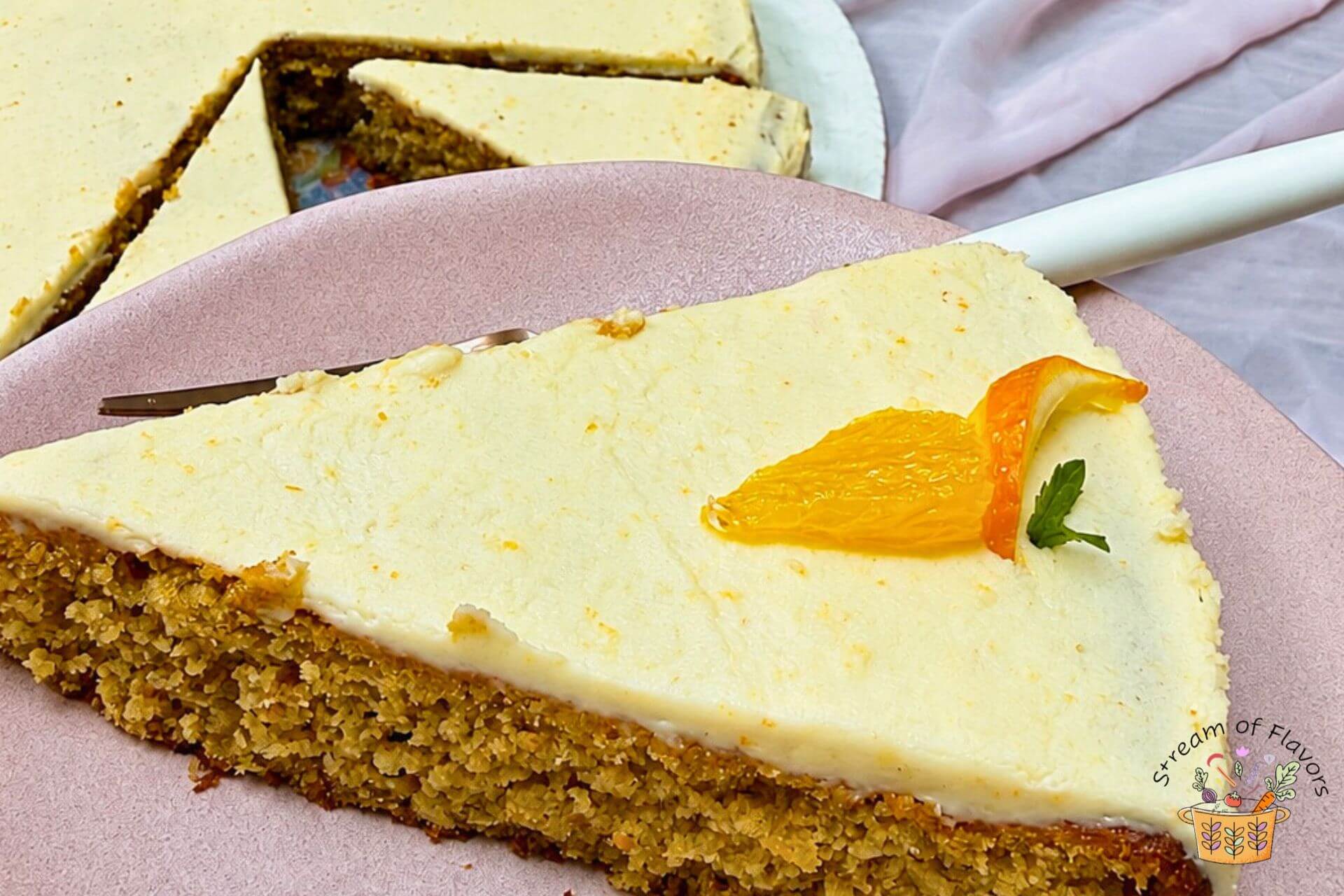
Sicilian Whole Orange Cake is a moist, tender citrus cake made with whole oranges, spelt flour, almond flour, Greek yogurt, butter, and avocado oil. Inspired by the traditional Italian whole orange cake, my version is topped with a creamy orange-maple mascarpone frosting for the perfect balance of bright citrus, gentle sweetness, and rich creaminess. Made with whole oranges for an intense natural orange flavor, this rustic yet elegant cake is perfect for brunch, afternoon tea, holidays, or any special occasion!
This Sicilian Whole Orange Cake was inspired by an Italian friend who introduced me to the simple beauty of baking with whole oranges. I was captivated by the idea of using the fruit with the fragrant peel, juicy flesh, and all that wonderful citrus flavor, instead of letting any part go to waste. It reminded me of what I love about Italian cooking: taking humble, beautiful ingredients and letting them speak for themselves. I began experimenting with the traditional Sicilian whole-orange cake, giving it my own twist with spelt flour, almond flour, yogurt, avocado oil, and butter. The result is a cake that feels both rustic and refined and deeply orange-scented, moist and tender, with a gentle nuttiness and a creamy mascarpone, orange, and maple topping.
What makes this Sicilian-inspired Whole Orange Cake special?
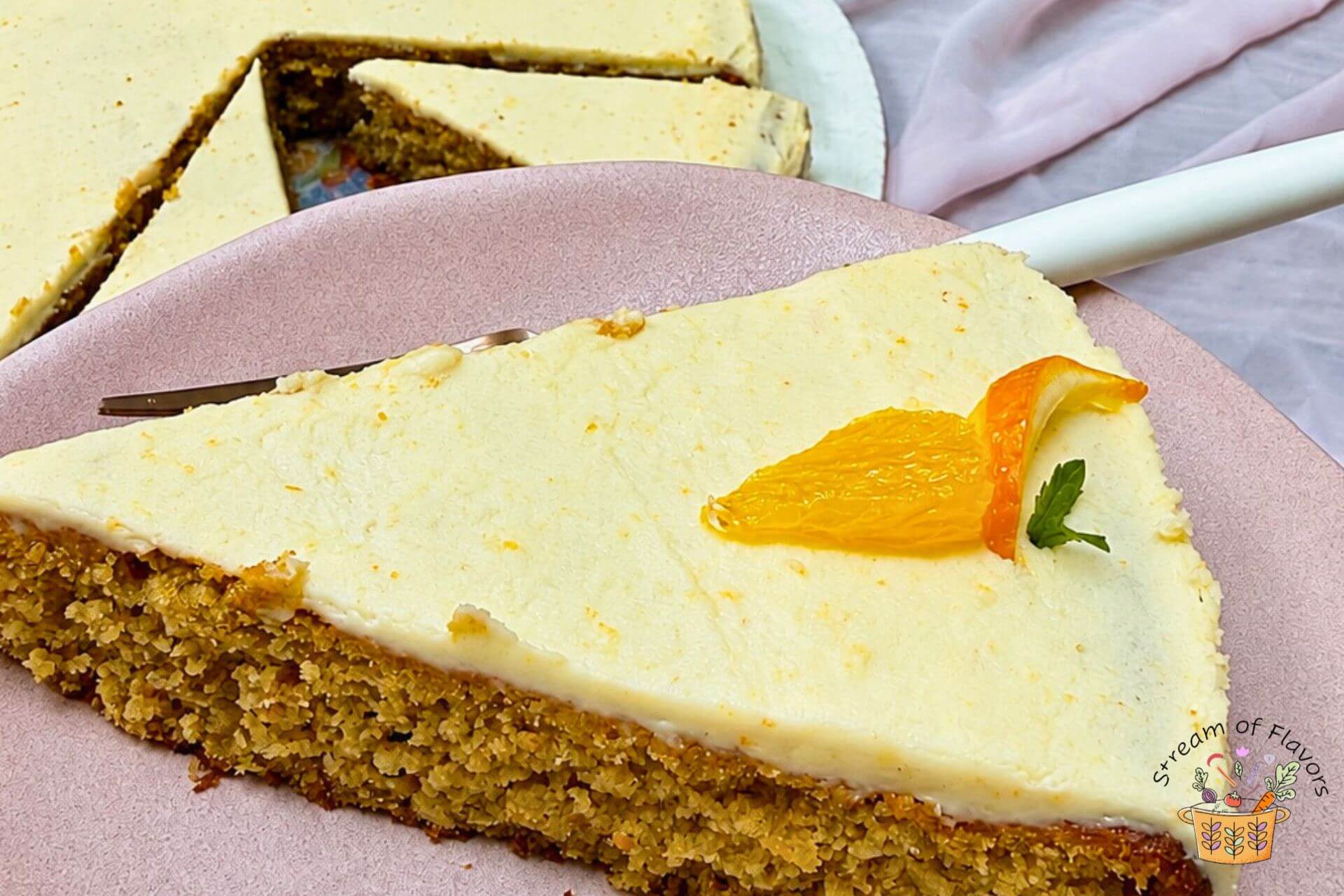
A Sicilian-inspired whole-orange cake is special because it celebrates one of Sicily’s most distinctive ingredients, the fragrant, intensely flavored whole orange. By using the fruit in its entirety, including the zest and pulp, rather than relying only on juice, this Mediterranean-inspired cake is naturally sweetened from a simple ingredient. Sicily is renowned for its citrus groves, particularly its intensely aromatic oranges, which thrive in the island’s Mediterranean climate and volcanic soils. I took that tradition and gave it a wholesome, modern character with spelt flour and almond flour, while avocado oil and butter create richness and tenderness, and yogurt adds moisture and a subtle tang. The result is deeply citrusy, naturally aromatic, and wonderfully moist, with the almond and spelt adding warmth and nuttiness to the cake. I chose to frost the cake with mascarpone cheese infused with orange puree and whisked with maple sugar. This frosting is not necessary, but it does complement the cake.
Cake decorating options:
- Candied orange slices: Arrange a few thin, translucent orange slices in a slightly overlapping circle on top.
- Fresh orange zest: Scatter fine curls of orange zest over the mascarpone for a simple, fragrant finish.
- Toasted almonds: Sprinkle toasted sliced or chopped almonds around the edges.
- Maple-orange finish: Drizzle just a tiny amount of maple syrup over the mascarpone, then finish with orange zest and flaky salt.
- Dried orange slices: A few dried orange wheels arranged off-center would give it a rustic, Mediterranean look.
- Edible flowers: Small white, orange blossoms or pale yellow flowers would look gorgeous against the creamy mascarpone.
- Pistachios: Finely chopped pistachios scattered lightly over the top would add Sicilian character and a beautiful green contrast.
Frequently Asked Questions:
1. Why does my Sicilian Whole Orange Cake taste bitter?
If the oranges that you use are not sweet, the cake can taste bitter. So try a small piece of the orange before pureeing it. If it is not sweet, boil the oranges for 20 minutes and discard the water. Cool and grind the fruit without seeds or central pith, using thin-skinned organic oranges.
2. What can I substitute for the spelt flour?
Use all-purpose flour as a good substitute for spelt flour. Spelt flour is whole-grain and adds a subtle nuttiness, yielding a tender, rustic crumb.
3. Should I boil my oranges for the Sicilian Whole Orange Cake recipe?
I did not boil my orange as it was sweet and thin-skinned. I chose organic oranges, which are usually very sweet at the height of summer. If using thick-skinned Navel or Valencia oranges, it is a good idea to boil the oranges to soften the skin and remove any bitterness.
This post may contain affiliate links. As an Amazon Associate, I earn from qualifying purchases at no extra cost to you.
If you’ve tried this recipe or have questions, I would love to hear from you. Please feel free to share (below) your thoughts, comments, or any questions that you might have. And if you like my recipes, you can subscribe to my mailing list for the latest recipes delivered to your inbox. From my pen to your table, Bon Appétit!
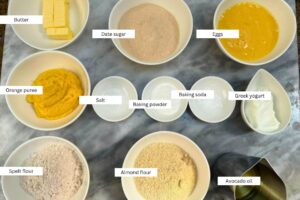
Ingredients:
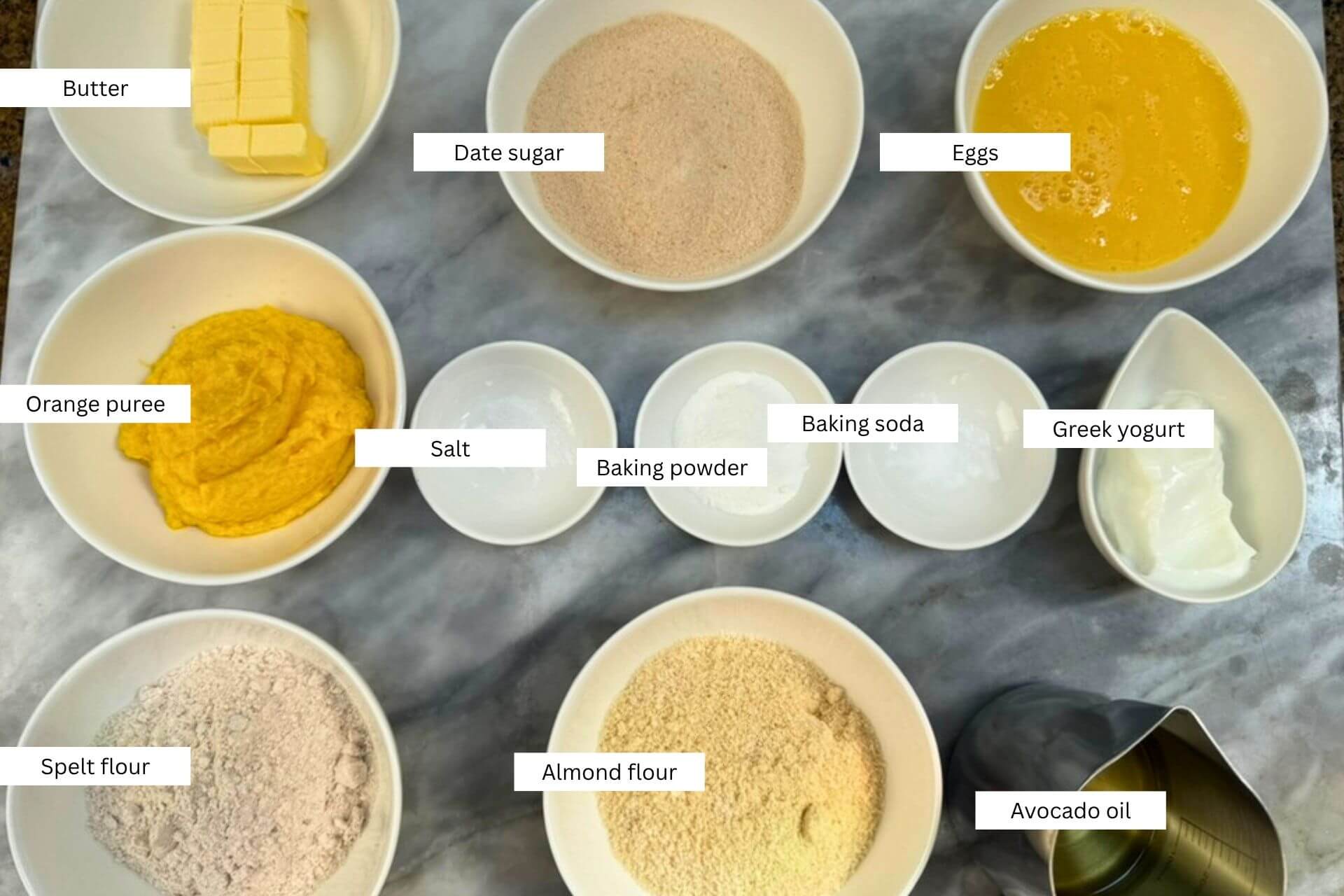
- Fat: unsalted butter, avocado oil
- Sweetener: date sugar
- Eggs
- Flour: spelt flour, almond flour
- Leavening agents: baking powder, baking soda
- Whole orange puree
- Greek yogurt
Here are the step-by-step instructions to make this dish. Please refer to the recipe card below for the measurements.
How to make the Sicilian Whole Orange Cake:
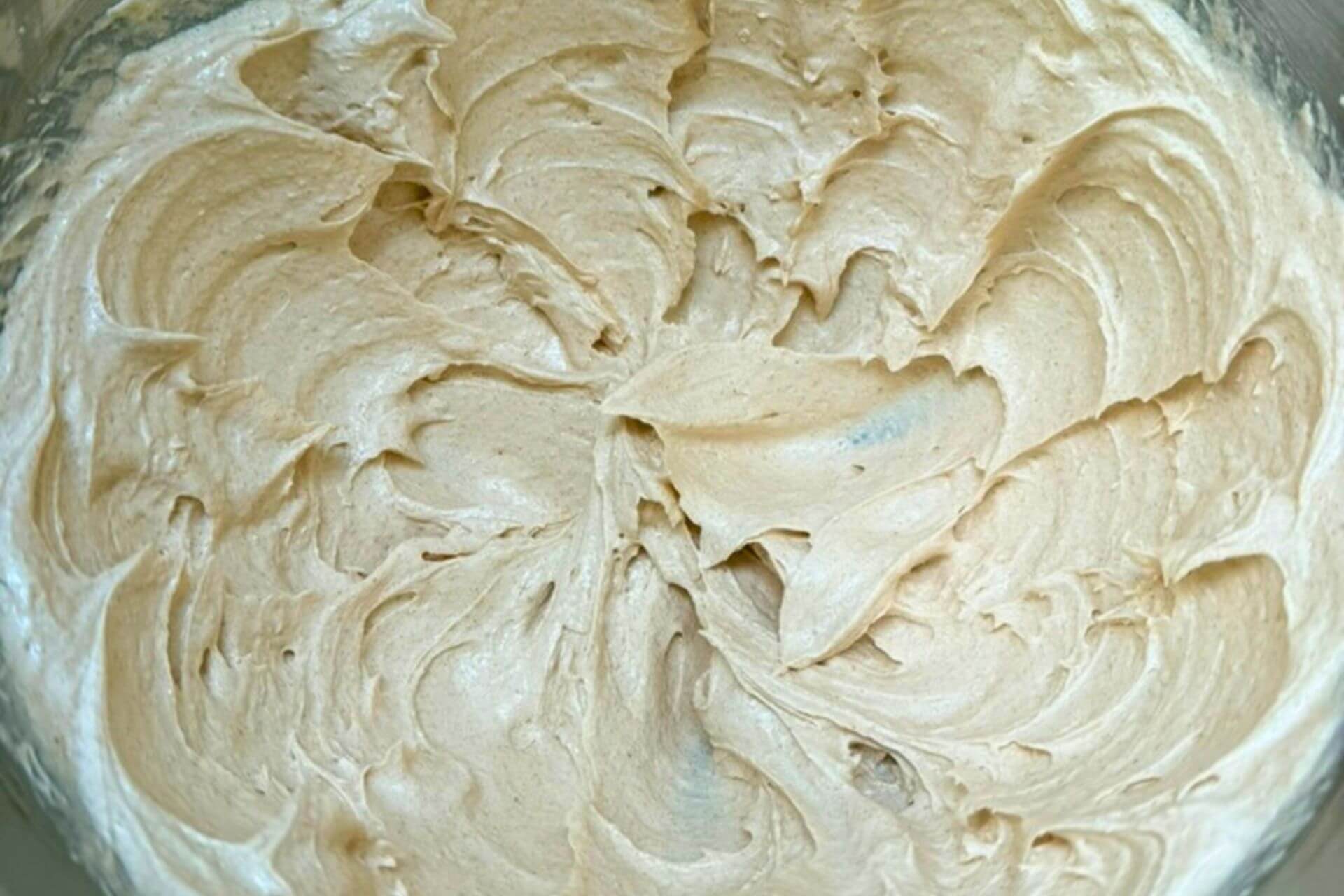
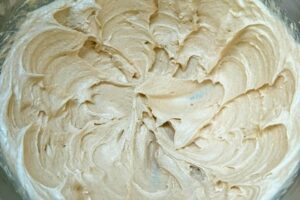
- Cream the butter, avocado oil, and date sugar with the paddle attachment on a stand mixer for 3-4 minutes, or until creamy. Add the beaten eggs a little at a time, beating well for 3-4 minutes, or until light and fluffy.
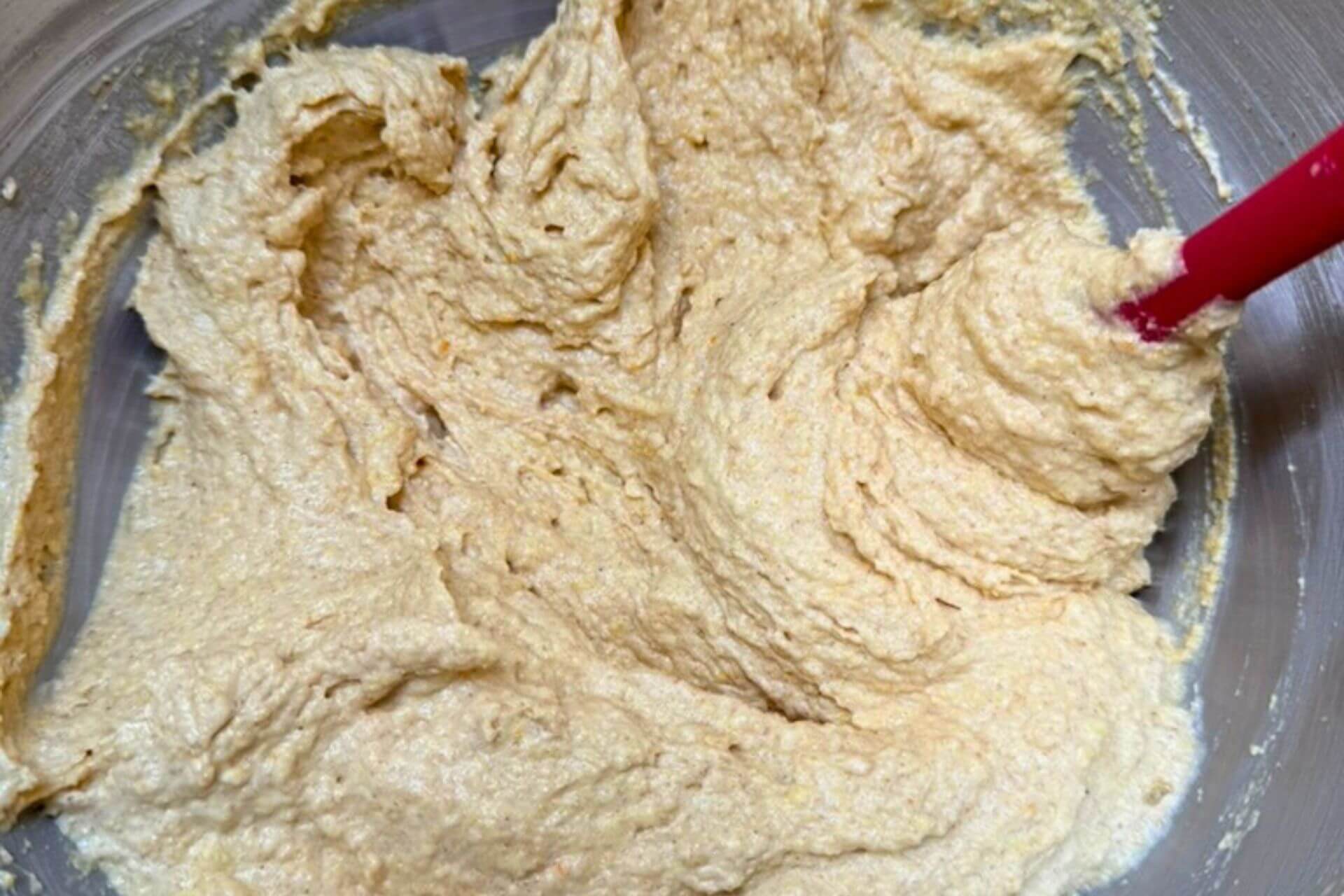
2. Combine the baking powder, baking soda and salt with the spelt flour. Gently fold in a third of the spelt flour. Then, fold in a third of the whole orange puree mixed with yogurt. Alternate between adding the spelt flour and orange puree. Finally, fold the almond flour into the batter.
3. Spoon the batter into a parchment paper-lined 8″ springform pan. Tap the pan gently on the countertop to remove large air bubbles. Smooth the top of the cake with a spatula, then bake for 30-35 minutes, or until a cake tester comes out clean with a few crumbs on it.
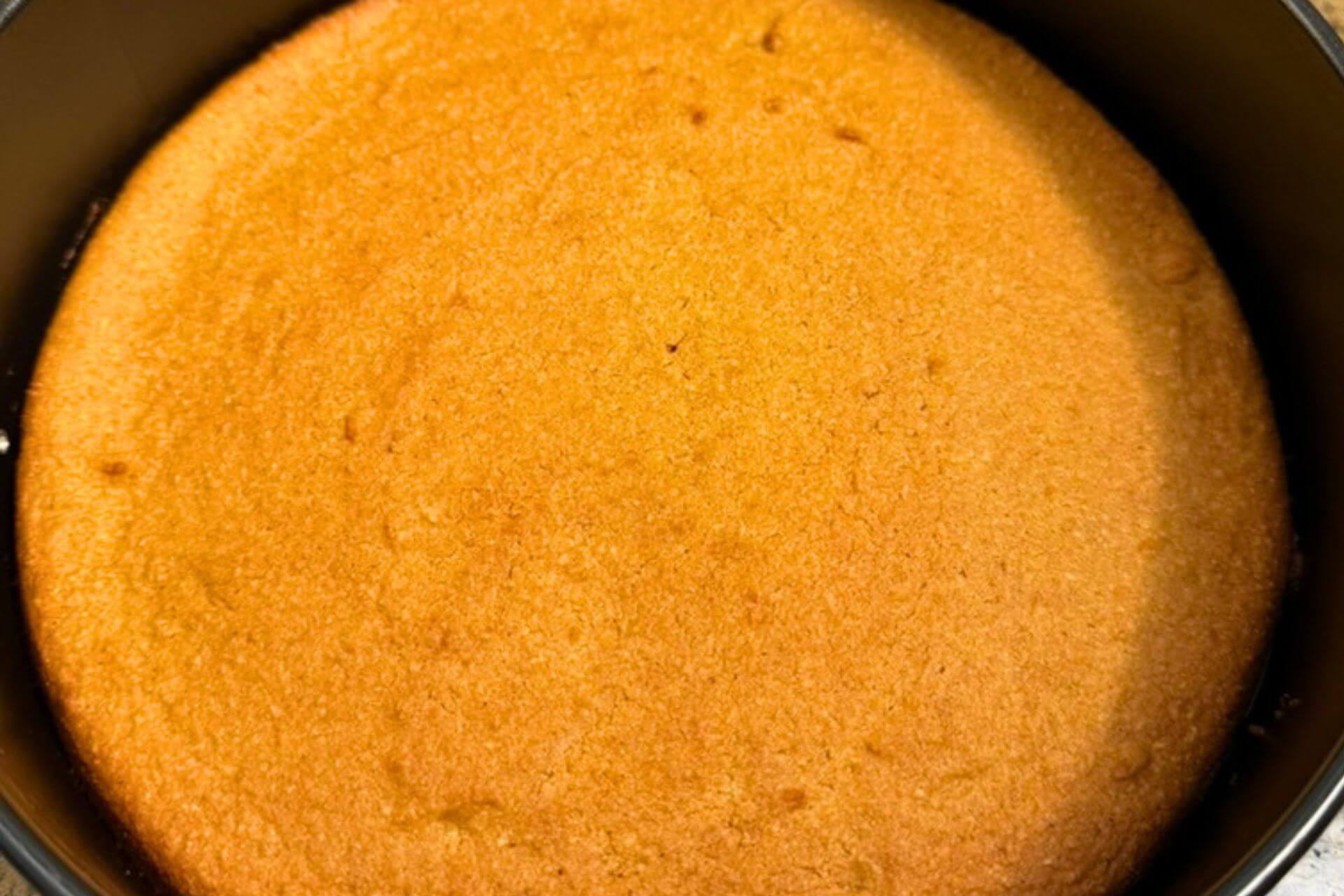
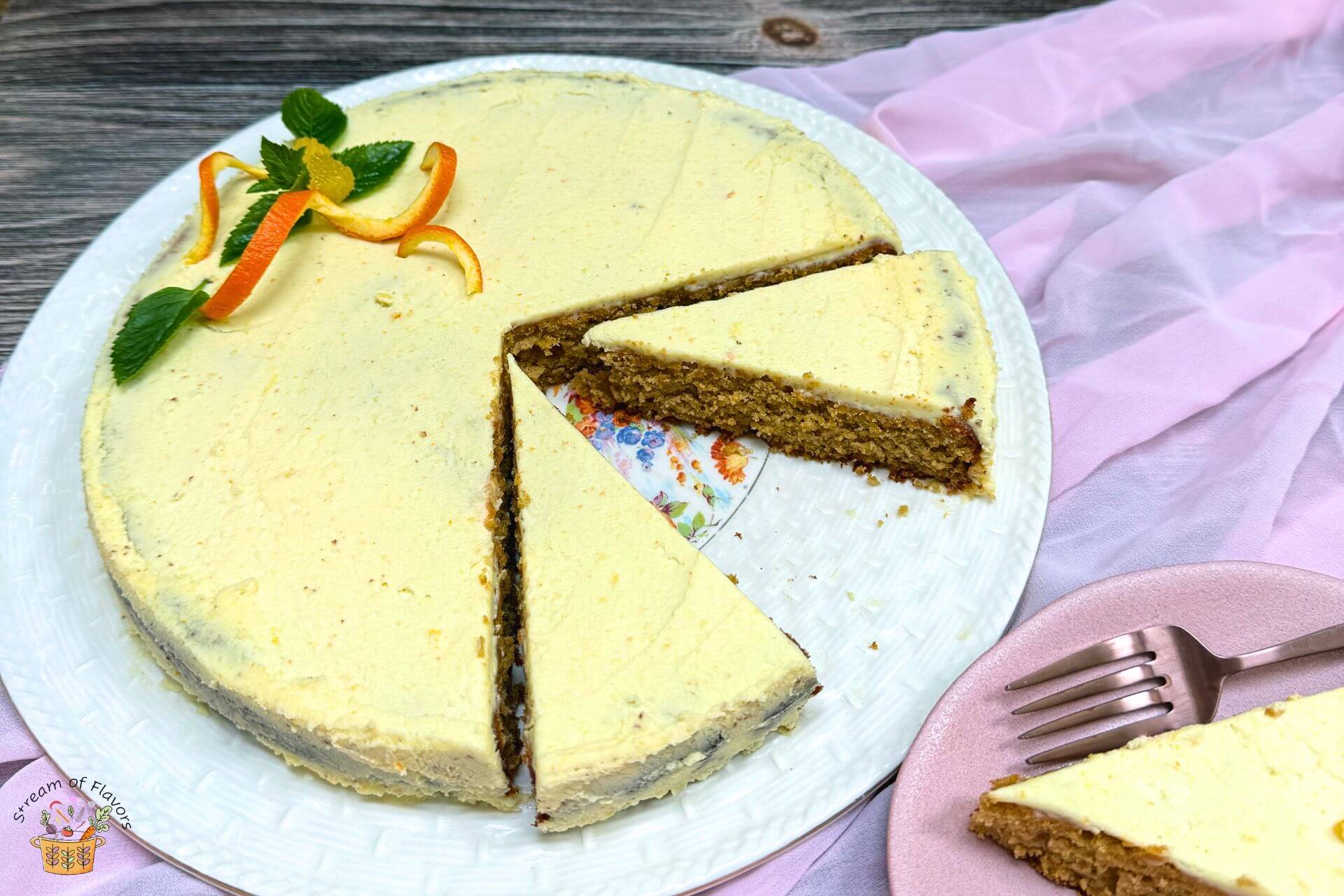
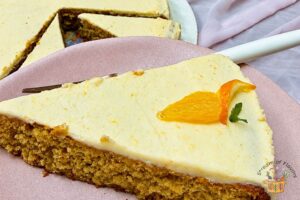
4. To make the frosting: In a mixing bowl, add the frosting ingredients and whisk until smooth (using a fork or a whisk), then refrigerate until use. Remove the cake from the oven and allow it to rest for 15 minutes. Use an offset spatula to frost the top and sides of the cake. Smooth it and decorate the cake with thinly sliced orange peel curls and/or segments. Slice and serve.
Tips:
1. Choose your oranges carefully. The sweetness of the oranges makes a big difference in this cake. If the fruit is bitter or not very sweet, the finished cake can also taste bitter. Before making the puree, taste a small piece of the orange. If it is bitter, boil the whole oranges for about 20 minutes, then discard the water. Let them cool completely before grinding. Remove any seeds and the thick central pith, and use thin-skinned organic oranges whenever possible for the best flavor and texture.
2. Let the cake cool completely before slicing. This is a wonderfully moist and tender cake, so it needs time to set. Slicing it while still warm can cause the delicate crumb to crumble. Allow it to cool completely before cutting into it.
3. Combine the orange puree with the yogurt. Stir the almost-smooth orange puree into the Greek yogurt before adding it to the batter. This helps lighten and distribute the puree, preventing it from sinking toward the bottom of the cake as it bakes.
4. Fold in the almond flour last. Add the almond flour at the very end and fold it in gently. Take care not to overmix or deflate the air bubbles in the batter, as this helps keep the finished cake tender and beautifully textured.
5. Let the cake rest. Like many traditional cakes, this one only gets better with time. As it rests, the orange flavor deepens and the crumb becomes even more moist and cohesive. If you can resist, let it sit for several hours or enjoy it the following day, when the flavors have fully developed.
Serving suggestions:
Serve the Sicilian Whole Orange Cake at room temperature, when the orange flavor is at its fullest and the mascarpone frosting is soft and creamy. It is lovely on its own, but a few simple touches make it feel especially special. Garnish each slice with a little fresh orange zest, a few toasted almonds or pistachios, and a delicate slice of fresh or candied orange. For a more indulgent finish, serve with a spoonful of lightly sweetened mascarpone or Greek yogurt alongside. A cup of strong espresso, cappuccino, or fragrant black tea makes the perfect accompaniment. The cake is also wonderful served the following day, when the flavors have had time to meld and the crumb becomes even more moist and tender.
Storage:
Refrigerate the cake for 4-5 days in an airtight container or freeze for three months.
Other dessert recipes made with fruit that you might like:
- Easy Apple Galette Recipe
- Quince Pie Recipe
- Greek Semolina Cake
- Basque Cake With Cherry Preserves
- Kumquat Cake Recipe
Sicilian Whole Orange Cake
Equipment
- Oven
- 8" springform pan
Ingredients
For the orange cake:
- 2 oz butter unsalted
- 2 tbsp avocado oil
- ½ cup date sugar + 1 tbsp
- 2 eggs beaten
- ½ cup spelt flour
- ¼ cup almond flour
- 2 tsp baking powder
- ¼ tsp baking soda
- a pinch salt
- ½ cup whole orange pureed
- 1 tbsp Greek yogurt
For the frosting: (optional)
- 4 tbsp mascarpone cheese
- 1 tbsp orange puree
- 1 tbsp maple sugar optional
Instructions
Prepare and bake the cake:
- Prepare the ingredients. Remove the central pith and seeds, and puree the whole orange.
- Cream the butter, avocado oil, and date sugar with the paddle attachment on a stand mixer for 3-4 minutes, or until creamy. Add the beaten eggs a little at a time, beating well for 3-4 minutes, or until light and fluffy.
- Preheat the oven to 350 degrees F.Combine the baking powder, baking soda and salt with the spelt flour. Gently fold in a third of the spelt flour. Then, fold in a third of the whole orange puree mixed with yogurt. Alternate between the spelt flour and the orange puree. Finally, fold the almond flour into the batter.
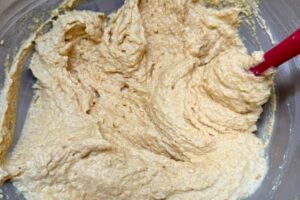
- Spoon the batter into a parchment paper-lined 8" springform pan. Tap the pan gently on the countertop to remove large air bubbles. Smooth the top of the cake using a spatula and bake for 30-35 minutes or until a cake tester comes out clean with a few crumbs on it.

Make the frosting:
- In a mixing bowl, add the frosting ingredients and whisk until smooth (using a fork or a whisk), then refrigerate until use. Remove the cake from the oven and allow it to rest for 15 minutes. Use an offset spatula to frost the top and sides of the cake. Smooth it and decorate the cake with thinly sliced orange peel curls, zest, and/or segments. Slice and serve at room temperature.
Notes
Nutrition







0 Comments