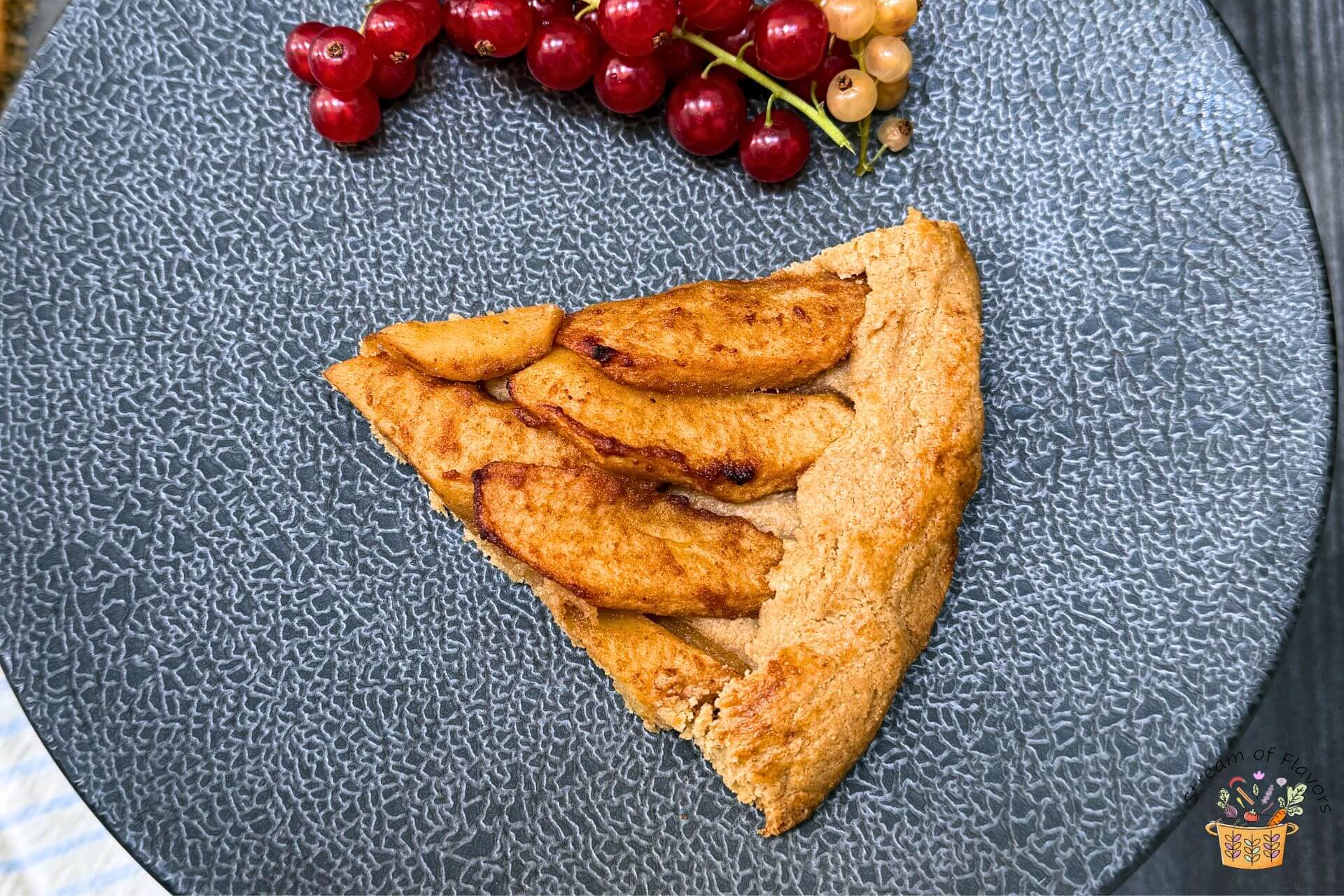
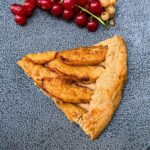
Easy Apple Galette Recipe is a rustic, wholesome French-inspired dessert that celebrates the natural sweetness of apples. This open-form pie has a buttery and flaky crust, made with a nourishing homemade blend of spelt flour, oat flour, vital gluten, and butter. The result is a rich, nutty-flavored crust filled with apples tossed in butter, date sugar, and, optionally, a little maple sugar, brightened with a splash of lemon juice. These natural sweeteners enhance the taste of the apple slices without overpowering them. Serve it warm on its own, or with a scoop of vanilla ice cream and/or fresh currants on the side, for the ultimate homemade seasonal treat!
One of the first things I learned to make in a French dessert class over thirty years ago was a classic galette with pâte brisée as the base. But as I visited various parts of France, Switzerland, and Belgium, I was amazed at the different types of pastries, fillings, and methods that encompass the wonderful world of galettes.
If you love homemade pie but want a more nutritious option, my healthy pie crust is the perfect solution. It’s tender, flaky, and easy to make with wholesome ingredients that add fiber and healthy fats without compromising flavor. This flaky, buttery-tasting pie crust delivers most of the comfort of a traditional crust but with more wholesome ingredients. Made with whole-grain flour and heart-healthy fats, this crust adds fiber and nutrients while keeping the texture somewhat light and delicate. Even if you’ve never made pie crust from scratch, this recipe is forgiving and easy to work with. Whether you’re baking for your family, meal prepping, or looking for a more nutritious dessert option, this crust fits right in. This has become my go-to pie crust because even friends who usually prefer traditional recipes ask for seconds.
Origin of the simple Apple Galette Recipe:
Galettes originated in medieval France around the 13th or 14th century and are derived from the Norman word ‘gale ’, which means ‘flat cake’. Depending on the region and the meal (breakfast, lunch, dinner, or dessert), a galette can be savory or sweet; it can vary from a pancake to a tart; it can be rustic or royal; and it can be made with fruit, vegetables, or even meat. What began as a simple recipe became a veritable French ocean.
To be candid, when one talks about pastries and cakes, the journey can be traced back to the 18th and 19th centuries, which I think of as the golden age of the French pâtissier. From éclairs and croissants to the galette, I believe the French have given the world more techniques and recipes for transforming flour, dairy, and heat into mouthwatering creations than anyone else.
But today, I’m going to be talking about the recipe for the Apple Galette that is so easy to make. It is essentially a semi-open-faced, freeform round tart with a spiced apple filling. As I’ve simply folded the pastry over the apples to form a semi-enclosed container, it’s rustic. If you crimp and shape the pastry carefully, it becomes something fancier.
Benefits of apples:
I’ve chosen to use homegrown apples, which are just bursting with sweetness and form a perfect counterpoint to the pastry. In Washington State, we are spoilt for choice when it comes to apples. Ranging from tart to cloyingly sweet, the choice of apples will certainly alter the taste of the tart.
Apples are naturally sweet as they contain about 11 grams of sugar per 100 grams. They are also a fiber-rich food, and a slice of baked apple can contain 4 to 5 grams of fiber, which is about 17 to 20 percent of recommended daily fiber intake. As a source of health, apples are a great source of vitamins A, B-6, C, and E, as well as thiamin, riboflavin, niacin, and folate. While raw apples are a wonderful source of polyphenols, which are antioxidants, their concentration wanes when apples are cooked.
Types of French pastry dough:
As I mentioned earlier, I cannot think of any other cuisine that offers such a variety of foods made from heating flour and dairy. This recipe uses pâte brisée as the base. Often thought of as the most basic crust, brisée translates to “broken” or “cracked” in English. It is the British short crust pastry and the American pie crust. The typical pâte brisée has three parts flour, two parts butter, and one part liquid. (Adding sugar reduces gluten formation and adds a lovely crunchy texture to the tart, while also helping the crust retain some moisture. In addition, the sugar also gives the crust a lovely wheat-gold coloring. I have not added sugar to the crust, but feel free to add a teaspoon.)
While many traditionalists feel that the butter needs to be incorporated by hand (it’s called frissage) because the butter is thoroughly worked into the dough, I find that both the stand mixer and food processor methods work just as well as hand mixing. Now, I don’t use eggs in this recipe, but if you did, the pastry would now be called pâte à foncer.
Other types of classic French pastry doughs:
- Sucrée: This comes from the French word for sugar – sucre. While it is similar to brisée, the key difference is that you have to cream the butter and sugar together first, and then add the eggs and flour. This makes the dough light and crisp while also strong enough to hold liquids.
- Sablée: This comes from the French word ‘sabler ’, which means sandy. Of course, there’s also the origin of the recipe itself from a town in the Loire called Sablée-sur-Sarthe. The one I prefer is the process of making this dough called sablage, which involves mixing flour and sugar together, and then mixing in diced, cool butter with one’s fingertips. The end result is a coarse and sandy dough that can be pressed and baked. I think the use of the fingertips pushes this type of pastry into the “traditionally toughest type of dough to make” category.
Frequently Asked Questions:
1. What is the difference between a galette and a pie?
A galette is a semi-open-faced tart with a free-form shape, while a pie has a base crust and a top crust. A galette basically has a single layer of pie encased in a filling.
2. Can the dough be frozen?
The short crust pastry, or pâte brisée, can be frozen for at least 3 months in an airtight container with plastic wrap, or refrigerated for 6-7 days. Frozen unbaked Apple Galette (tightly wrapped) can be baked straight from the freezer on a lined baking tray. If you would like to use the dough from the freezer, defrost it in the refrigerator overnight, then roll and bake.
3. Can I make a hand-held version of the galette?
Yes, I have made handheld galettes for my kids’ birthday parties. It does not take much time to make them, as I would just roll small discs of the pastry dough. There is no crimping or cutting for any lattice work. I would place the cooked apple slices in the center and fold the edges over the fruit. Kids have loved this Easy Apple Galette with ice cream on the side or à la mode.
This post may contain affiliate links. As an Amazon Associate, I earn from qualifying purchases at no extra cost to you.
If you’ve tried this recipe or have questions, I would love to hear from you. Please feel free to share (below) your thoughts, comments, or any questions that you might have. And if you like my recipes, you can subscribe to my mailing list to receive the latest recipes in your inbox. From my pen to your table, Bon Appetit!
Ingredients:
For the pastry dough:
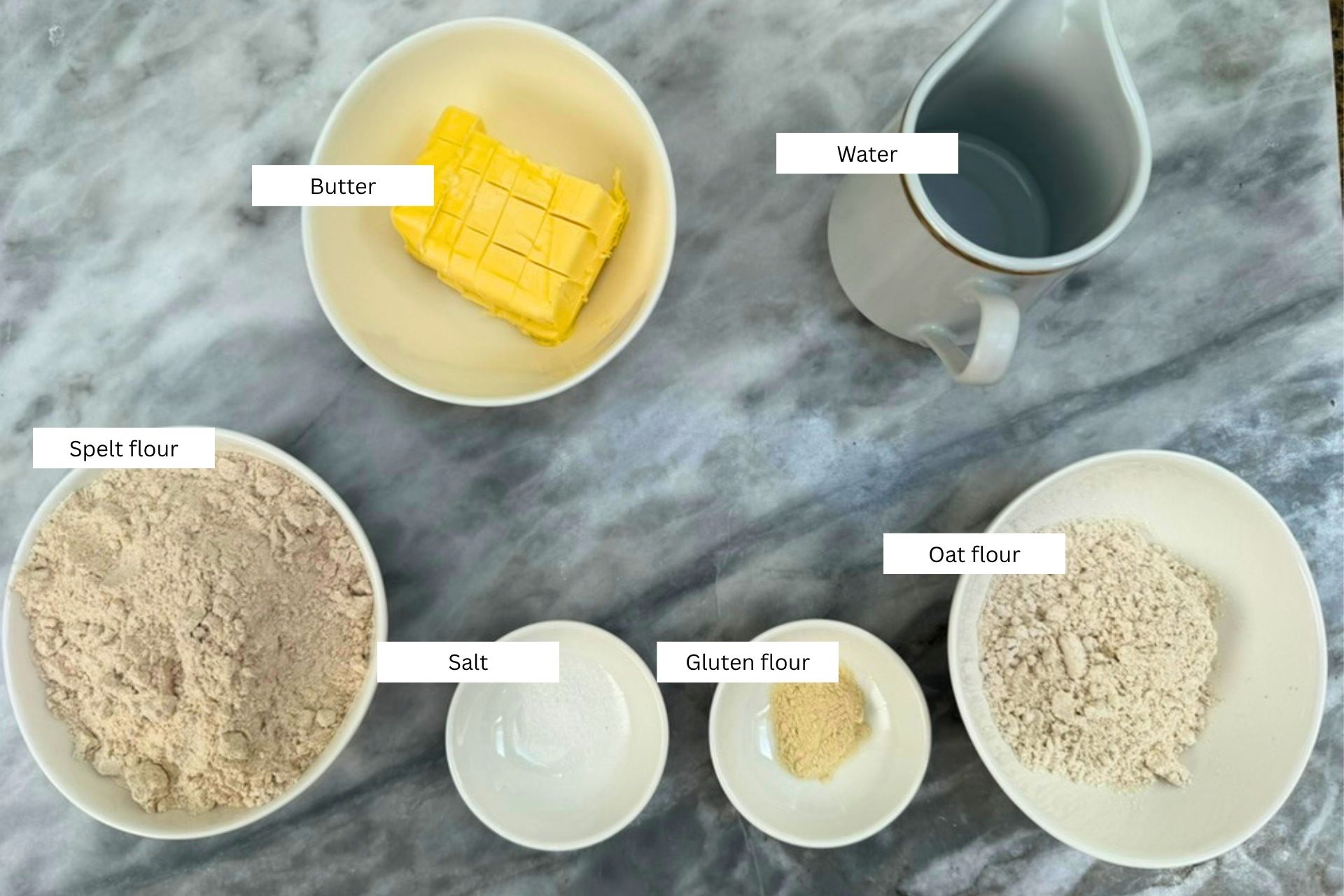
- Flour: spelt flour, oat flour, and a small amount of gluten flour if using oat flour.
- Butter (cold)
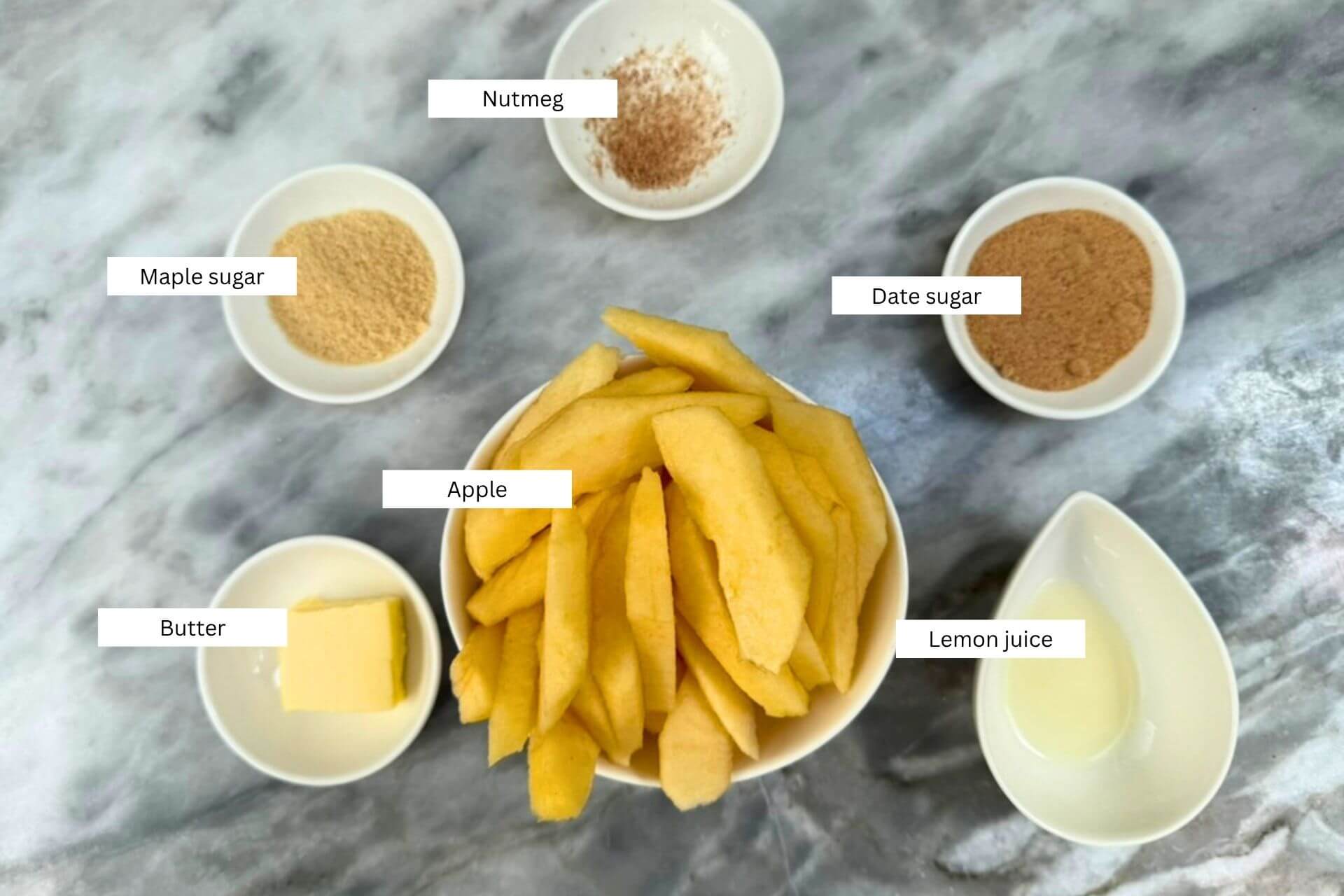
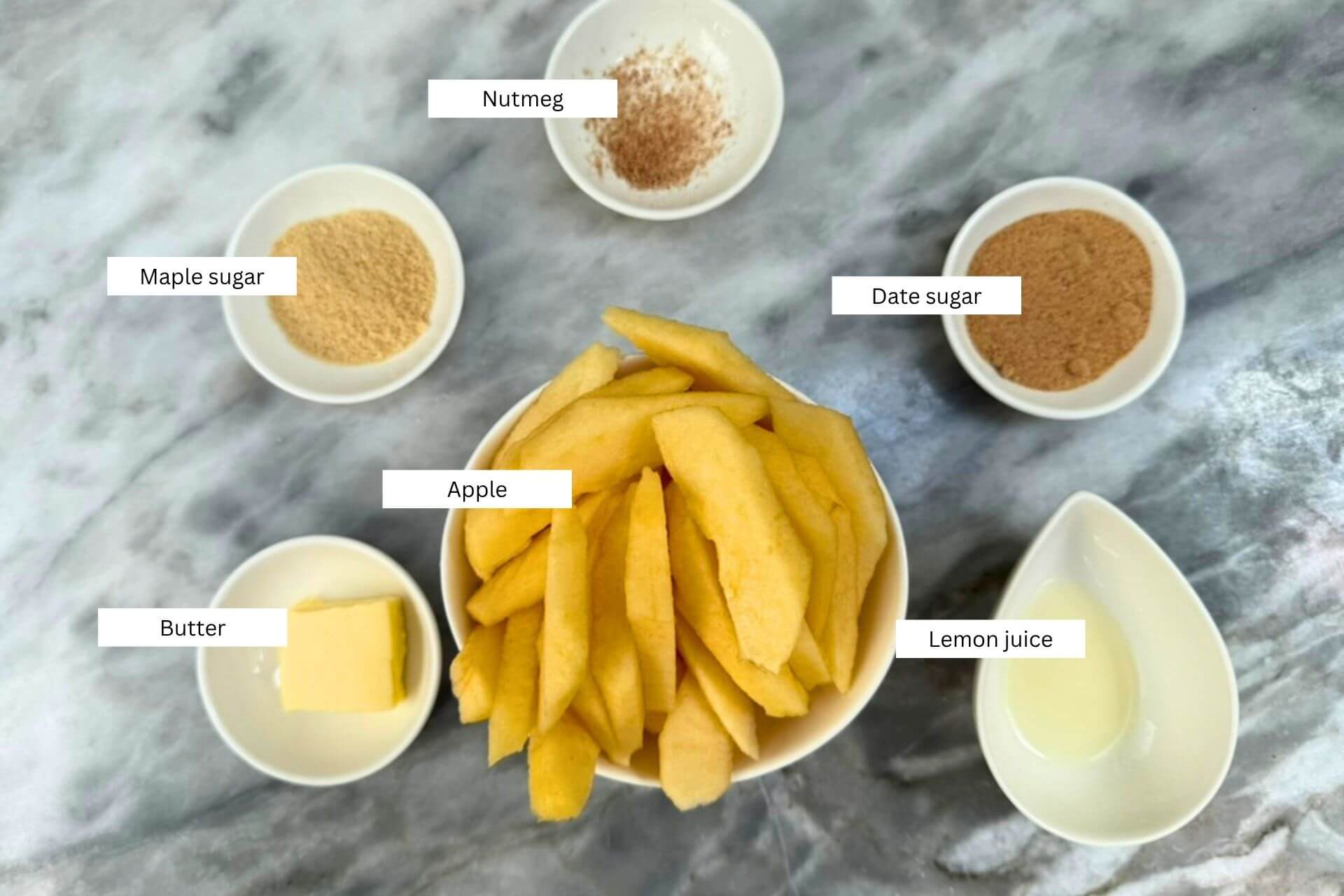
- Apple
- Sweetener: date sugar; maple sugar is optional
- Butter
- Lemon juice
- Nutmeg
These are step-by-step instructions to make this dish. For the measurements, please refer to the recipe card below.
How to make this easy Apple Galette with my recipe:
- Make the pie crust:
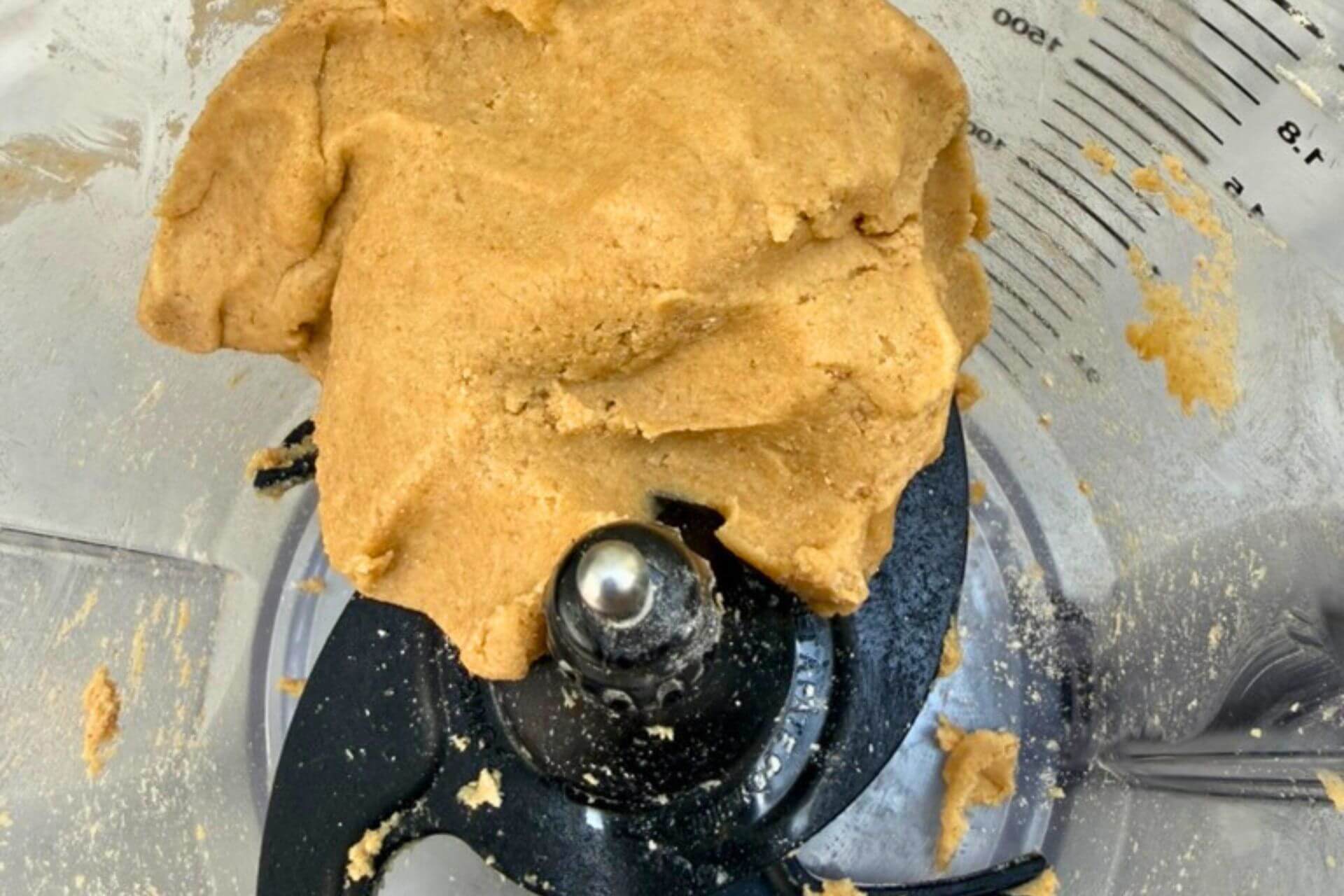
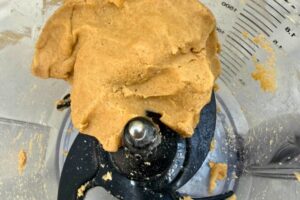
- Place the crust ingredients (except water) in a food processor fitted with the plastic dough blade. Process until the butter is chopped and the mixture looks like small peas. Add a teaspoon of cold water at a time until the consistency becomes a firm dough. Close the food processor bowl with the lid and refrigerate the dough for at least 15 minutes.
2. Make the filling:
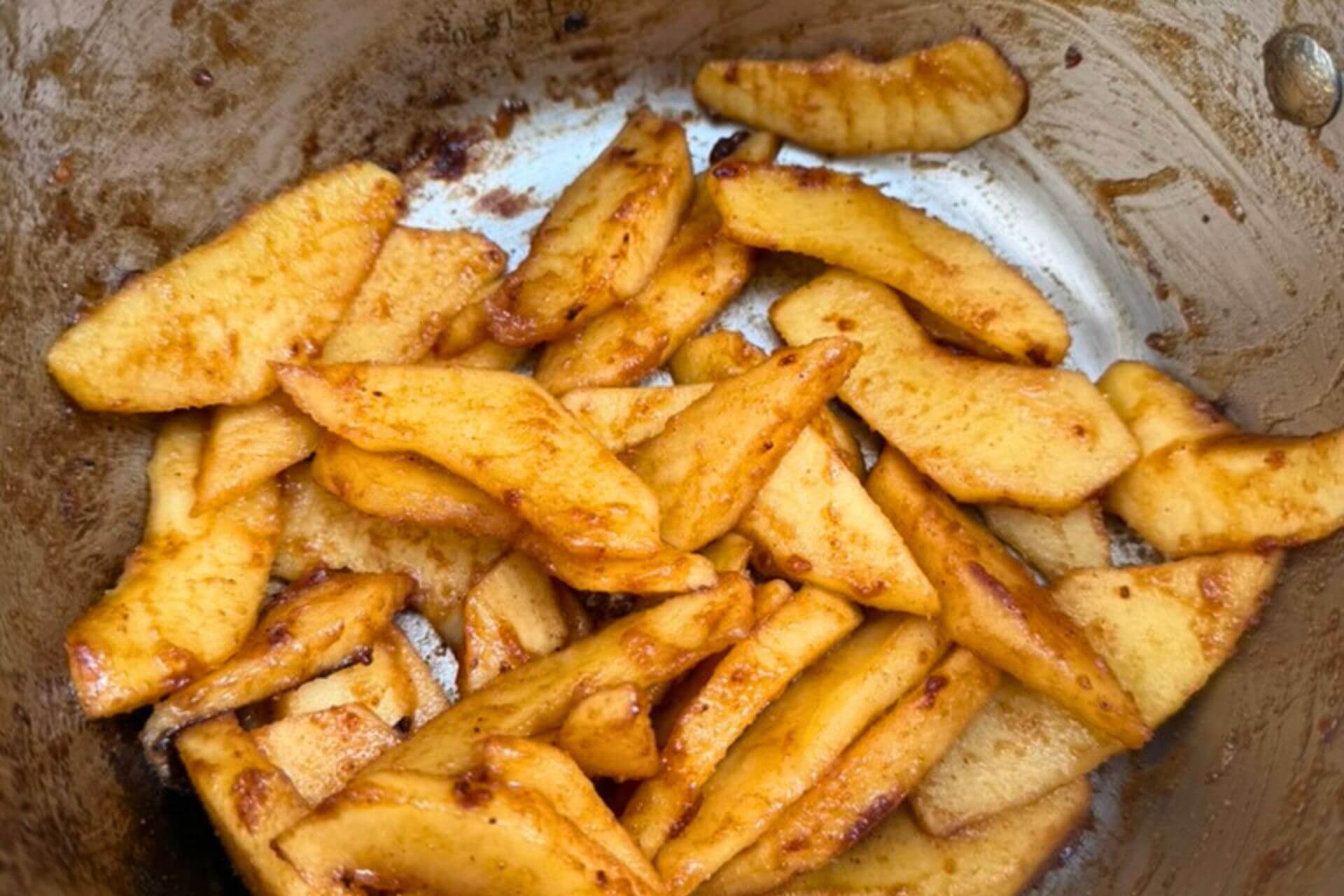
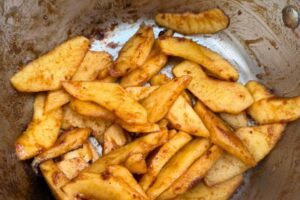
- Place the filling ingredients (except nutmeg) in a saucepot and cook over low heat for 10 minutes, or until the juices evaporate (not too dry), leaving very little moisture. Add the grated nutmeg and turn off the heat. Keep it aside to cool.
3. Assemble the Apple Galette:
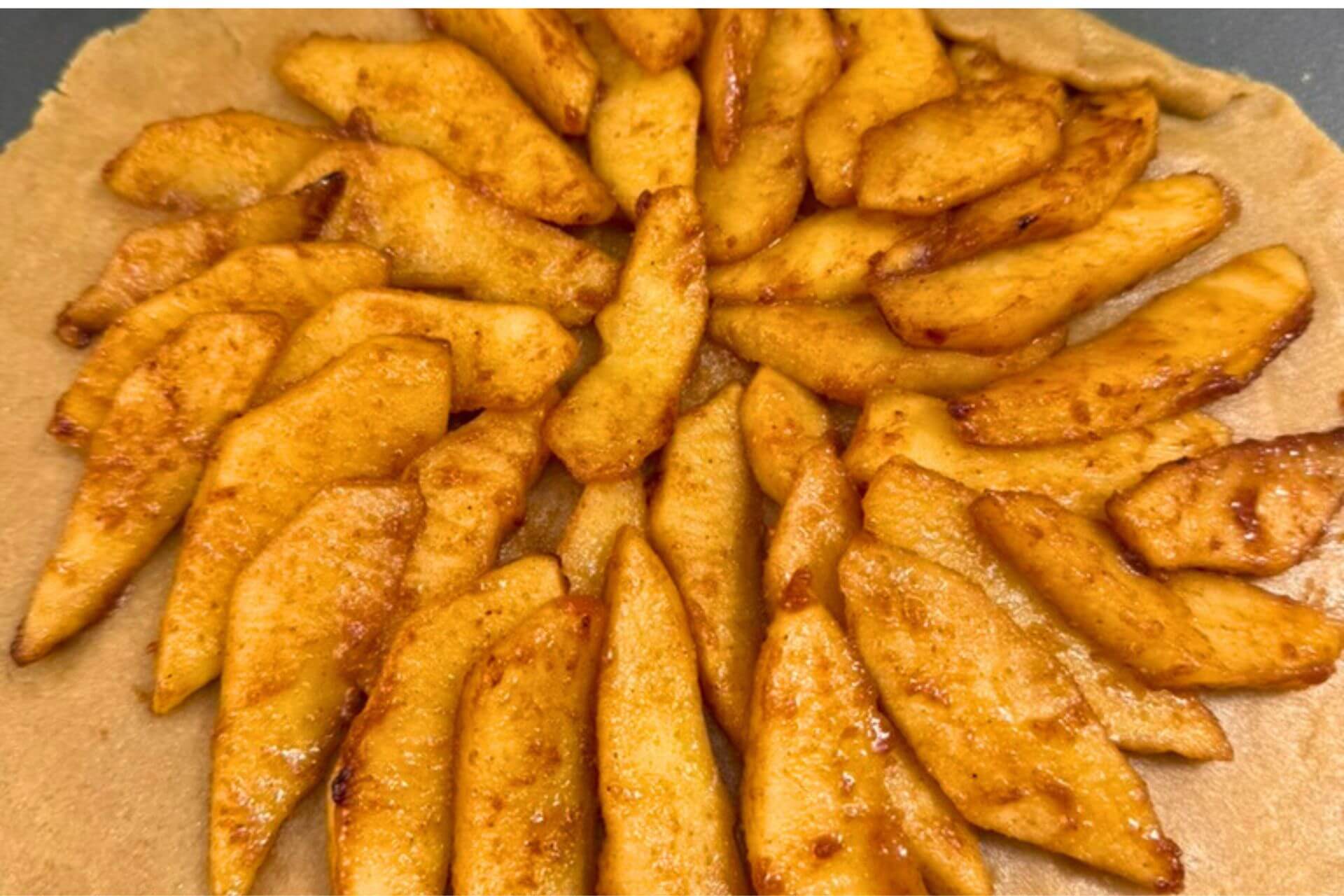
- Roll the dough into a 9″ disc. Place the disc on a nonstick baking sheet. Arrange the cooled apple slices over the disc, leaving an inch of space around the edges. Fold the edges over the apple slices. Brush the edges with egg wash (beaten with a little milk)
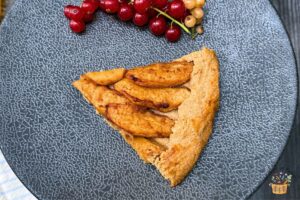
- Bake the Apple Galette for 25 minutes or until golden around the edges. Remove from the oven, cool, slice, and serve with vanilla ice cream, frozen yogurt, whipped cream, and/or currants on the side.
1. Cooking the apple slices prior to filling the base crust prevents it from becoming soggy and removes the excess moisture. (Other options are to brush the crust with egg white or apricot preserve or dust with some flour before putting the fruit on top.)
2. For a savory galette, caramelize some onions and add broccoli florets with cheese and bake.
3. Adding some lemon juice to the apple slices prevents discoloration. Alternatively, you could try soaking the apple slices in a bowl of water with 1/8 tsp of salt.
4. Do not pile a lot of apple slices on the crust. A single layer of sliced apples is enough to let the bottom of the crust bake through.
5. Feel free to sprinkle some sugar on the crust for a deep golden color.
6. Do not overmix the dough, as it will become tough when baked.
7. The pie dough must be firm and not too soft. Please add a little water at a time to make a dough that rolls easily.
8. If there is still a lot of moisture on the apple slices while arranging them, dust them with a little flour, and that will help absorb the excess moisture.
Serving suggestions:
Serve the warm Apple Galette with a scoop of ice cream, frozen yogurt, or whipped cream.
Storage:
The short-crust pastry, or pâte brisée, can be frozen for at least 3 months with plastic wrap. It can be refrigerated for several days in an airtight container or plastic wrap. If you would like to use the pastry dough from the freezer, defrost it in the refrigerator overnight, then roll and bake. Frozen unbaked Apple Galette (tightly wrapped) can be baked straight from the freezer on a lined baking tray.
Other tart or pie recipes that you might like:
Easy Apple Galette Recipe
Equipment
- baking sheet
- food processor
- saucepot small
- rolling board and pin
Ingredients
For the pie crust:
- 5 oz spelt flour
- 1 oz oat flour
- pinch salt
- ½ tsp gluten flour
- 4 oz butter unsalted
- 1-2 tsp water cold
For the filling:
- 1 tbsp butter unsalted
- 2 apple cored, peeled, sliced
- 1½ tbsp date sugar
- 1½ tsp maple sugar optional
- 2 tsp lemon juice
- a pinch nutmeg
Instructions
Make the pie crust:
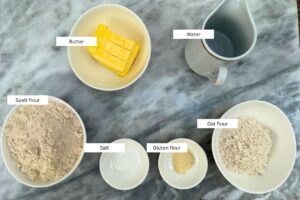
- Measure the ingredients for the crust.
- Place the crust ingredients (except water) in a food processor fitted with the plastic dough blade. Process until the butter is chopped and the mixture looks like small peas. Add a teaspoon of cold water at a time until the consistency becomes a firm dough. Close the food processor bowl with the lid and refrigerate the dough for at least 15 minutes.
Make the filling:
- Prepare the ingredients for the apple filling.
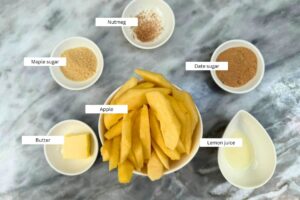
- Preheat the oven to 400 degrees F.Place the filling ingredients (except nutmeg) in a saucepot and cook over low heat for 10 minutes, or until the juices evaporate (not too dry), leaving very little moisture. Add the grated nutmeg and turn off the heat. Keep it aside to cool.
How to assemble the Easy Apple Galette with my recipe:
- Roll the dough into a 9" disc. Place the disc on a nonstick baking sheet. Arrange the cooled apple slices over the disc, leaving an inch of space around the edges. Fold the edges over the apple slices. Brush the edges with egg wash that is beaten with a little milk.
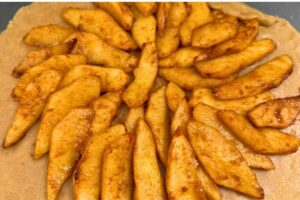
- Bake the Apple Galette for 25 minutes or until golden around the edges. Remove from the oven, cool, slice, and serve with vanilla ice cream, frozen yogurt, whipped cream, and/or currants on the side.
Notes
Nutrition


0 Comments