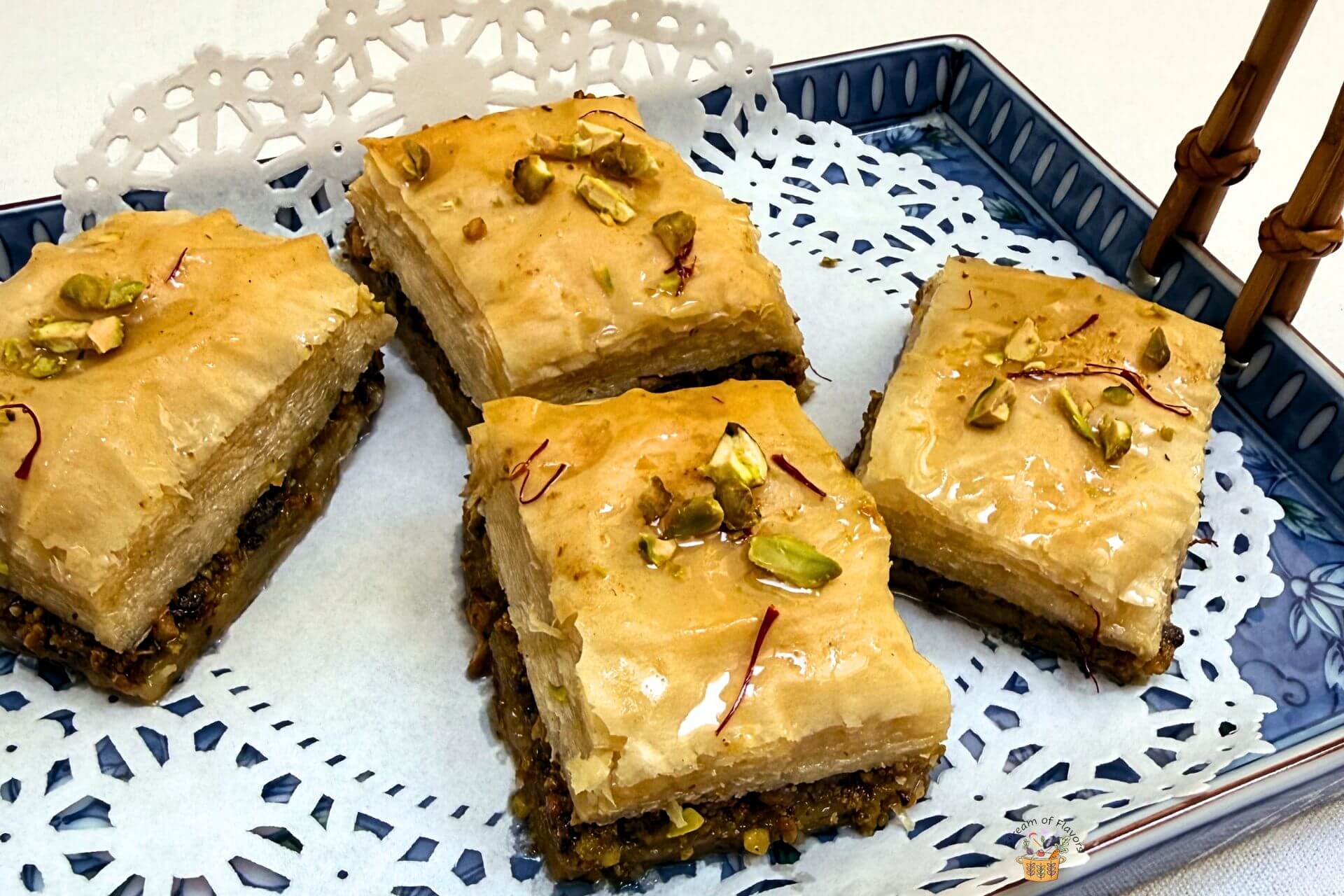
Lebanese Baklawa is crafted with delicate layers of buttery, flaky phyllo pastry sheets, generously filled with crushed premium pistachios. Experience the irresistible flavors as the pastry is soaked in a fragrant homemade sugar syrup infused with orange blossom water and a touch of luxurious saffron. This traditionally rich Middle Eastern dessert is an elegant treat for any celebration or if you’re craving something truly special. Discover the secrets to making it perfectly crisp, with a balance of sweetness and floral-citrus notes!
One of my all-time favorite dessert recipes is the Lebanese Baklawa. You’ll notice that I call it baklawa and not baklava. The traditional pronunciation is ‘bak-lau-wa ’, not ‘bak-la-va’. To some extent, these are interchangeable, but one element I pay attention to when creating recipes is nuance. Nuance makes all the difference between a ½ cup of water and a ½ cup of honey. When it comes to recipes, nuance and its cousin, detail, matter. So, let’s begin with the first nuance.
I have tried and tested this recipe for many years, making tweaks all the way. I would try one method, just to find that it was either too sweet, too soft, too soggy, or too dry. Browsing through cookbooks or magazines during the pre-internet years, I learned many tips and tricks for getting recipes right. Besides word of mouth, I have searched through magazines, cookbooks, notes from family friends’ paper clippings, etc., to find answers to my kitchen mishaps.
I would then try a recipe again using the new technique or ingredient I read about somewhere. If it worked, I would make notes and keep that method in my journals forever. It is with great pleasure that I am sharing the final product of all those trials and errors on my part over the past many years, in my attempt to perfect one of my favorite desserts.
Origin:
The key thing to remember is that Baklawa is both Mediterranean and Middle Eastern. You can find versions of this decadent dessert from Greece to India. While it remains likely that the origin of this pastry (yufka) lies in Turkey, the origin of Baklawa can be traced to the 8th century BC in Assyria, where thin layers of bread dough were baked with nuts, fruits, and honey added as a glaze. With the expansion of trade and conquest, ancient Baklawa spread throughout the Mediterranean and the Levant.
It was not until the 15th century, in the Ottoman Empire, that attar was replaced with honey and served to the Janissaries during the Islamic holy month of Ramadan. This is the origin of the Baklava. With globalization and the diaspora, even the recipe for Lebanese Baklawa is now a global phenomenon.
Baklawa and its cousin, baklava, share many commonalities. First, they are both sweet desserts. If you are wondering why I called them sweet desserts, let me assure you that there are also savory desserts, such as desserts that contain cheese or chili. They are both made from filo or phyllo pastry. They both contain nuts such as walnuts or pistachios, though there are also versions made with clotted cream. And they are both baked.
Differences between Lebanese Baklawa and Baklava:
Structure:
- Baklawa is essentially a sandwich of filo or phyllo pastry, filled with a nut filling.
- Baklava is several layers of filo or phyllo pastry with a nut filling between the layers.
Glaze:
- Baklawa is glazed with attar. Attar, used throughout the Middle East and South Asia, is a sugar-based syrup containing a floral essence. This essence is usually made from rose blossoms or orange blossoms. Lemon juice is added to the syrup to prevent sugar crystallization. But from a flavor perspective, it adds an acidic dimension to the mixture, thus both heightening the flavor profile and reducing the sweetness. For additional complexity, chefs sometimes add sweet spices such as cinnamon, cardamom, or even cloves.
- Baklava is glazed with honey. The flavor profile will alter based on the type of honey used.
Frequently Asked Questions:
What is the difference between filo and puff pastry?
While they are both commercially available, the key differences are how they are prepared and their fat contents. Phyllo dough has a lower fat content than puff pastry. Phyllo is made from flour, water, and vinegar and is brushed with oil. The layering effect occurs when the thin dough is layered and baked. When one brushes this dough with melted butter, it becomes extremely flaky, which is the traditional Lebanese Baklawa crust.
Puff pastry is ‘laminated’ dough. The laminating process involves folding butter into the dough multiple times to create a thin, alternating layer of yummy, buttery dough. This butter creates a puffy, airy texture when baked.
Why is this recipe called the Lebanese Baklawa?
It is a baklawa because I made a filo sandwich filled with pistachios and used attar as the glaze. It is Lebanese because I prefer making the baklawa lighter and mildly sweet, which is the hallmark of Lebanese Baklawa compared to the heavier Greek or Turkish baklava varieties.
What is the difference between Greek Baklava and Lebanese Baklawa recipes?
Greek Baklava is honey-based, while the Lebanese Baklawa recipe uses sugar syrup with orange blossom water and lemon juice.
This post may contain affiliate links. As an Amazon Associate, I earn from qualifying purchases at no extra cost to you.
If you’ve tried this recipe or have questions, I would love to hear from you. Please feel free to share (below) your thoughts, comments, or any questions that you might have. And if you like my recipes, you can subscribe to my mailing list to receive the latest recipes in your inbox. From my pen to your table, Bon Appetit!
Ingredients:
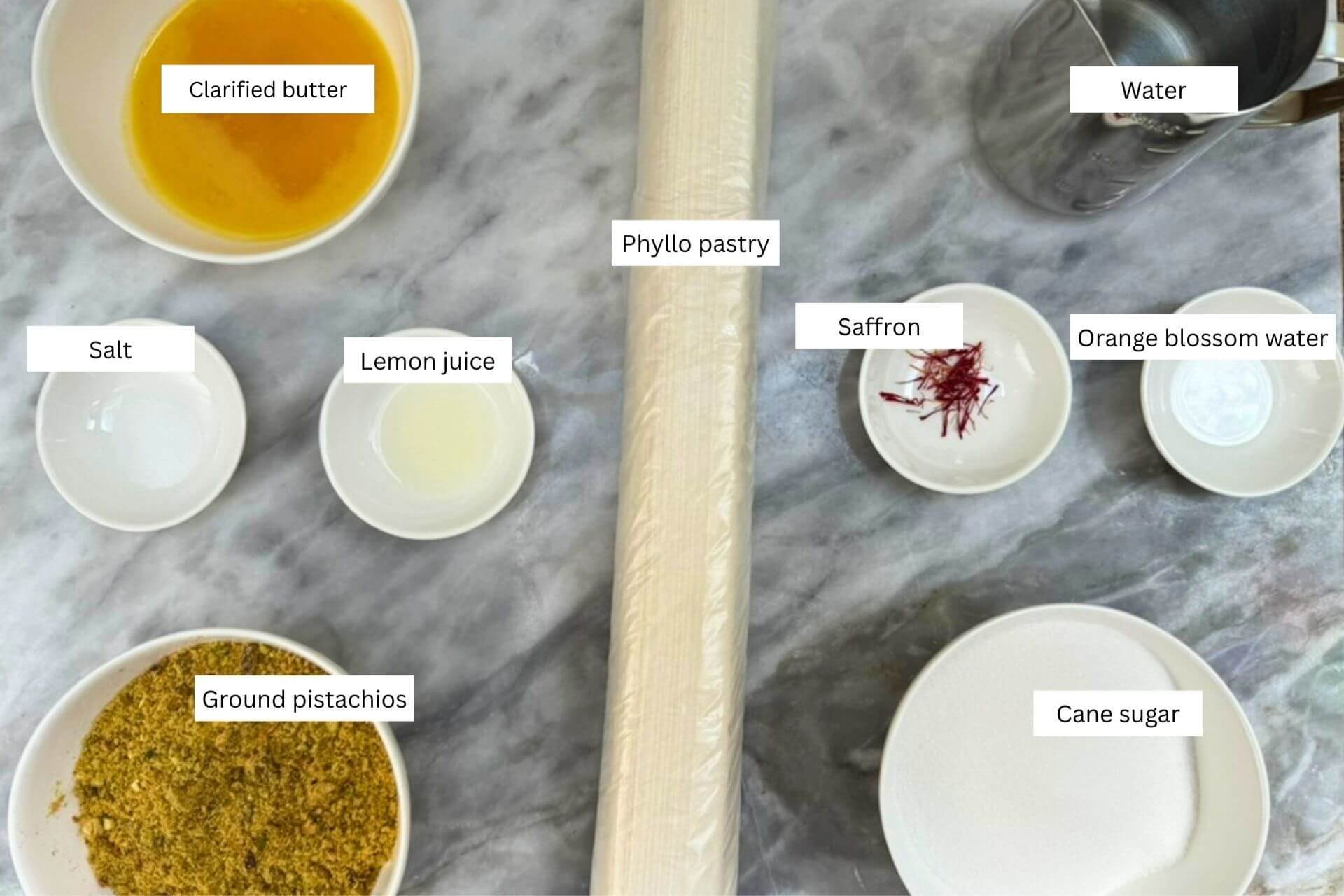
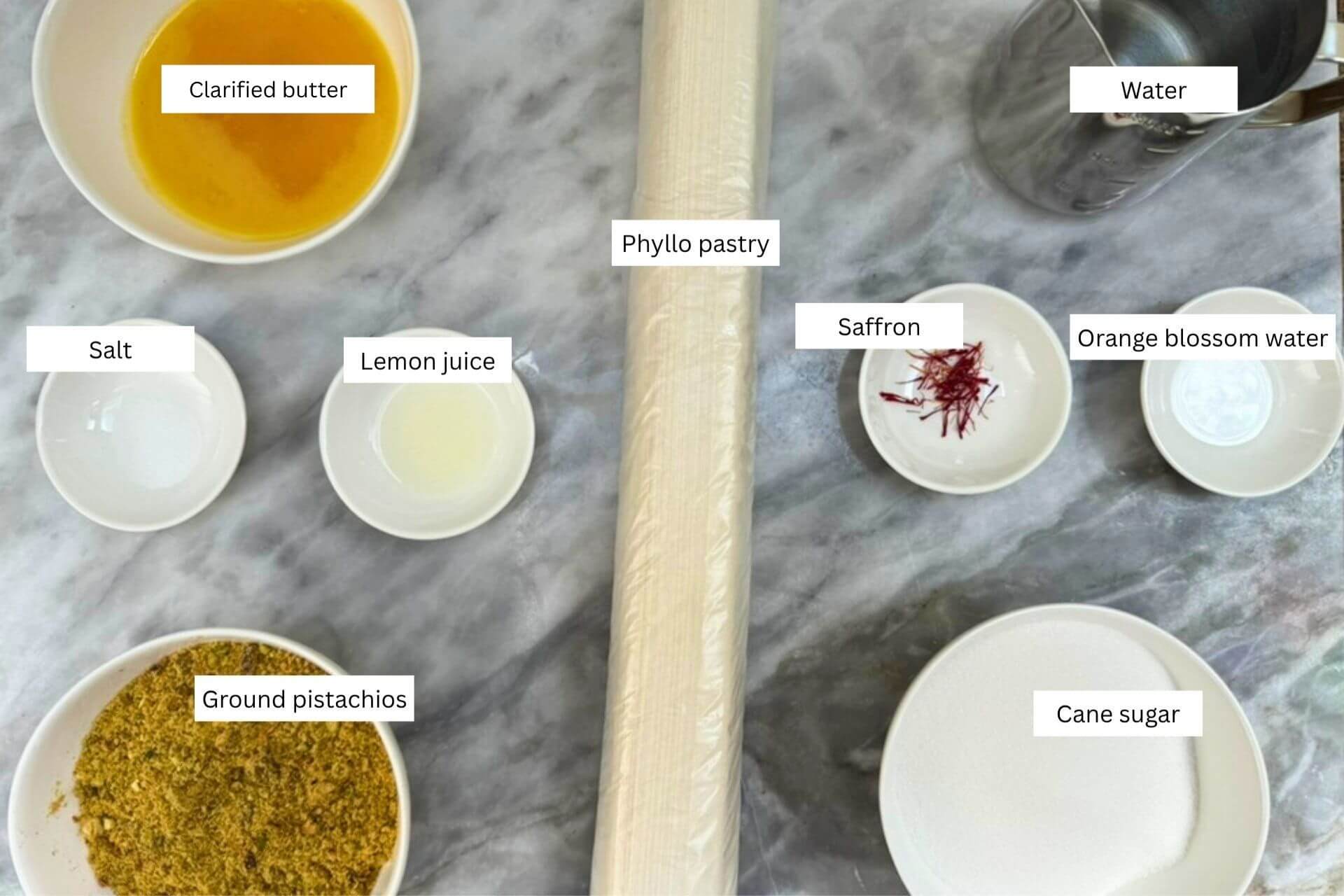
- Phyllo (or filo) dough/pastry sheets
- Ground pistachios
- Syrup: cane sugar, orange blossom water, lemon juice, saffron
Here are the step-by-step instructions to make this dish. For the measurements, please refer to the recipe card below.
How to make Lebanese Baklawa:
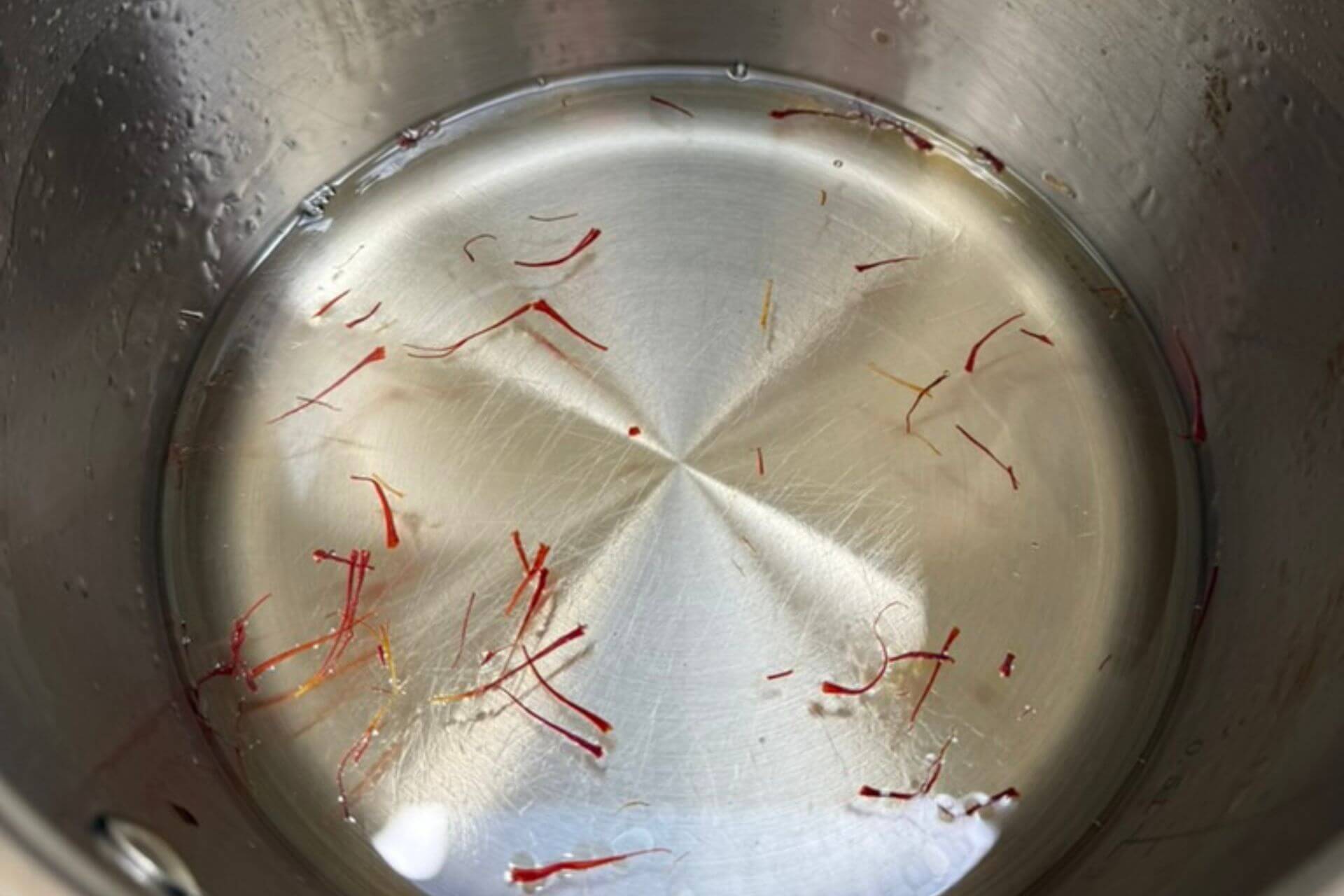
- Prepare the syrup: Bring the syrup ingredients (except saffron) to a rolling boil in a saucepot. Simmer the syrup for 10 minutes. Turn off the heat and add saffron. Set it aside to cool down.
2. Make the baklawa:
- Remove the phyllo pastry sheets from the package. Place the sheets on a rolling board and use a sharp knife or scissors to cut them into quarters. (Please ensure that the cut sheets fit neatly into the baking dish.) Cover the sheets with a damp kitchen towel to prevent them from drying and breaking. Remove one sheet at a time, place it in the baking dish, and brush the sheet with the melted clarified butter. Repeat this step until half the sheets are used.
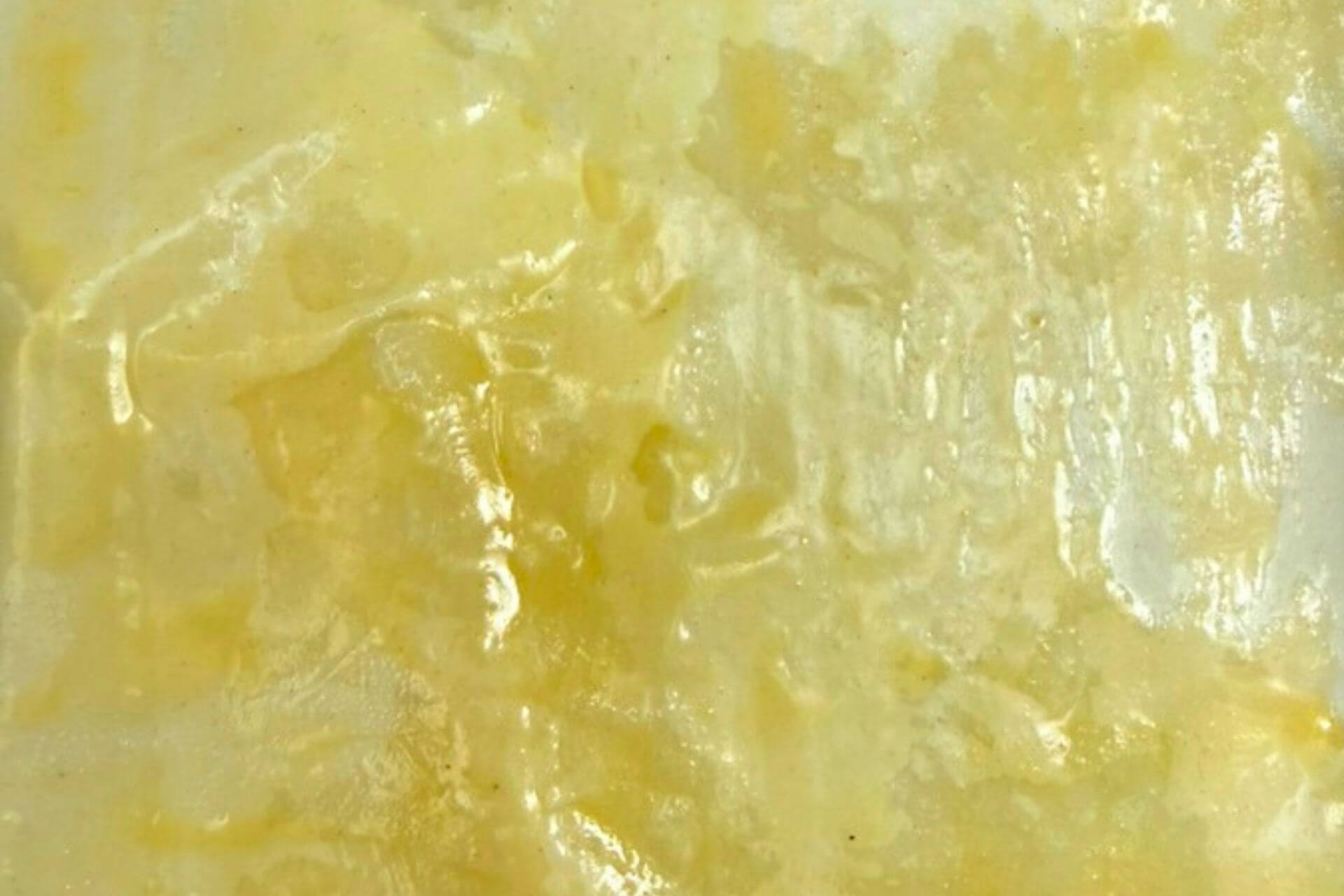
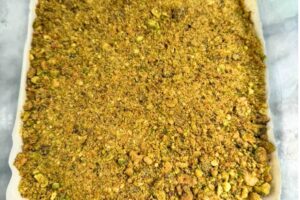
- Spread the ground pistachios evenly on top. Repeat the previous step until the remaining sheets are used. Pour the leftover melted clarified butter over the last sheet.
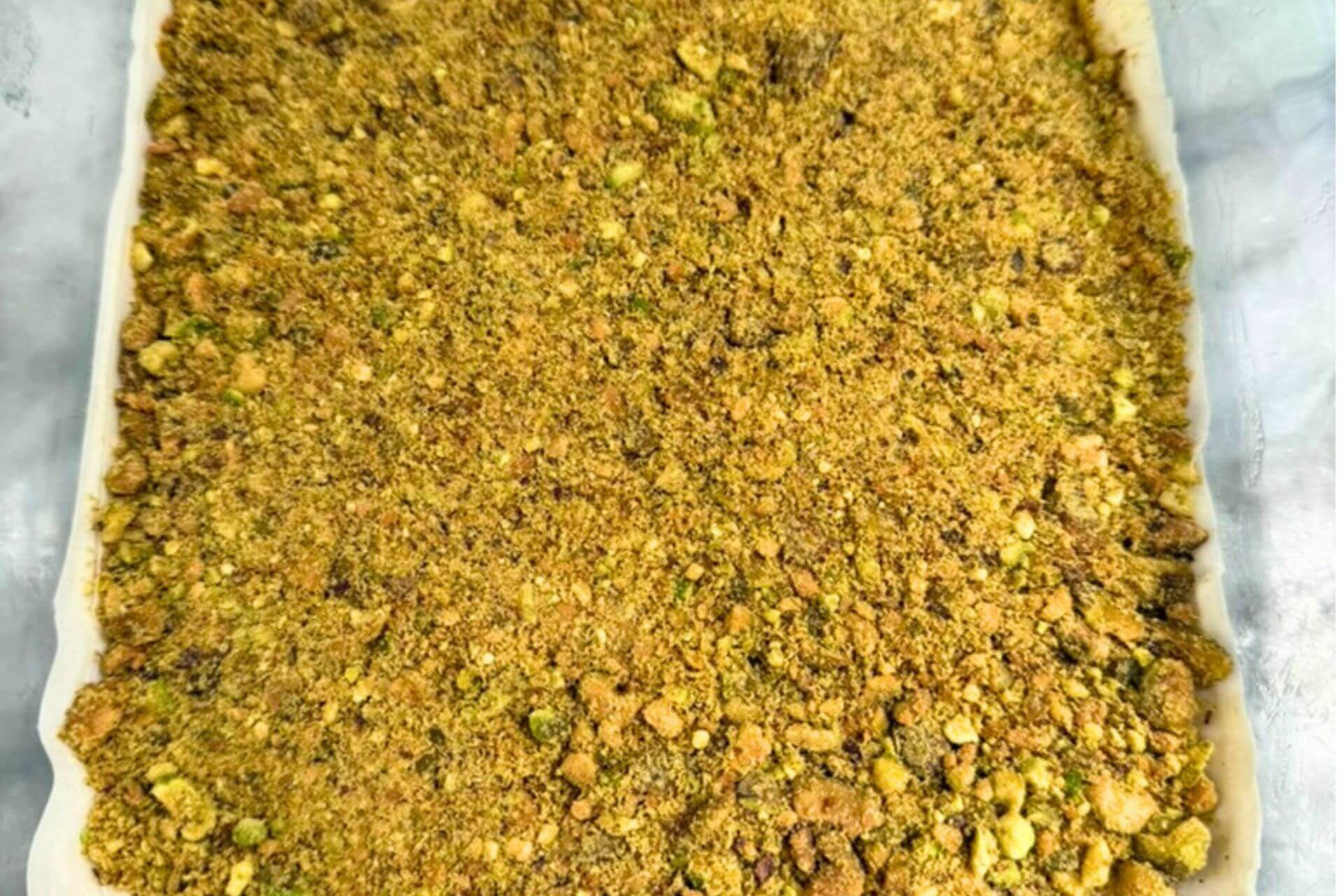
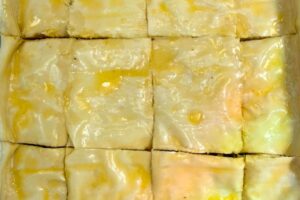
- Use a sharp knife to cut through the stack of phyllo pastry sheets into 16 squares or diamonds.
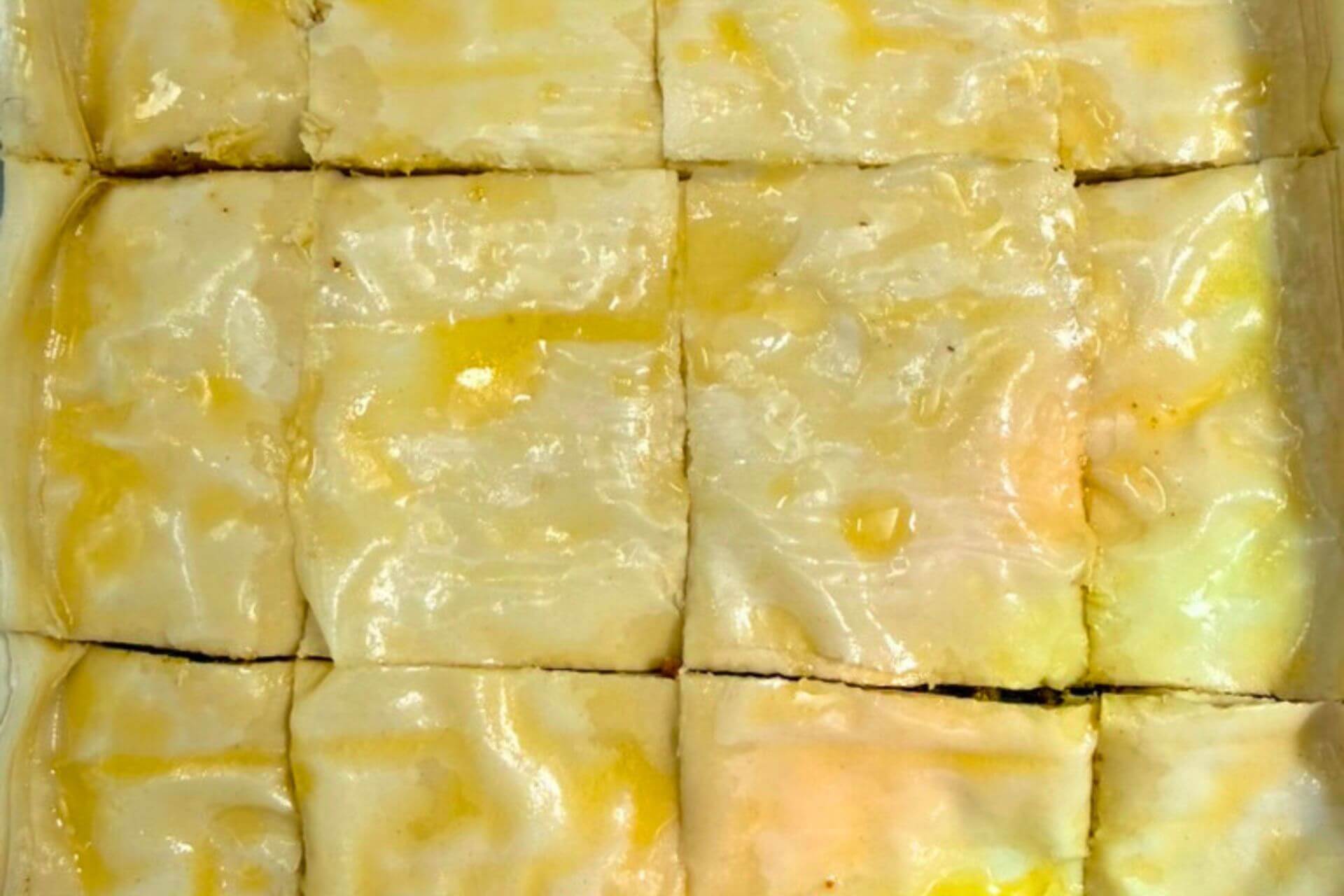
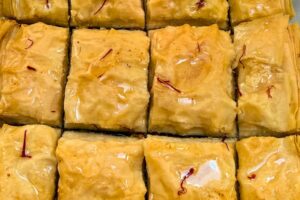
- Bake the cut baklawa for 50-52 minutes or until golden. Remove from the oven. Pour the cooled syrup over the hot baklawa. Let it rest for 1-2 hours.
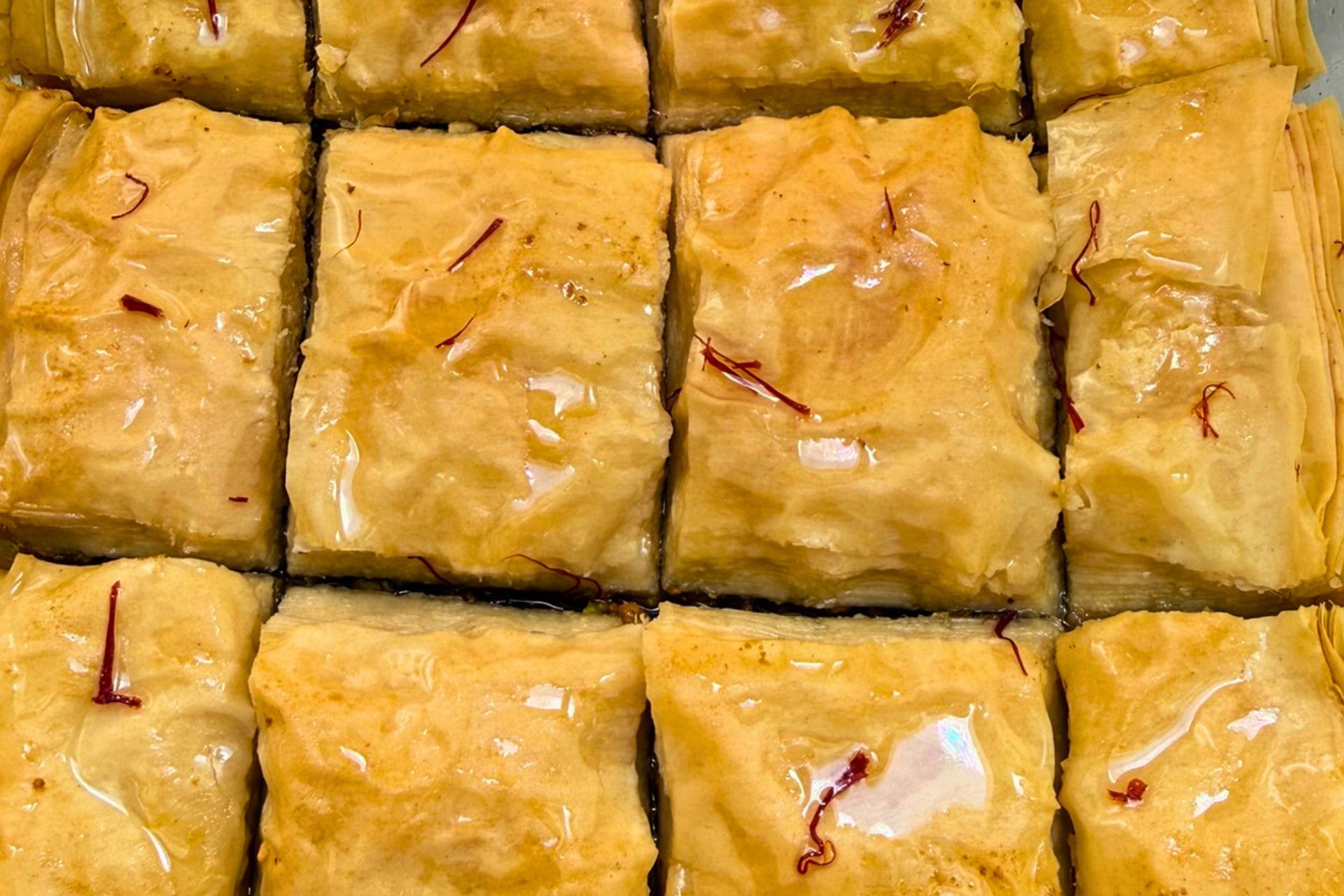
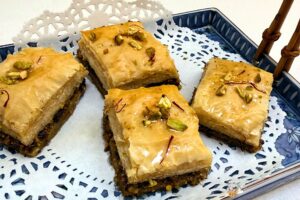
- Serve the Lebanese Baklawa for dessert with hot Turkish coffee.
1. To prevent crystallization of the sugar syrup, add the lemon juice while simmering the syrup.
2. I have used a ratio of 1:1 sugar (1 cup) and water (1 cup) for the syrup for this dessert, as it is traditionally meant to be less sweet. If you like it sweeter, use 1.5 parts sugar to 1 part water, then boil the syrup for 3-4 minutes.
3. The phyllo sheets must be placed on a rolling board covered with a damp kitchen towel to prevent the sheets from drying, cracking, and/or breaking.
4. I used a sharp knife to pre-cut the Lebanese Baklawa down to the bottom of the tray. This step will make serving easier without torn edges. Use your palm to hold down the top sheet of the pastry to make even cuts. A neatly cut slice of Lebanese Baklawa will be easy to take apart after baking and will look presentable when served.
5. I use cooled sugar syrup on the hot Baklawa. Please allow the dessert to cool completely for an hour before re-cutting and serving it.
6. Brush with clarified butter between each sheet to make this crispy, flaky, and crunchy.
Serving suggestions:
The Lebanese Baklawa tastes great when served as a cold dessert or paired with hot Turkish coffee.
Storage:
Lebanese Baklawa stays fresh when stored in an airtight container at room temperature for two weeks. Leftover desserts can be frozen in airtight containers for up to 3 months.
Other dessert recipes that you might like:
Lebanese Baklava
Equipment
- baking dish 8" x 8"
- saucepot
- Oven
Ingredients
For the syrup:
- ¾ cup water
- ¾ cup cane sugar
- ½ tsp lemon juice
- a pinch saffron
For the pastry:
- 10 sheets phyllo sheets large
- 8 tbsp clarified butter melted
- 1 cup pistachios coarsely ground
Instructions
- Prepare the ingredients.
Prepare the syrup:
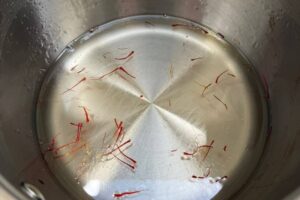
- Bring the syrup ingredients (except saffron) to a rolling boil. Simmer the syrup for 10 minutes. Turn off the heat and add saffron. Set it aside to cool down.
Prepare the pastry:
- Preheat the oven to 350 degrees F.Remove the phyllo pastry sheets from the package. Place the sheets on a rolling board and use a sharp knife or scissors to cut them into quarters. (Please ensure that the cut sheets fit neatly into the baking dish.) Cover the sheets with a damp kitchen towel to prevent them from drying and breaking. Remove one sheet at a time, place it in the baking dish, and brush it with some melted clarified butter. Repeat this step until half the sheets are used.
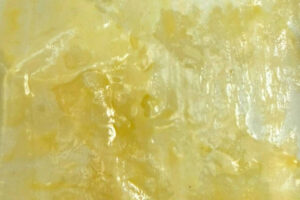
- Spread the ground pistachios evenly on top. Repeat the previous step until the remaining sheets are used. Pour the leftover melted clarified butter on top of the last sheet.
- Use a sharp knife to cut through the stack of phyllo pastry sheets into 16 squares or diamonds.
- Bake the cut baklawa for 50-52 minutes or until golden. Remove from the oven. Pour the cooled syrup over the hot baklawa. Let it rest for 1-2 hours.
- Serve the Lebanese Baklawa for dessert with hot Turkish coffee.
Notes
Nutrition

0 Comments