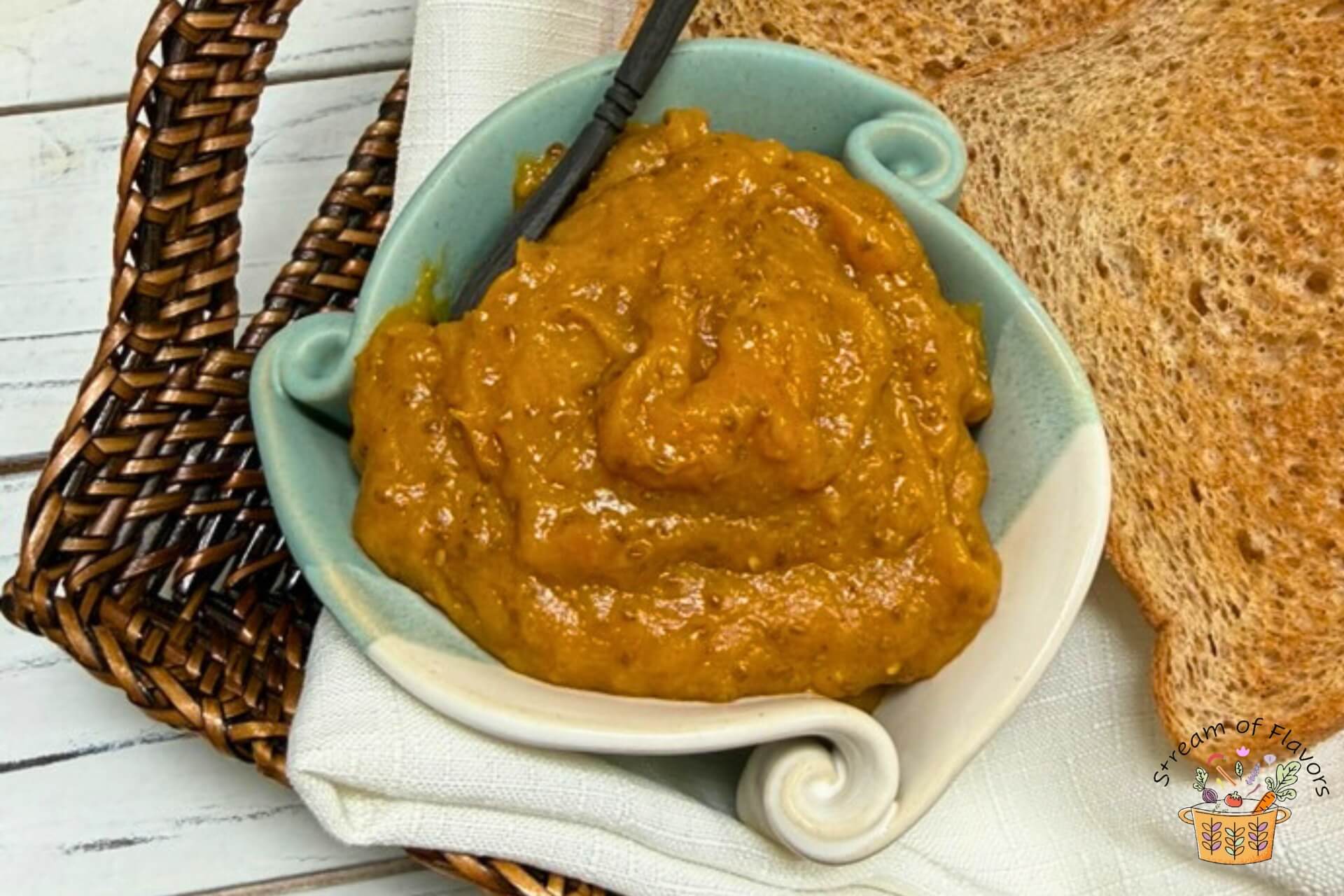
Sugar-Free Mango Jam is a bright, tropical, and naturally sweet condiment made with ripe mangoes. Date sugar gives it a gentle sweetness instead of refined sugar, while the lemon juice adds a subtle tang. Chia seeds help set the jam naturally without the use of pectin. Two simple steps and the result is a vibrant fruit spread. This versatile homemade jam can be spooned over toast, swirled in yogurt, or used as a filling in healthy desserts. It’s pure mango goodness in every bite that will make you crave more!
Origin of mango:
Interestingly, the mango is native to South Asia and is the national fruit of India, the Philippines, and Pakistan. While the wild mango is believed to have originated in the foothills of the Himalayas, the first recorded cultivation was around 5,000 years ago in Southern India. The mango rose to prominence under successive generations of Indian rulers, especially the Mughals, and became truly international in the late 15th century, when the Portuguese landed on India’s west coast. Through the Columbian Exchange, the fruit was introduced from Europe to South America, which is the principal source of mangoes for the US.
Interestingly, the mango is a drupe, a fleshy fruit covered by a thin skin and containing a large pit (a central stone that contains the seed). That makes the mango, weirdly, a distant relative of olives, dates, and cherries, as well as the nutty family of cashews and pistachios, which are also drupes. There are literally hundreds of mango varieties based on regional soil and climate characteristics, as well as hybrids resulting from cross-pollination within and outside the mango family. There is even a hybrid in which the mango was mated with a melon species.
The mango is generally eaten raw, but for centuries, especially in South India, mangoes have been made into pickles and chutneys, both sweet and savory. This Sugar-Free Mango Jam is one that I have been making ever since my visit to the Caribbean. While not common, you can find this jam in major grocery stores. My own history of making jams started with watching my mom make it, usually from fresh fruit before they started to go bad. Coming from a large household, we would sometimes overestimate how much fruit we bought, so my mom turned the unused fruit into jams using her recipe.
Benefits of mango:
Mangoes are tropical fruits that are rich in vitamins C, A, E, K, and B. They contain antioxidants such as beta-carotene and bioactive compounds such as mangiferin that promote skin and eye health while boosting immunity. In a study published in the National Library of Medicine, mangoes were found to be antiviral, antifungal, antibacterial, antiinflammatory, etc. due to their high fiber content. They are high in natural sugars and therefore need to be consumed in moderation, making this Sugar-Free Mango Jam the perfect choice.
Frequently Asked Questions:
- What is pectin?
While everyone knows that we need to add sugar, one of the mysteries of jam-making is pectin. Pectin is a starchy, soluble fiber (polysaccharide) that is mostly found in the skins of fruit. Its natural role is to act as a structural base that holds cell walls together. In this case, pectin helps suspend the small fruit slivers in a mesh that traps the liquid, effectively forming a gel. To form the gel, pectin requires two other components: acid and sugar. While the acid extracts pectin from the fruit during simmering, sugar enhances the gel structure by absorbing the moisture from the pectin. Some fruits, such as apples, oranges, unripe grapes, certain berries, and lemons, are rich in natural pectin, while others, such as mangoes, cherries, melons, nectarines, and peaches, are low in pectin. So it is natural for us to combine high and low-pectin fruits to make jam. This is why I have combined the mango (low in pectin) with the lemon (high in pectin). To achieve a gel-like consistency, I have used chia seeds in this Sugar-Free Mango Jam.
2. Why add lemon juice to the jam?
Lemon juice is added to the jam not just to give it a pop of citrusy flavor, but also to act as a chemical catalyst. It lowers the pH by allowing the pectin strands to bind together. Fresh lime or lemon juice can vary in acidity depending on ripeness. Bottled lemon juice works well to ensure the jam sets consistently, since it has a standardized pH.
3. What fruits can I substitute for the mangoes?
Other low-pectin fruits that you can use in this recipe are ripe peaches, apricots, raspberries, and strawberries.
This post may contain affiliate links. As an Amazon Associate, I earn from qualifying purchases at no extra cost to you.
If you’ve tried this recipe or have questions, I would love to hear from you. Please feel free to share (below) your thoughts, comments, or any questions that you might have. And if you like my recipes, you can subscribe to my mailing list for the latest recipes delivered to your inbox. From my pen to your table, Bon Appétit!
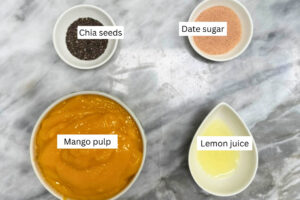
Ingredients:
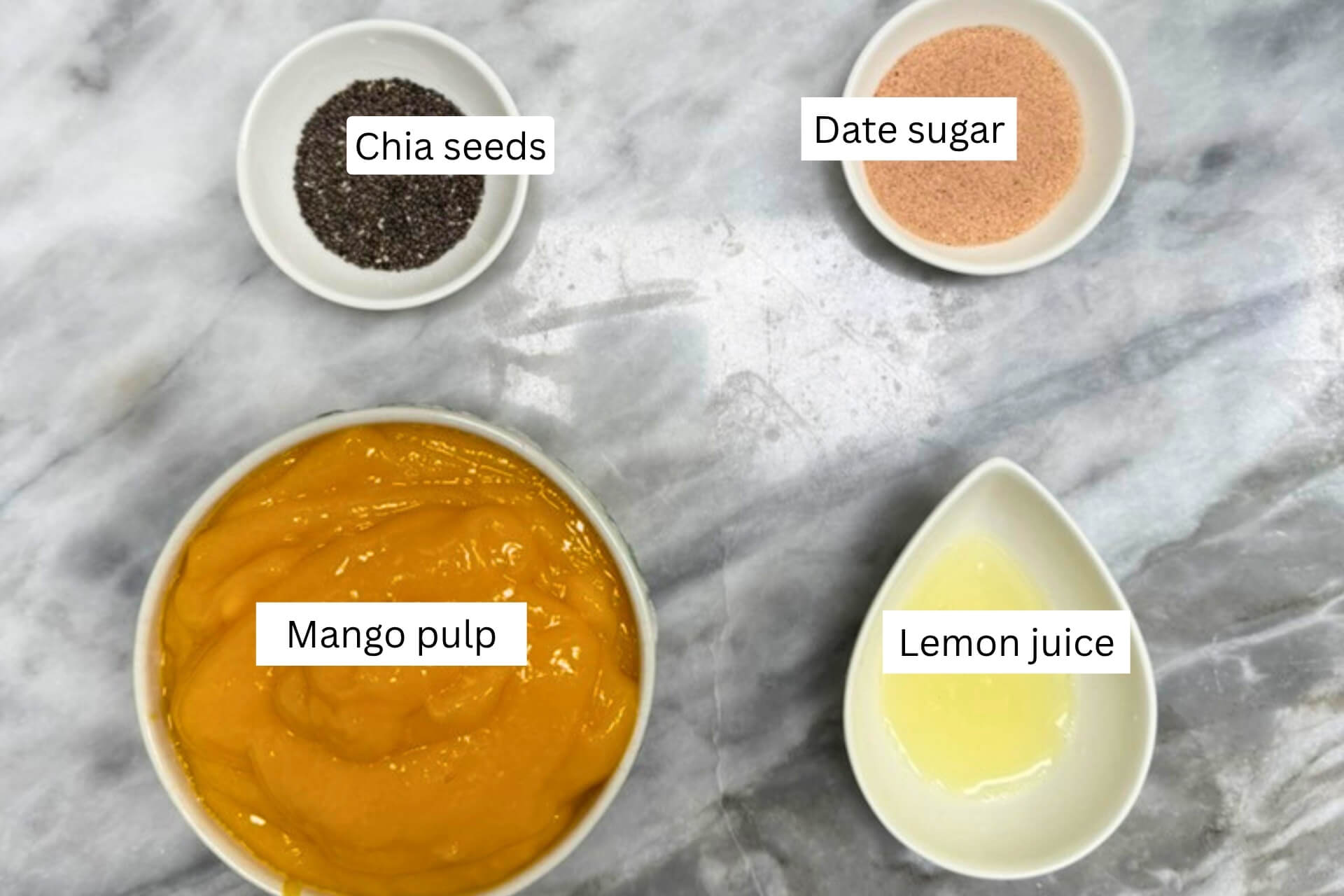
- Mango pulp
- Lemon juice
- Chia seeds
- Date sugar
How to make the Sugar-Free Mango Jam:
- Add the coarsely pureed mango pulp and lime juice to a heavy-bottomed pot and bring the mixture to a boil over medium heat. When the mixture boils, simmer for 12-14 minutes, stirring constantly, until it reaches the desired jam consistency. Add the chia seeds and date sugar.
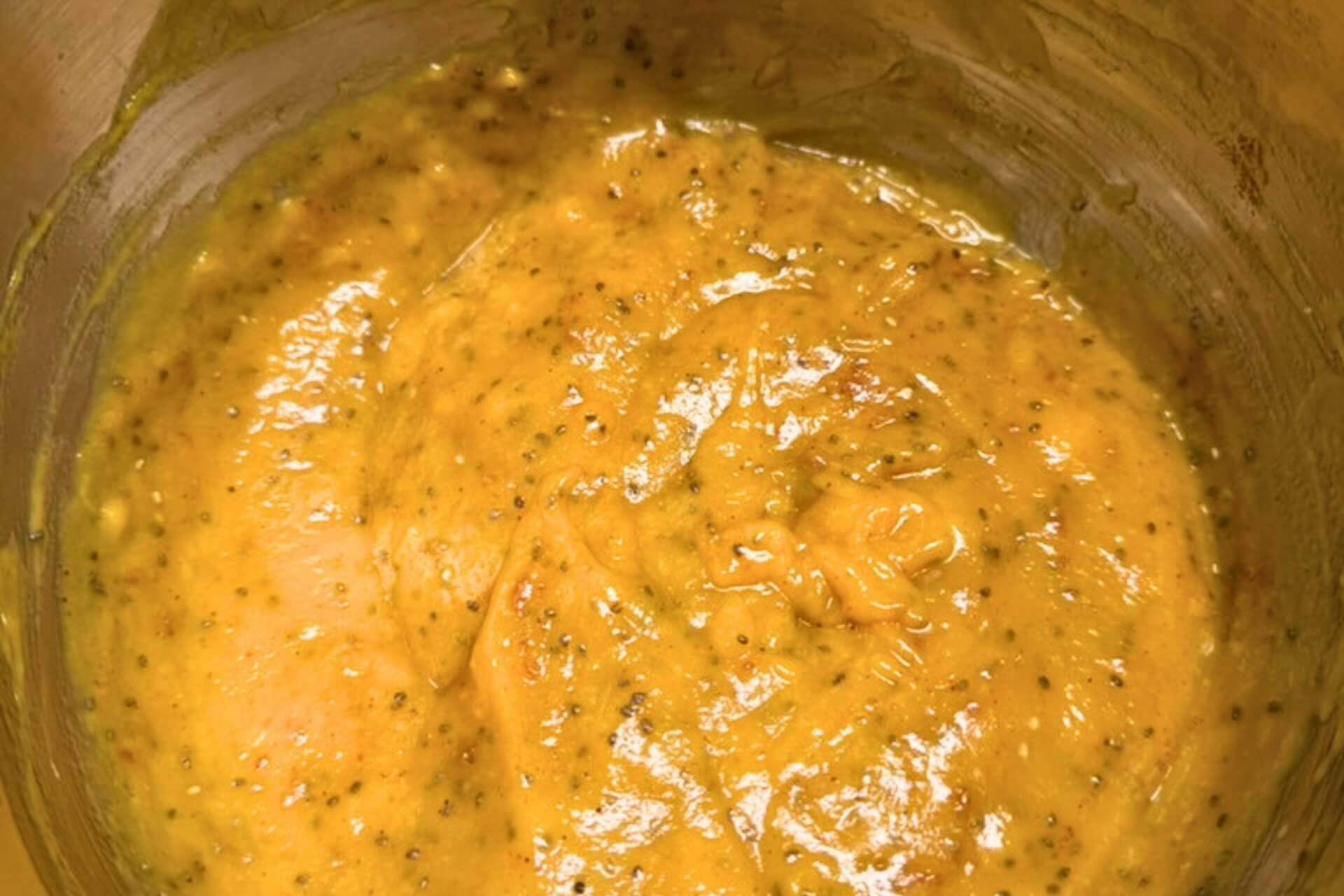
2. Cook for another 1-2 minutes and turn off the heat. Allow the mixture to thicken while the chia seeds absorb and swell. Allow it to rest for at least 20 minutes. Cool it completely and then spoon the Sugar-Free Mango Jam into a clean, sterilized, dry mason jar.
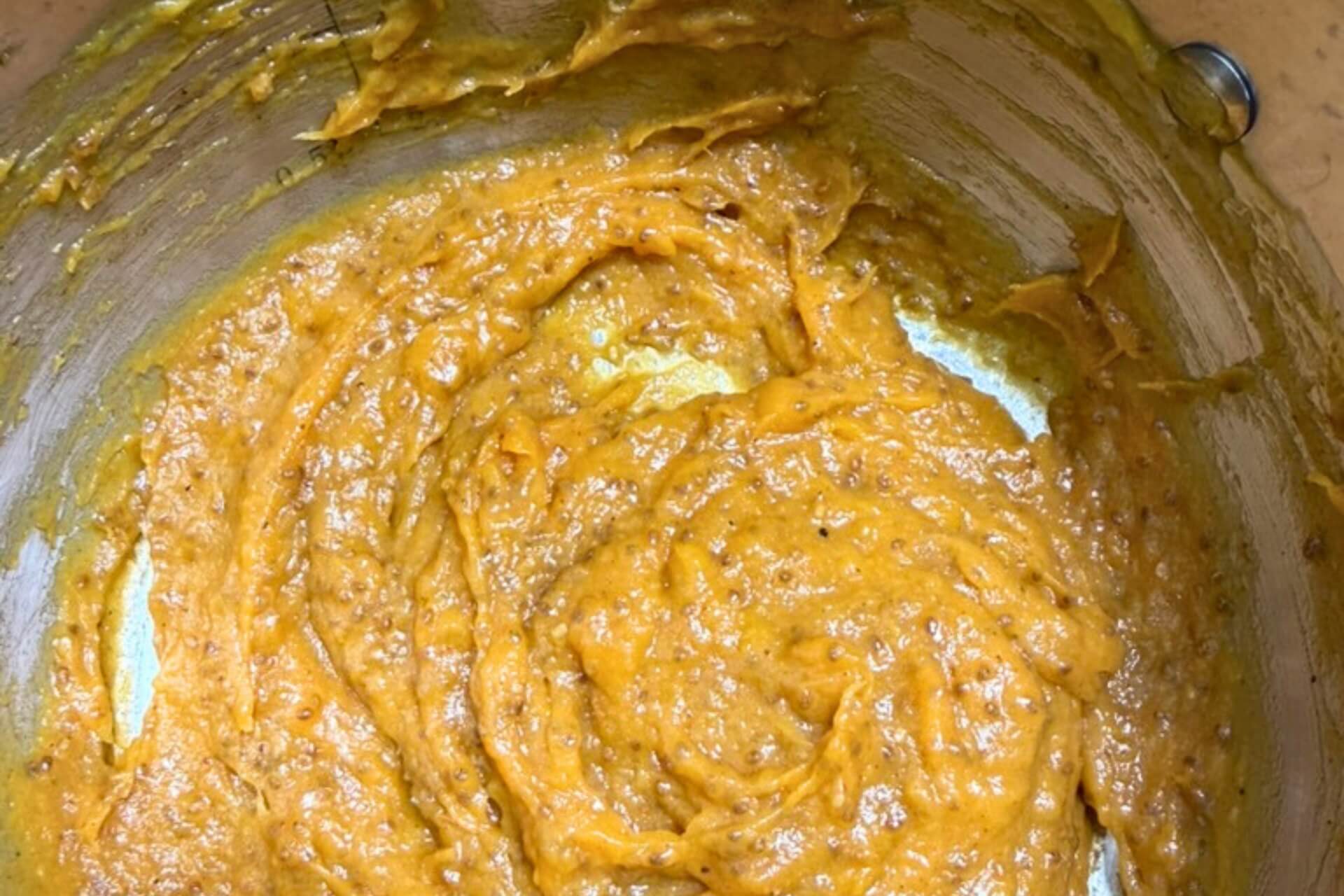
3. Serve the Sugar-Free Mango Jam over toasted bread.
Tips:
- Feel free to soak the chia seeds in a tablespoon of water. If using chia seeds without soaking, please allow the mixture to rest after cooking it.
- Fresh mangoes will yield a tasty jam. Since this is a sugar-free iteration, it will not be as sweet as regular jam. Adjust the sweetness by adding a tablespoon of maple sugar.
- The jam mixture must be cooked on low heat or simmered. Constant stirring prevents the bottom from burning.
- Lime juice acts as a preservative, helping the jam to set and prevent spoilage over time. It lowers the pH by allowing the pectin strands to bind together. Fresh lime or lemon juice can vary in acidity depending on the ripeness. Bottled lemon juice works well to ensure the jam sets consistently, since it has a standardized pH.
Serving suggestion:
This versatile homemade jam can be spooned over toast, swirled in yogurt, or used as a filling in healthy desserts.
Storage:
Store this Sugar-Free Mango Jam in clean, dry, sterilized mason jars in the refrigerator for 1-2 weeks.
Other recipes that you might like:
Sugar-Free Mango Jam
Equipment
- heavy-bottomed pot
Ingredients
- 1.5 cup mango pulp coarsely pureed
- 1.5 tbsp lime juice bottled
- 1.5 tbsp chia seeds
- 1 tbsp date sugar
Instructions
- Prepare the ingredients. Puree the mango coarsely to a thick pulp.
- Add the coarsely pureed mango pulp and lime juice to a heavy-bottomed pot and bring the mixture to a boil over medium heat. When the mixture boils, simmer for 12-14 minutes, stirring constantly, until it reaches the desired jam consistency. Add the chia seeds and date sugar.
- Cook for another 1-2 minutes and turn off the heat. Allow the mixture to thicken while the chia seeds absorb and swell. Allow it to rest for at least 20 minutes. Cool it completely and then spoon the jam into a clean, sterilized, dry mason jar.
- Serve the Sugar-Free Mango Jam over toasted bread.

Notes
- Feel free to soak the chia seeds in a tablespoon of water. If using chia seeds without soaking, please allow the mixture to rest after cooking it.
- Fresh mangoes will yield a tasty jam. Since this is a sugar-free iteration, it will not be as sweet as regular jam. Adjust the sweetness by adding a tablespoon of maple sugar if needed.
- The jam mixture must be cooked on low heat or simmered. Constant stirring prevents the bottom from burning.
- Lime juice acts as a preservative, helping the jam to set and prevent spoilage over time. It lowers the pH by allowing the pectin strands to bind together. Fresh lime or lemon juice can vary in acidity depending on ripeness. Bottled lemon juice works well to ensure the jam sets consistently, since it has a standardized pH.
- Store this Sugar-Free Mango Jam in clean, dry, sterilized glass mason jars in the refrigerator for 1-2 weeks.
Nutrition




0 Comments