
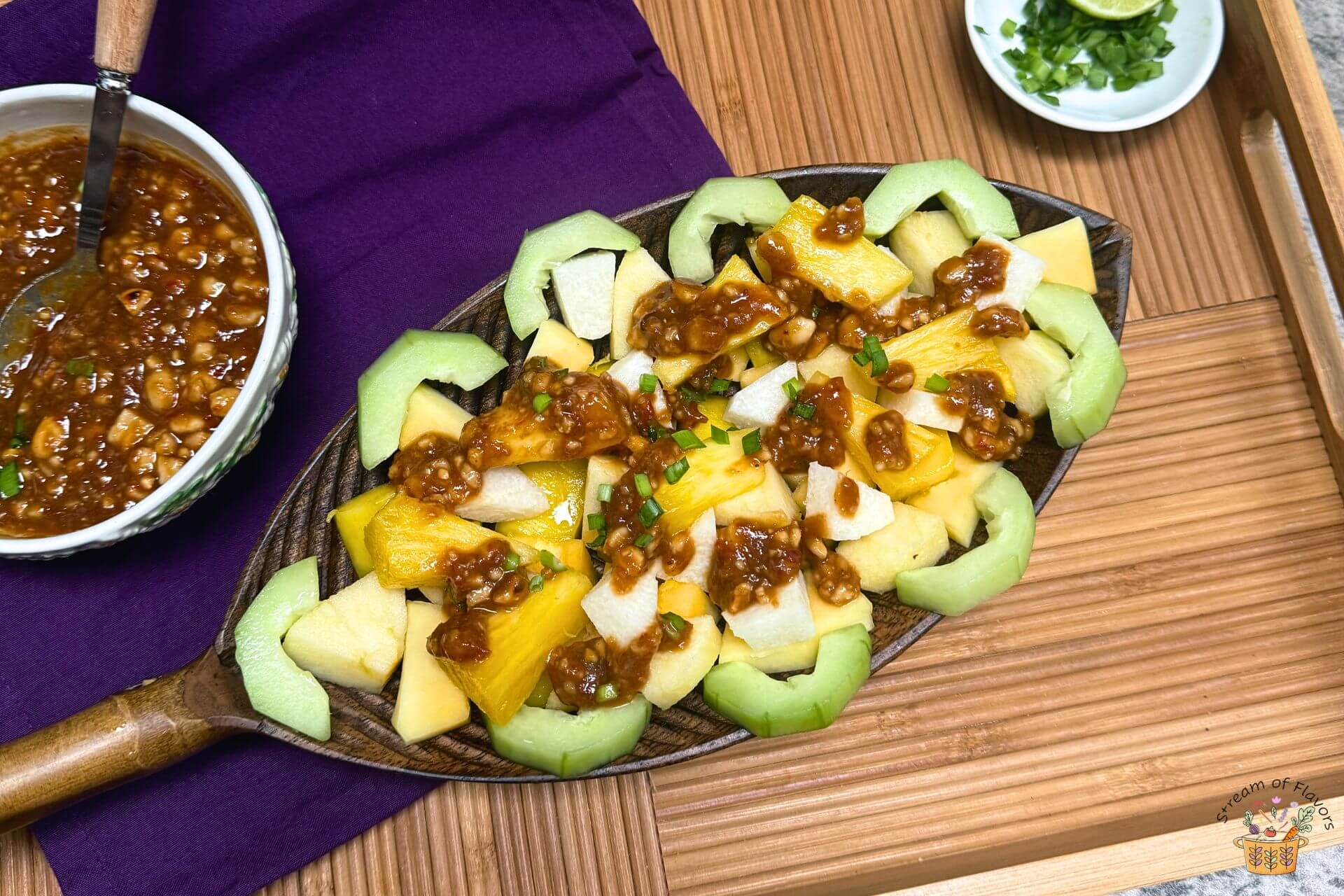
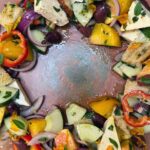
Rujak Recipe is an Indonesian fresh fruit-and-vegetable salad, dressed in a sweet, spicy, and tangy peanut sauce. Crisp unripe mango and papaya, tart green apple, juicy pineapple, refreshing cucumber, and crunchy jicama are served on a platter, where each fruit adds brightness and texture to the salad. The real star of the salad is the luscious peanut sauce, which begins with a sautéed shrimp, chilli, and galangal paste, folded with tamarind pulp, palm sugar, and crushed peanuts. The end result is a glossy, nutty dressing drizzled over the salad, bringing out the dish’s bold Indonesian character. There is something truly magical about savoring this salad as a snack at any time of the day!
The harmonious explosion of complex, contrasting flavors and textures etched a memory I would not revisit for a decade. The next time I had Rojak was in Singapore. The ingredients were a far cry from the humble dish served from the back of a bicycle. It was then that I realized that Rojak meant something different in Singapore than in Malaysia, even though both countries shared a rich, symbiotic history. As I further explored the recipe for the Indonesian Rujak, I was surprised (and I’m still not sure why) to find many variations in composition and flavor across towns and villages. From Bandung in Indonesia to Butterworth in Malaysia, people used tamarind, chili, peanut sauce, and dried shrimp to dress jicama, pineapples, green mangoes, and many other tropical fruits, making Rujak.
What is Rujak?
Rujak is an Indonesian fruit salad that sometimes uses vegetables like the jicama. It is a popular street food found all over Indonesia and other parts of Southeast Asia. This Rujak Recipe is also known as Rujak Buah, in which tropical fruits are drizzled with a tangy, sweet, and spicy peanut sauce.
Origin of the Rujak Recipe:
Salads have a long and varied history. Derived from the Latin ‘sal’, meaning salt, they usually feature fresh seasonal produce and can include herbs, fruits, vegetables, meats, or seafood. While the simplest dressings are oil and salt, those that liven flavors can become complex, making the salad extremely rich.
Rujak, in Indonesian or Rojak in Malay, has a complex medley of flavors that belie its humble, simple beginnings. Rojak in Malay literally means ‘mixed,’ so the name is conveniently apt for many reasons. While local folklore attributes the origin of the Rujak to 9th century Java, the admixture of Indian, Chinese, Thai, and traditional Malay cuisines has made this spectacular salad a world-beater. While each vendor has its own unique twist, the Rujak recipe’s essential cohesion stems from its diverse multicultural heritage.
Frequently Asked Questions:
- What fruits are commonly used in the Rujak Recipe?
Green mango, unripe papaya, pineapple, cucumber, green apple, guava, and water apple are the most common fruits used in the Rujak. As for vegetables, jicama is added for extra crunch. Typically, the fruit selection varies by region and season.
2. How can I make this recipe vegan?
To make it vegan, omit the dried shrimp paste and substitute soy sauce instead.
3. Is this Rujak Recipe healthy?
Fruits and jicama in this recipe are loaded with fiber, vitamin C, and antioxidants. However, the peanut sauce is laden with palm and dark brown sugar, so consuming it in moderation is key.
This post may contain affiliate links. As an Amazon Associate, I earn from qualifying purchases at no extra cost to you.
If you’ve tried this recipe or have questions, I would love to hear from you. Please feel free to share (below) your thoughts, comments, or any questions that you might have. If you enjoy my recipes, subscribe to my mailing list to receive the latest recipes directly in your inbox. From my pen to your table, Bon Appétit!
Ingredients:
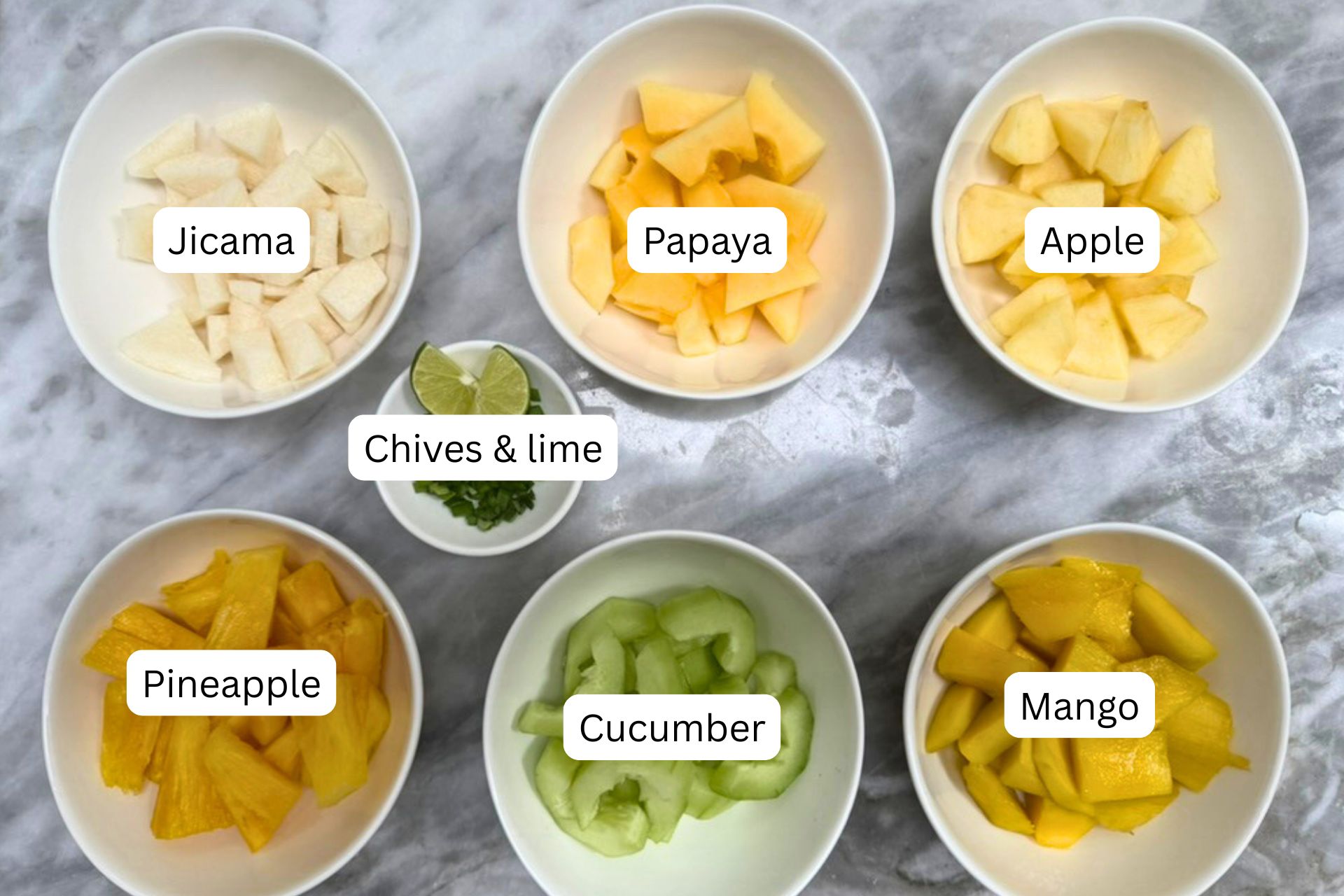
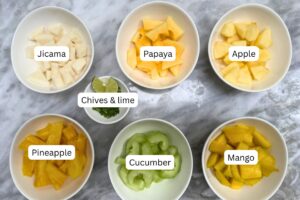
- Fruits: mango, pineapple, green apple, papaya, cucumber
- Vegetables: jicama
- For garnish: chives, lime
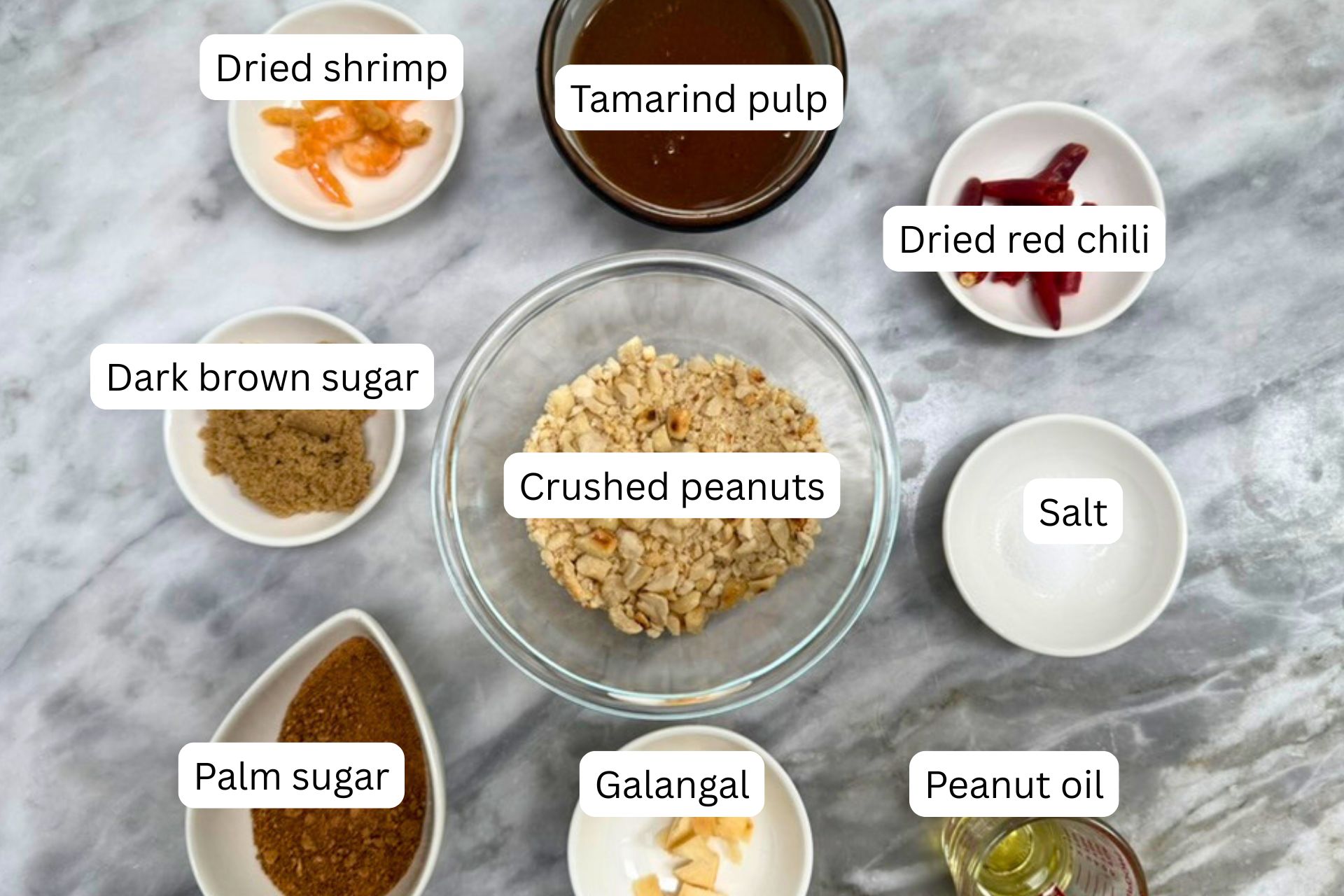
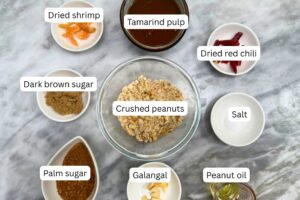
- Peanut oil (or use coconut oil)
- Dried shrimp
- Dried red chili
- Galangal (optional)
- Dark brown sugar
- Palm sugar
- Tamarind pulp
- Crushed roasted peanuts
Here are the step-by-step instructions to make this dish. Please refer to the recipe card below for the measurements.
How to make Rujak with my recipe:
- How to make the peanut sauce:
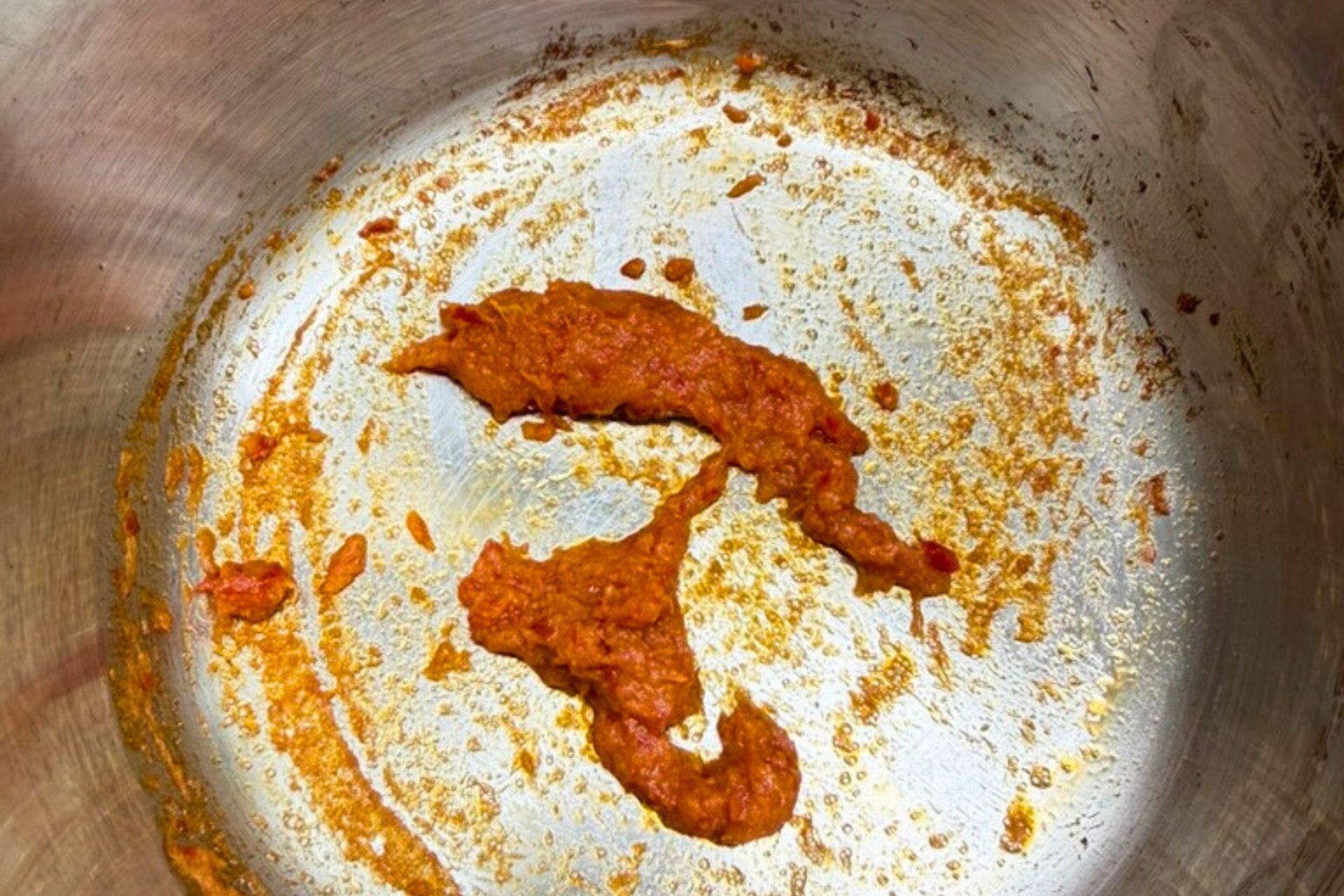
- Grind the dried red chili, dried shrimp, and galangal that were soaked in 1-2 tablespoons of water to a fine paste. Heat a pan with the peanut oil and sauté the spice paste over low heat for 2 minutes. Add the tamarind pulp and the remaining ingredients and turn off the heat. Mix well, transfer to a bowl, and set it aside.
2. How to assemble the Rujak Recipe:
- Arrange the fruits and jicama on a platter. Serve the peanut sauce on the side or drizzle it over the fruits. Garnish with crushed peanuts, chives, and optionally serve with lime wedges.
- Prepare the peanut sauce first, and then slice the fruits and vegetables for a fresh taste.
- For the peanut sauce, sauté the galangal, dried shrimp, and dried red chilis until fragrant, then add the remaining ingredients.
- Crush the peanuts coarsely for a crunchy sauce or grind them to a smooth paste for a creamy sauce.
- Add 1-2 tablespoons of hot water to dilute the peanut sauce for a more dropping consistency.
Serving suggestions:
Rujak made with this recipe is most commonly served as an afternoon snack or at family gatherings. Occasionally, it is also served as a dessert. There are two ways to serve this dish:
- Serve the fruits and the jicama mixed in a bowl with the peanut sauce or dressing, garnished with crushed peanuts or chives.
- Serve the Rujak with the peanut sauce in a bowl on the side. Guests can serve the sauce onto their plates individually.
Storage:
The peanut sauce can be refrigerated for a week in an airtight container or frozen for three months. The fruits and vegetables can be refrigerated for 1-2 days in separate containers and served with the peanut sauce on the side.
Other salads that you might like:
Rujak Recipe
Equipment
- saucepan
- Stovetop
Ingredients
For the salad:
- ½ cup jicama peeled, chopped
- ¾ cup pineapple cubed
- ¾ cup cucumber sliced, deseeded
- ¾ cup mango chopped
- ½ cup papaya unripe, chopped
- ½ cup apple peeled, sliced
- 3 chives chopped for garnish
For the peanut sauce:
- 5 dried shrimp soaked
- 4 dried red chili soaked
- ½ tsp galangal optional
- 4 tbsp tamarind pulp
- ½ cup peanut roasted, crushed
- ½ tsp salt
- 1 tbsp coconut palm sugar
- 1 tbsp dark brown sugar
- 1 tsp peanut oil
Instructions
How to prepare the salad ingredients:
- Slice or chop the fruits and the jicama.
How to make the peanut sauce:
- Prepare the ingredients. Extract or strain the tamarind pulp after soaking 2 tablespoons of wet tamarind in 4 tablespoons of water. Roast and skin the peanuts.
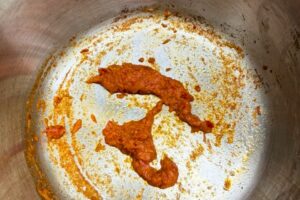
- Grind the dried red chili, dried shrimp, and galangal that were soaked in 2 tablespoons of water to a fine paste. Heat a pan with the peanut oil and sauté the spice paste over low heat for 2 minutes or until fragrant.
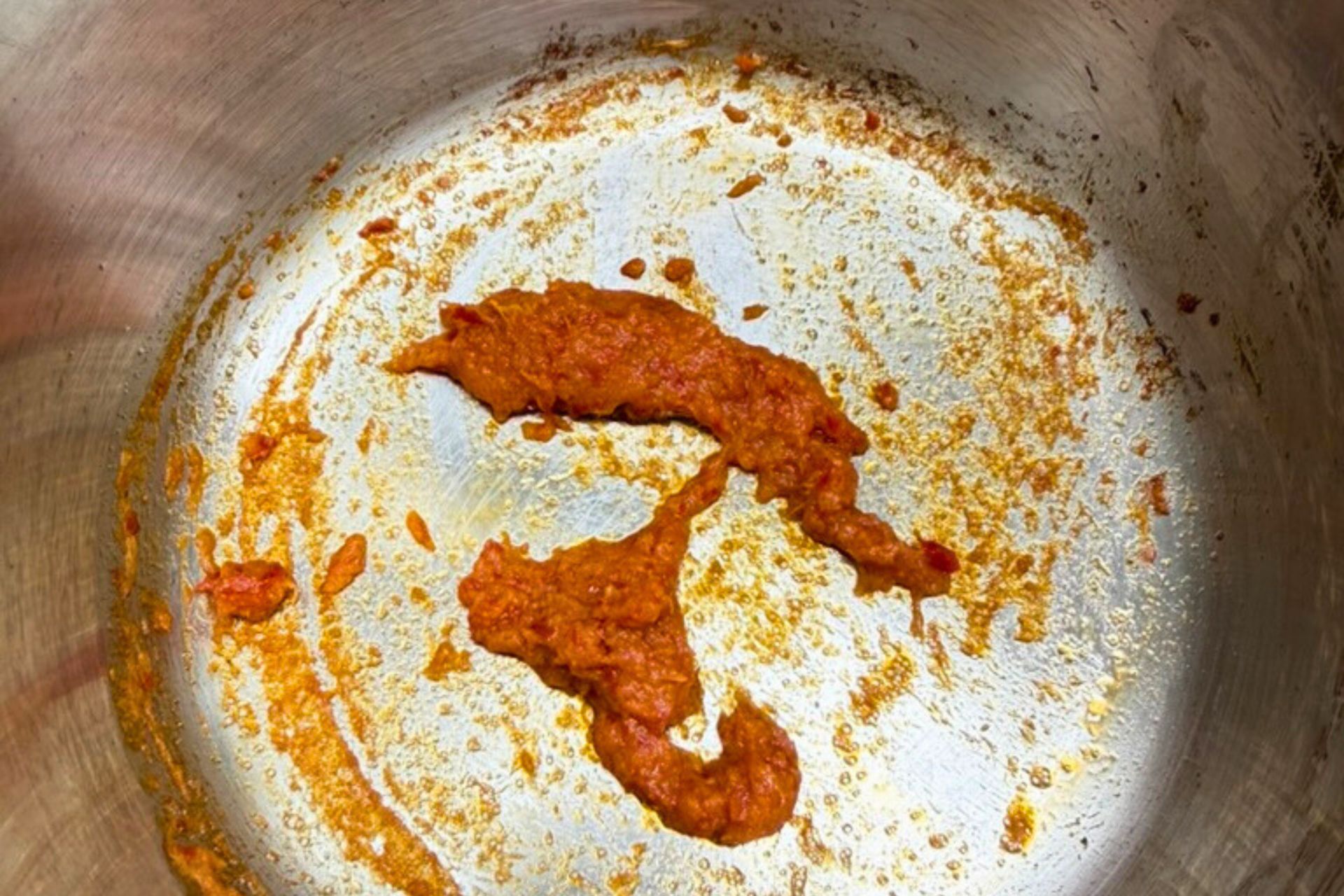
- Add the tamarind pulp and the remaining ingredients and turn off the heat. Mix well, transfer to a bowl, and set it aside.
How to assemble the Rujak Recipe:
- Arrange the fruits and jicama on a platter. Serve the peanut sauce on the side or drizzle it over the fruits. Garnish with chives and optionally serve with lime wedges.

Video
Notes
- Prepare the peanut sauce first, and then slice the fruits and vegetables for a fresh taste.
- For the peanut sauce, sauté the galangal, dried shrimp, and dried red chilis until fragrant, then add the remaining ingredients.
- Crush the peanuts coarsely for a crunchy sauce or grind them to a smooth paste for a creamy sauce.
- Add 1-2 tablespoons of hot water to dilute the peanut sauce for a more dropping consistency.
Nutrition






0 Comments